
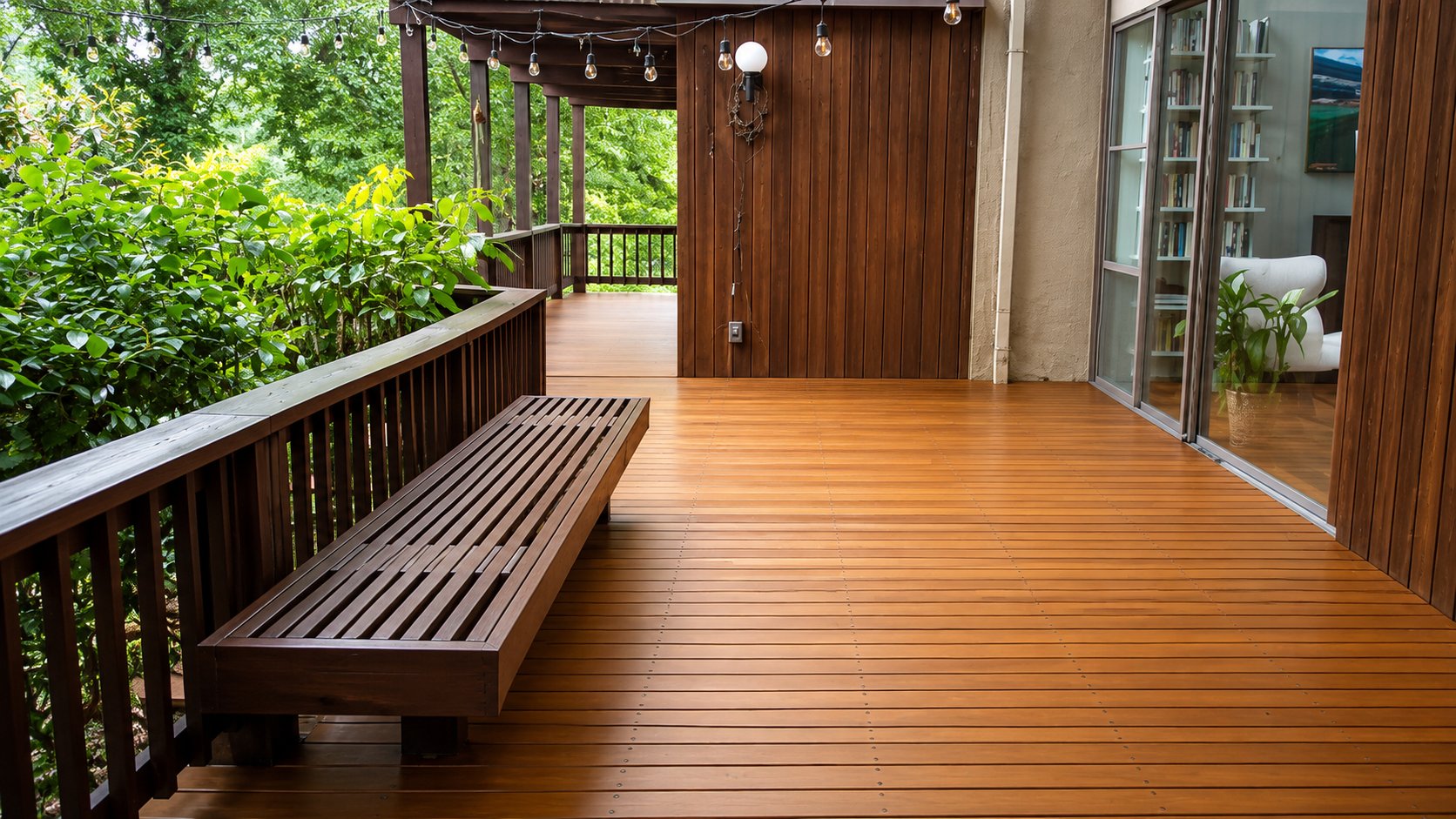
Hillside lots are where LA homes earn their views — and where decks earn their keep. Most properties on a slope have a back door that opens onto nothing usable: a steep drop, irrigation, dirt. We built this homeowner a full hillside deck that took the unused slope behind their kitchen and converted it into the actual main outdoor living space — wide, level, covered along part of its length, with a wood stair down to the lower yard.
The brief
The home was a Spanish-modern with French doors along the entire back elevation that opened to a steep slope. The owners wanted a wood deck spanning the full back of the house, wide enough to entertain, covered for the half that ran along the kitchen window line, with a proper stair down to the lower yard and matching wood railing throughout. Premium finish, traditional vocabulary — no glass panels, no cable, no metal. Real wood, stained to read warm against the white stucco.
The structure
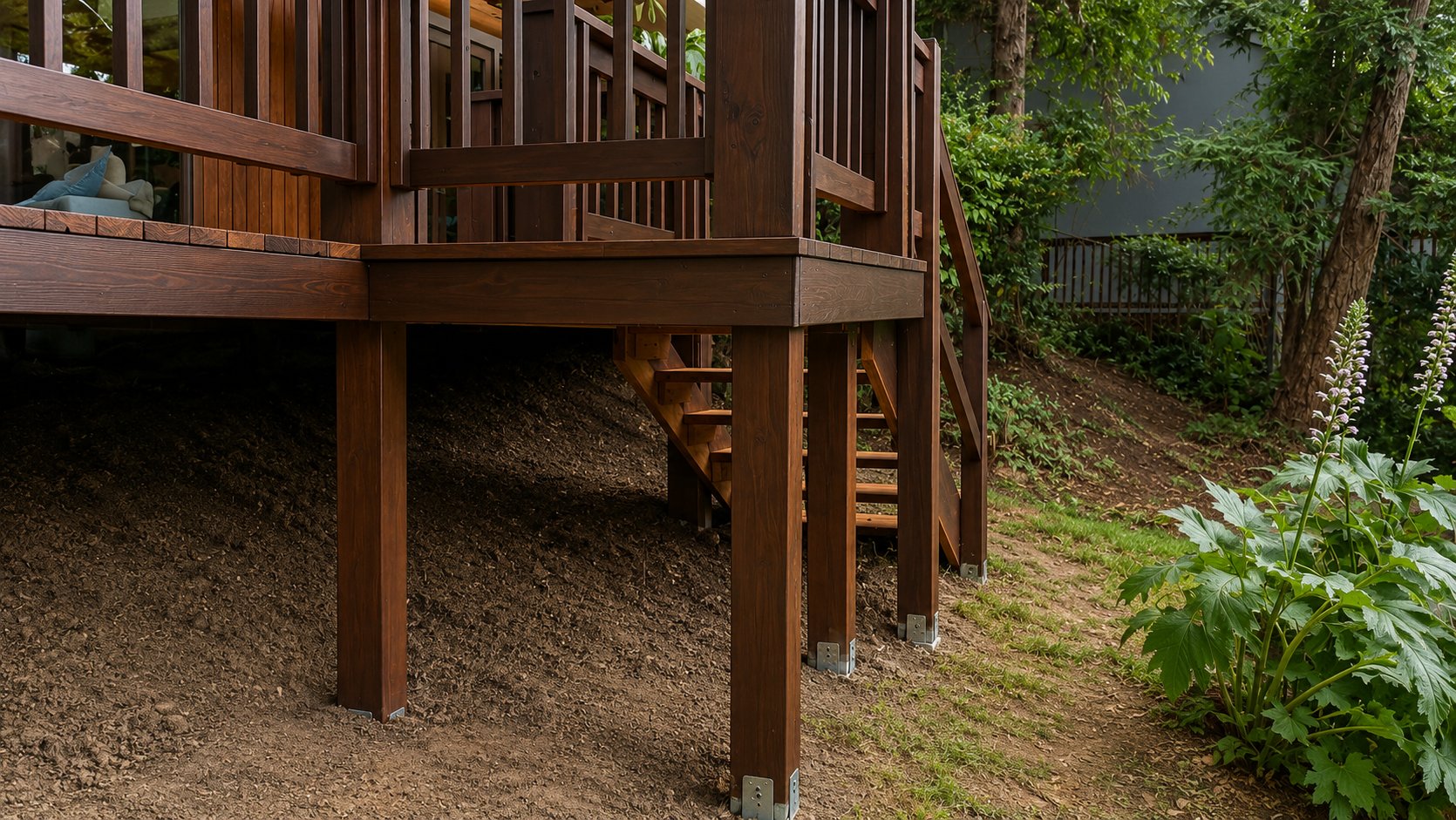
Posts: pressure-treated 6×6 wood posts set on adjustable steel post bases anchored into concrete footings. Steel bases keep the wood off the ground so it never wicks moisture from the soil — that single detail is the difference between a deck that lasts 25 years and one that starts rotting at the post bottoms by year eight. Beams and joists: pressure-treated structural lumber, sized to the span and the LA wind/seismic code. We over-engineered the joist spacing for a softer, more solid feel under bare feet.
The deck boards
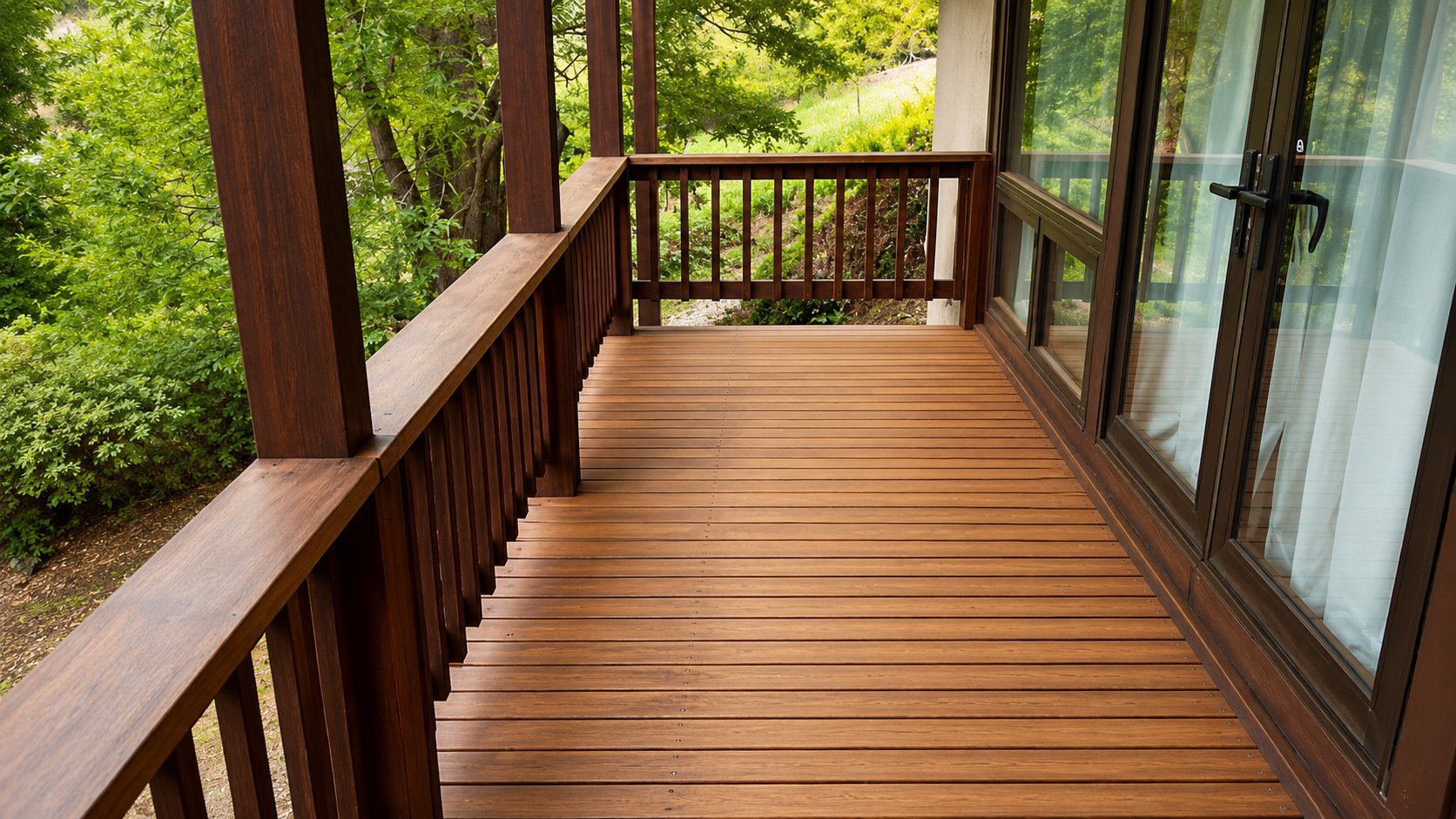
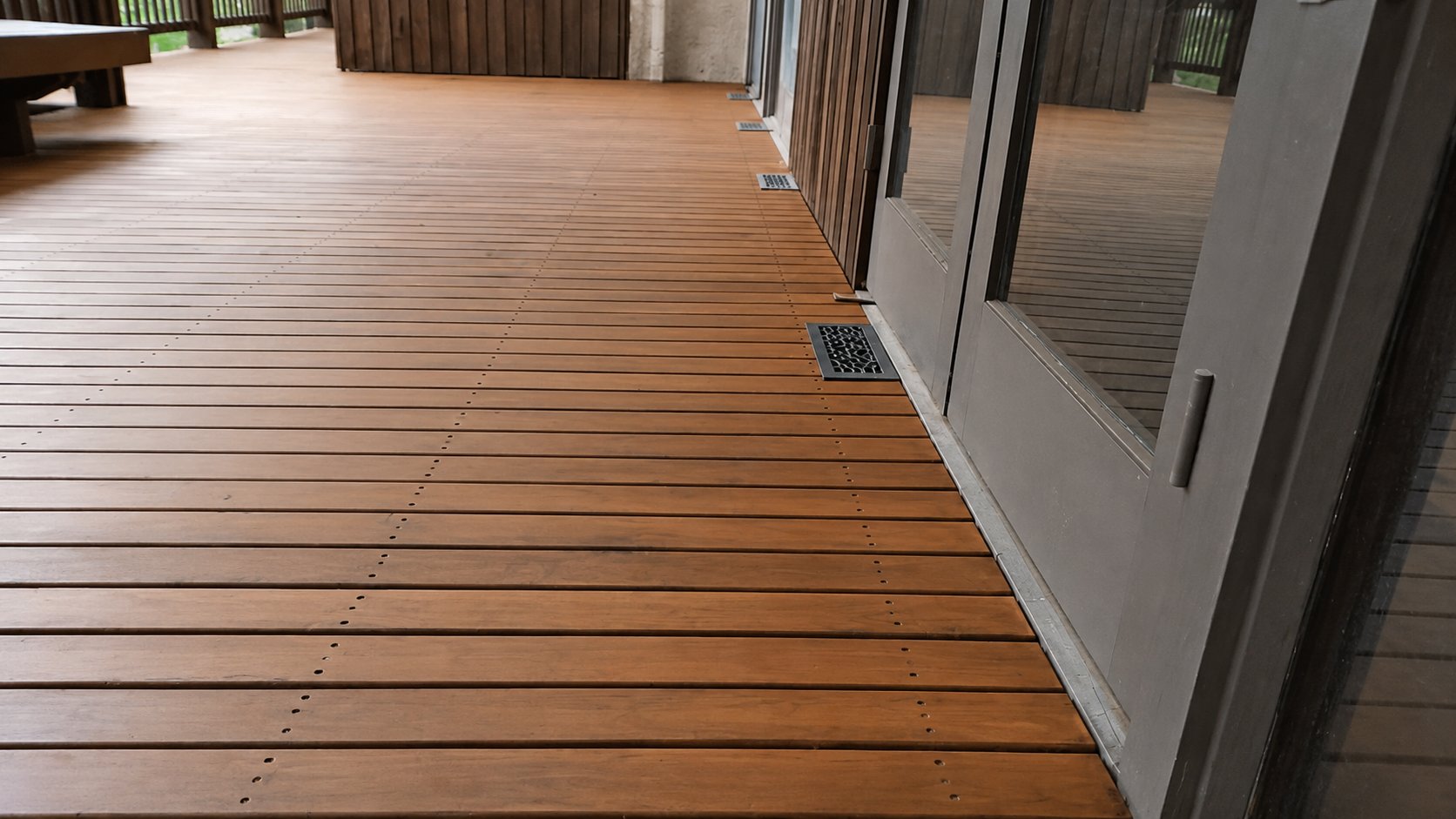
Hardwood-tone deck boards laid tight with consistent reveal, straight runs the full length of the deck without cross-cuts at the high-traffic field. Boards align with the longest axis of the deck — eye reads continuous lines instead of a patchwork. Picture-frame border around the perimeter so the field cuts terminate clean against trim instead of running into the railing posts.
The railing system
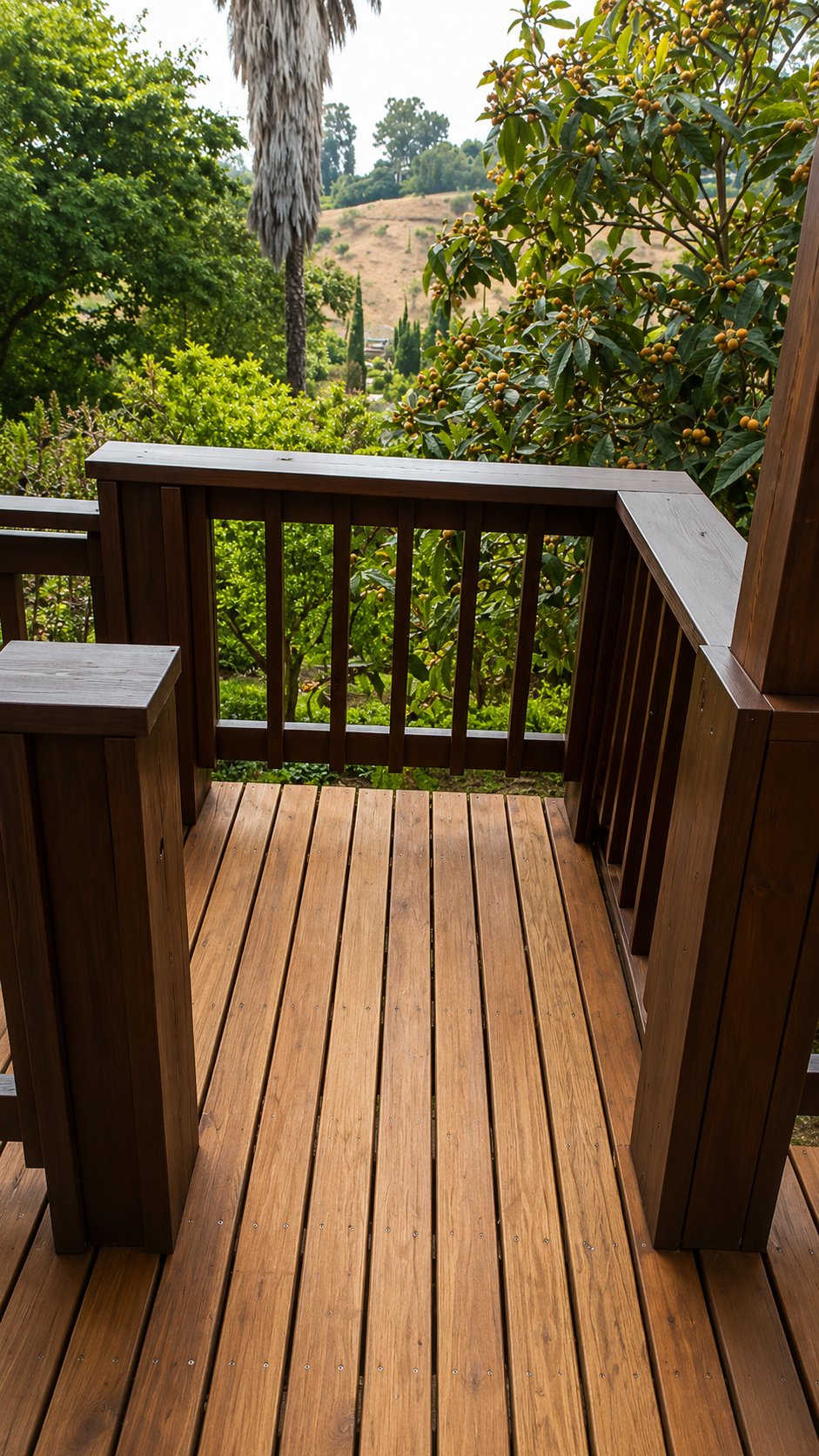
Solid wood throughout — stained a deeper chocolate-brown that contrasts cleanly with the warm honey deck floor. Top rail is a continuous capped 2×6 with eased edges so the kids can lean and the adults can set drinks. Vertical balusters at code spacing (4-inch sphere) with a bottom rail tying them all into a single frame. Posts every 6 feet with through-bolts into the beam below — no surface-mounted brackets that loosen over time.
The stairs
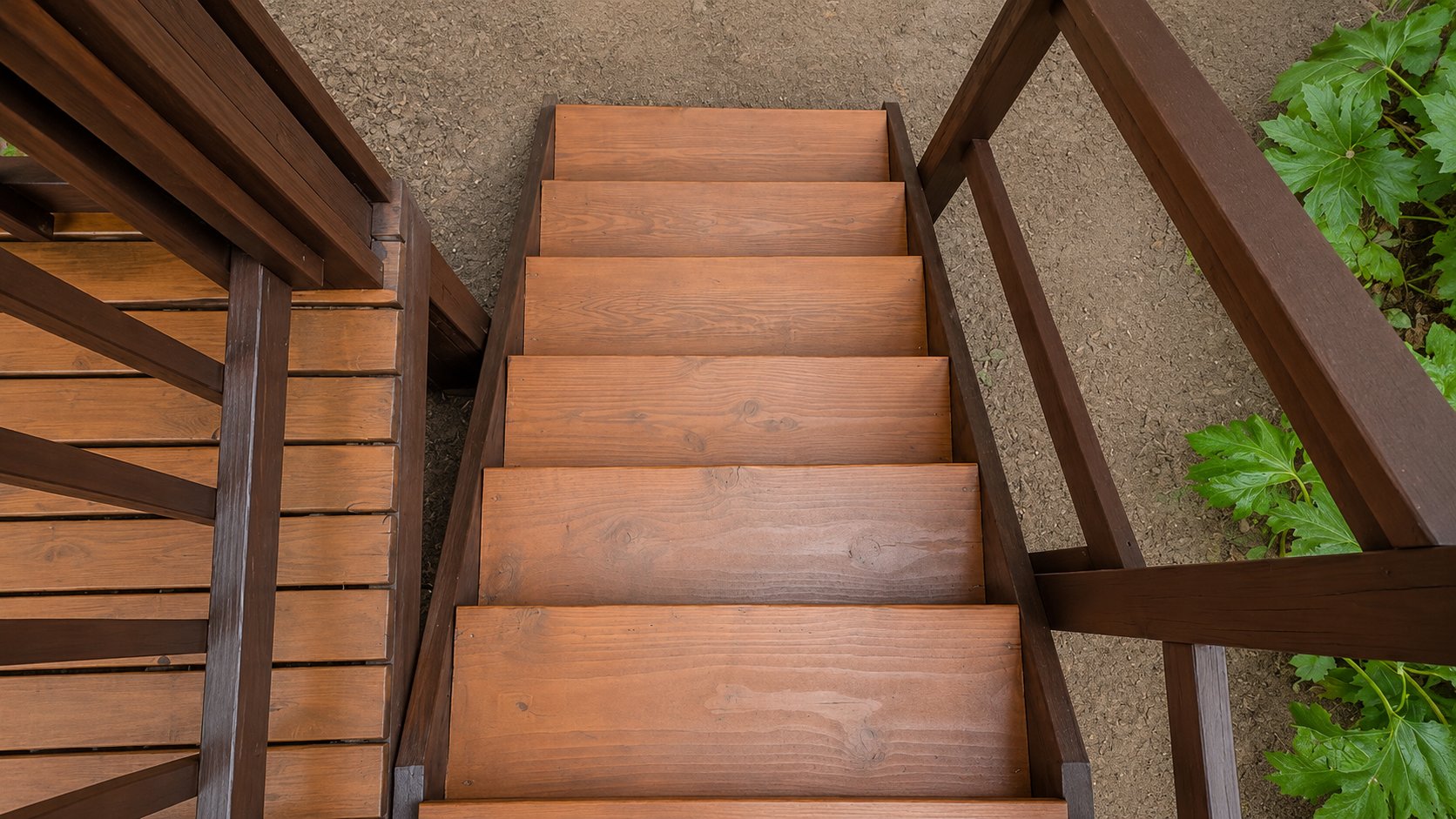
Open-tread wood stair from the deck level down to the lower yard, treads sized to comfortable residential rise and run. Stringers are pressure-treated structural lumber, treads are matching deck-board stock with bullnose front edges. Railing continues down the stair at the same pattern as the deck — same posts, same balusters, same cap rail — so there is no visual break between the deck and the stair.
Why wood instead of composite on this project
Three reasons we still build real wood decks at the premium end of the market:
Wood reads as wood at every distance. Composite has come a long way, but at five feet you can still tell. On a deck this size and this exposed to the view from inside the house, the homeowner sees it every minute of every day; the difference matters.
It can be refinished and brought back. A wood deck that has weathered hard can be sanded and re-stained in a weekend and look new again. Composite is fixed at its install color — if you want to change it later, you cannot.
Repair is a single board. If a board gets damaged on a wood deck, you replace one piece and re-stain it; it blends. Composite of an exact discontinued color is a sourcing nightmare ten years later.
Hillside-specific build considerations
LA hillside lots add real engineering to a deck. Wind loads are higher; soil is often expansive or rocky; drainage matters more. We size footings to the actual soil bearing capacity of each post location (not a one-size-fits-all spec), tie the deck back to the house with a properly flashed ledger so water cannot get behind it, and run drainage so storm runoff goes off the slope cleanly instead of pooling around the posts. None of this shows in the finished photos, but it is what separates a 25-year deck from a 10-year one.
Materials and longevity
Posts: pressure-treated 6×6 on steel bases over concrete footings. Beams and joists: pressure-treated structural lumber. Deck boards and railing: premium-grade hardwood-tone boards (cedar, mahogany, or hardwood per project; same family across the deck and the railing). Stain: penetrating oil semi-transparent in warm honey for the floor, deeper walnut for the railing. Hardware: structural fasteners, hidden where possible, exterior-rated where exposed.
Care
Stained wood deck wants a re-coat every 2-3 years on sun-exposed sections in LA (more often than a fence because of foot traffic abrasion). Light sand, sweep, re-apply the same oil. Railing tops on covered sections last longer between re-coats than the open deck floor. The pressure-treated framing underneath is essentially permanent — that part of the deck does not need maintenance for the life of the home.
Thinking about a hillside deck?
If your LA backyard ends in a slope you cannot use, a properly engineered hillside deck is the highest-impact backyard upgrade in the market. We design and build to your geometry, manage the engineering and the permit, and finish to match the rest of the house. Send a few photos and the layout; we will come out the same day for a free on-site estimate.
Related guides: Cable Railing Installation in Los Angeles (alternative railing) · Cedar Plank Fence on a Hillside · Deck Building in Los Angeles (service overview) · Decks & Pergolas Photo Gallery