
A stainless cable railing is the detail that turns a good deck into a modern one. Thin horizontal cables strung between clean metal posts give you a nearly unbroken view — the garden, the hillside, the pool, the trees — instead of a wall of pickets blocking it. Done right, a cable railing in Los Angeles looks architectural, lasts for decades, and meets code without compromise. Done wrong, the cables sag, the posts flex, and the whole run looks loose within a season.
This guide covers how we approach cable railings for our LA clients: what materials hold up in our climate, what makes a cable run stay tight, what a quality install costs, and what to expect from start to finish.
Why Cable Railing Works So Well in Los Angeles
Los Angeles homes are built around views and indoor-outdoor living. Hillside lots in Glendale, Eagle Rock, and the Verdugo foothills, canyon properties, and modern flat-roof builds all benefit from a railing that protects without blocking. A horizontal stainless cable system reads as a thin line rather than a barrier, so a small deck feels larger and a view stays open.
Our climate is kind to the system. Stainless steel cable and powder-coated aluminum or steel posts shrug off our dry heat and occasional rain. The main enemy is UV on the deck surface and any wood components — which is why we pair cable railings with composite or properly finished decking. The cable itself is essentially maintenance-free.
The Components That Matter
A cable railing is only as good as its weakest part. These are the pieces we spec carefully on every job.
Posts. The backbone of the system. We use powder-coated aluminum or steel posts rated for cable tension. Cable exerts serious pull, so posts must be through-bolted or properly anchored into the deck framing or concrete — not just surface-screwed. End and corner posts often get extra reinforcement because they carry the full tension load.
Cable. 1/8″ or 3/16″ 316-grade stainless steel cable (316 is the marine grade that resists corrosion best). Spacing is set so a 4″ sphere cannot pass through — the code requirement that keeps the system safe and inspection-ready.
Tension fittings. Quality swageless or swaged fittings with proper tensioners at each run. This is what keeps cables tight for years. Cheap fittings are the number one reason cable railings sag.
Top rail. A metal or wood top rail ties the posts together, stiffens the system, and gives a finished edge. On longer runs the top rail is structural, not just decorative.
Intermediate supports. On long spans, we add intermediate pickets or stand-offs so the cables can’t be pushed out of plane. This keeps that crisp horizontal line from end to end.
Design Details That Separate a Good Railing from a Great One
Post finish. Matte black powder coat is the modern standard and what most of our LA clients choose — it disappears against the view and pairs with black window frames. We avoid shiny finishes that show every fingerprint and scratch.
Consistent cable spacing. Even, tight spacing top to bottom is the signature of a professional install. We jig the spacing rather than eyeballing it.
Clean corners and stair transitions. Where the railing turns a corner or follows stairs, the geometry has to be exact. Sloppy stair angles are the first thing the eye catches.
Deck integration. The railing and the deck are one system. We plan post locations with the deck framing so every post lands on solid blocking, and we match the railing to the decking tone and the home’s lines.
Realistic Cost Ranges in Los Angeles
Cable railing costs more than wood or standard metal picket railing because of the hardware and the labor to tension it correctly. Pricing depends on post material, total linear footage, number of corners and stairs, and how the posts mount. These are the ranges we see for a quality install by a licensed contractor in the LA market in 2026:
Aluminum-post cable railing, standard run: roughly $90 to $160 per linear foot installed, including posts, 316 stainless cable, fittings, top rail, and tensioning.
Steel-post or premium-system cable railing: roughly $150 to $250 per linear foot installed.
Stair sections: priced higher per foot than flat runs because of the angled fittings and added labor.
Composite decking (if built together): roughly $30 to $60 per square foot installed depending on board line and substructure.
These ranges assume solid framing to anchor into. Add for structural reinforcement, concrete anchoring, long spans needing intermediate supports, or permit-required guardrail heights (generally 42″ for decks above 30″ off grade in most LA jurisdictions). We always provide a written, itemized estimate that separates posts, cable and hardware, top rail, decking, and labor.
What the Build Process Looks Like
Site visit and measurements. We assess the deck framing, grade, and view lines, confirm guardrail height requirements, and lay out post spacing so cables meet the 4″ code spacing.
Written proposal. Post material and finish, cable size and grade, fitting type, top rail, and layout. We share photos of comparable projects so you know exactly what you are getting.
Framing check and blocking. Posts only hold tension if the structure under them is solid. We add blocking and reinforcement where needed before anything goes vertical.
Post installation. Posts set plumb, anchored to framing or concrete, and squared to the run. End and corner posts reinforced for tension load.
Cable run and tensioning. Cables threaded, fittings installed, and each cable tensioned evenly. We check the 4″ spacing along the whole run and confirm there is no sag.
Top rail and finish. Top rail installed, hardware dialed in, posts and rail wiped down. Final walk-through with the homeowner.
A typical single-level deck railing is a few days once materials are on site; a multi-level deck with stairs and a new composite surface runs one to two weeks.
Maintenance: What to Expect Over the Years
A stainless cable railing is about as low-maintenance as railings get. Realistic expectations:
Wipe the cables and posts down a couple of times a year — more if you are near the coast, where salt air calls for 316 stainless and the occasional rinse.
Check cable tension once a year. A quality tensioning system holds for years, but a quick check keeps the line crisp. We can re-tension as a service if a cable ever needs it.
The composite deck surface needs only periodic cleaning — no sanding or staining like wood.
Common Questions from LA Homeowners
Is cable railing up to code? Yes, when built correctly. The cables must be spaced so a 4″ sphere can’t pass, the guardrail height must meet your jurisdiction’s requirement, and the posts must resist the required load. We build to those standards and handle inspection-readiness.
Will the cables sag over time? Not when proper fittings and tensioners are used and the posts are anchored correctly. Sagging comes from cheap hardware or under-built posts — both of which we avoid.
Horizontal or vertical cables? Horizontal is the modern look and what most LA clients want. Some jurisdictions or HOAs have opinions on climbability for homes with young children; we confirm the rules before designing.
Can you add cable railing to my existing deck? Often yes, if the framing can take the post anchoring and tension. We assess the structure first and reinforce if needed.
Do you offer a warranty? Yes — written warranty on craftsmanship plus the manufacturer warranty on posts, cable, and hardware.
A Recent Project: Cable Railing and Composite Deck in Los Angeles
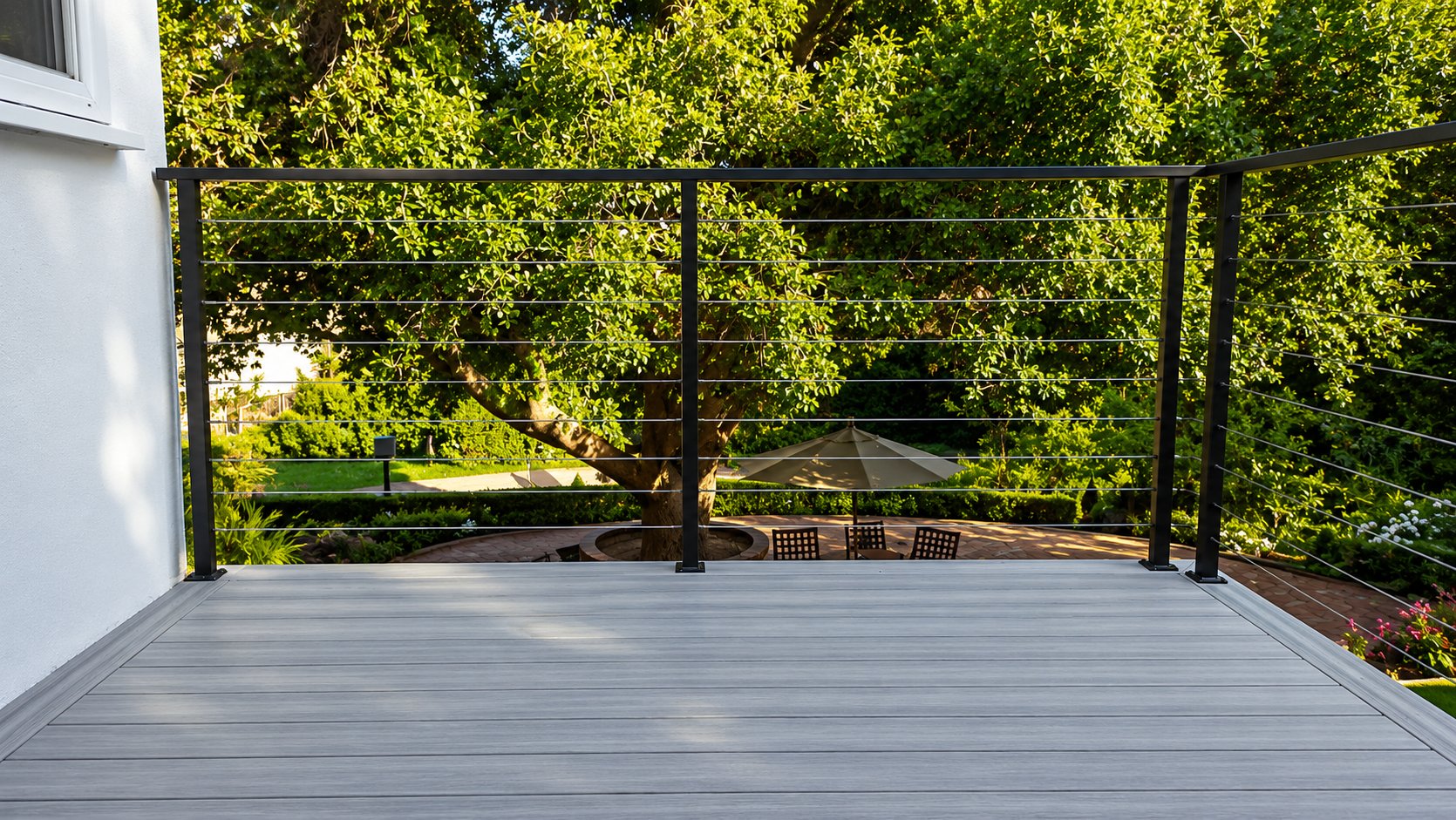
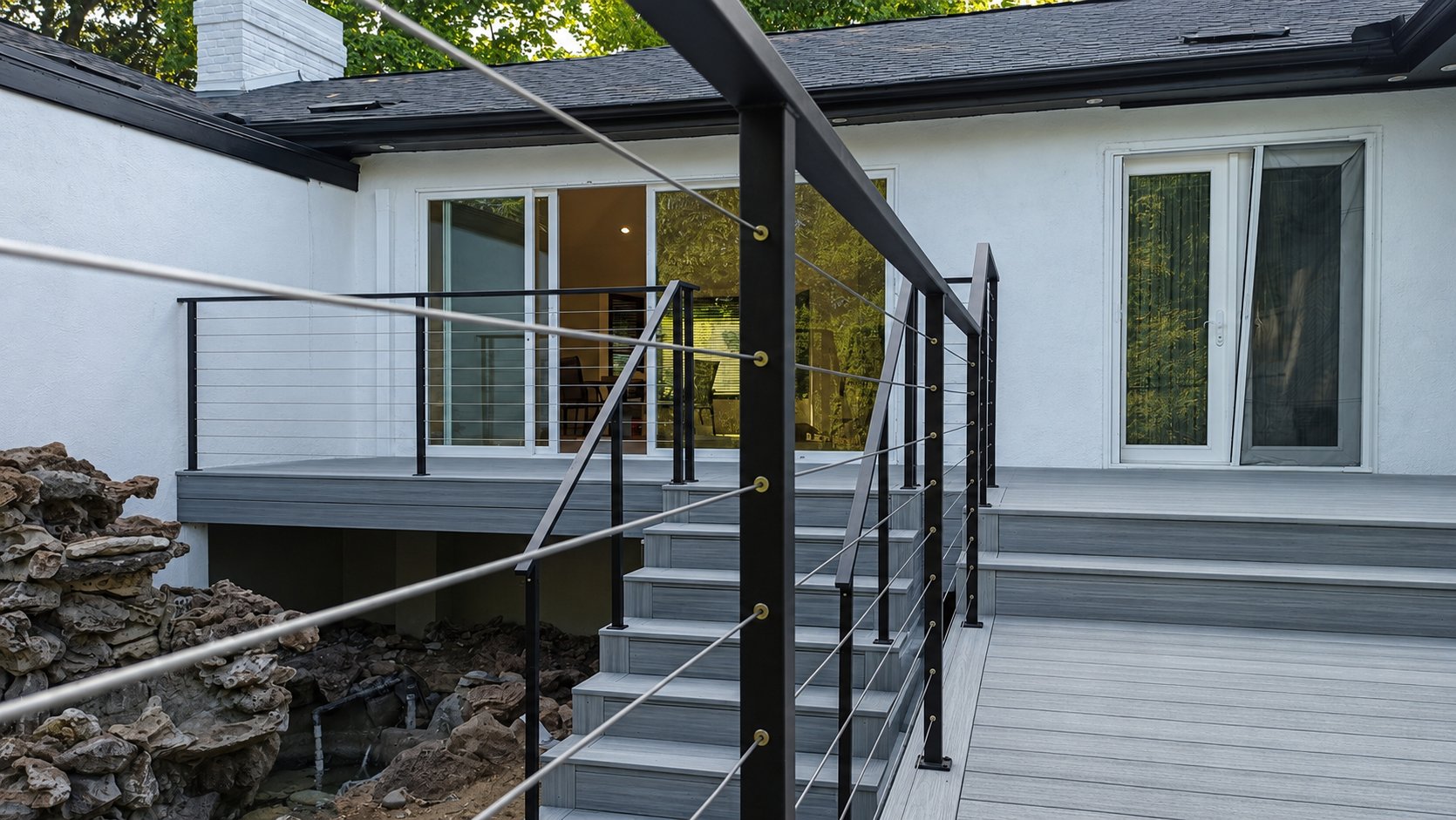
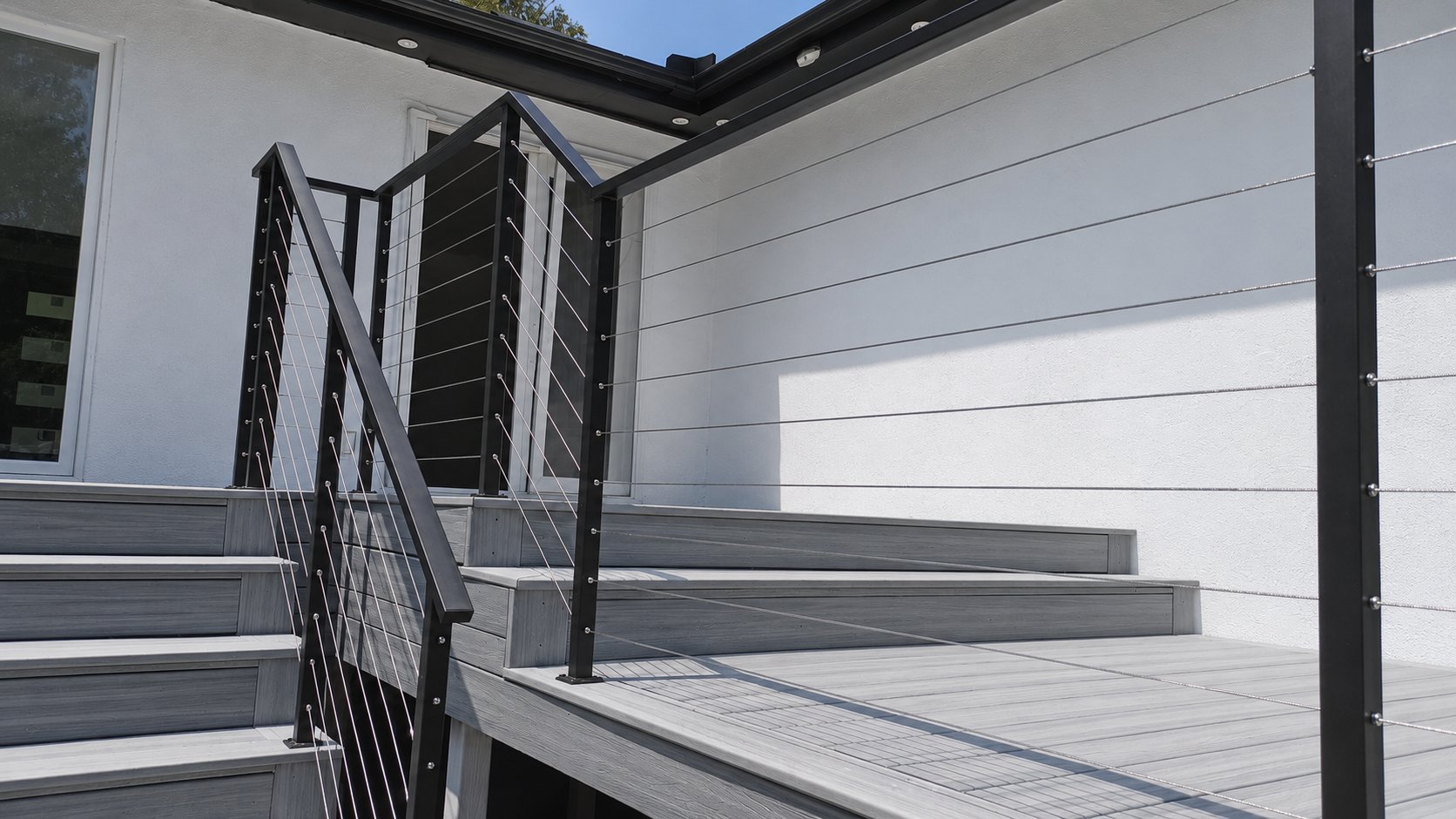
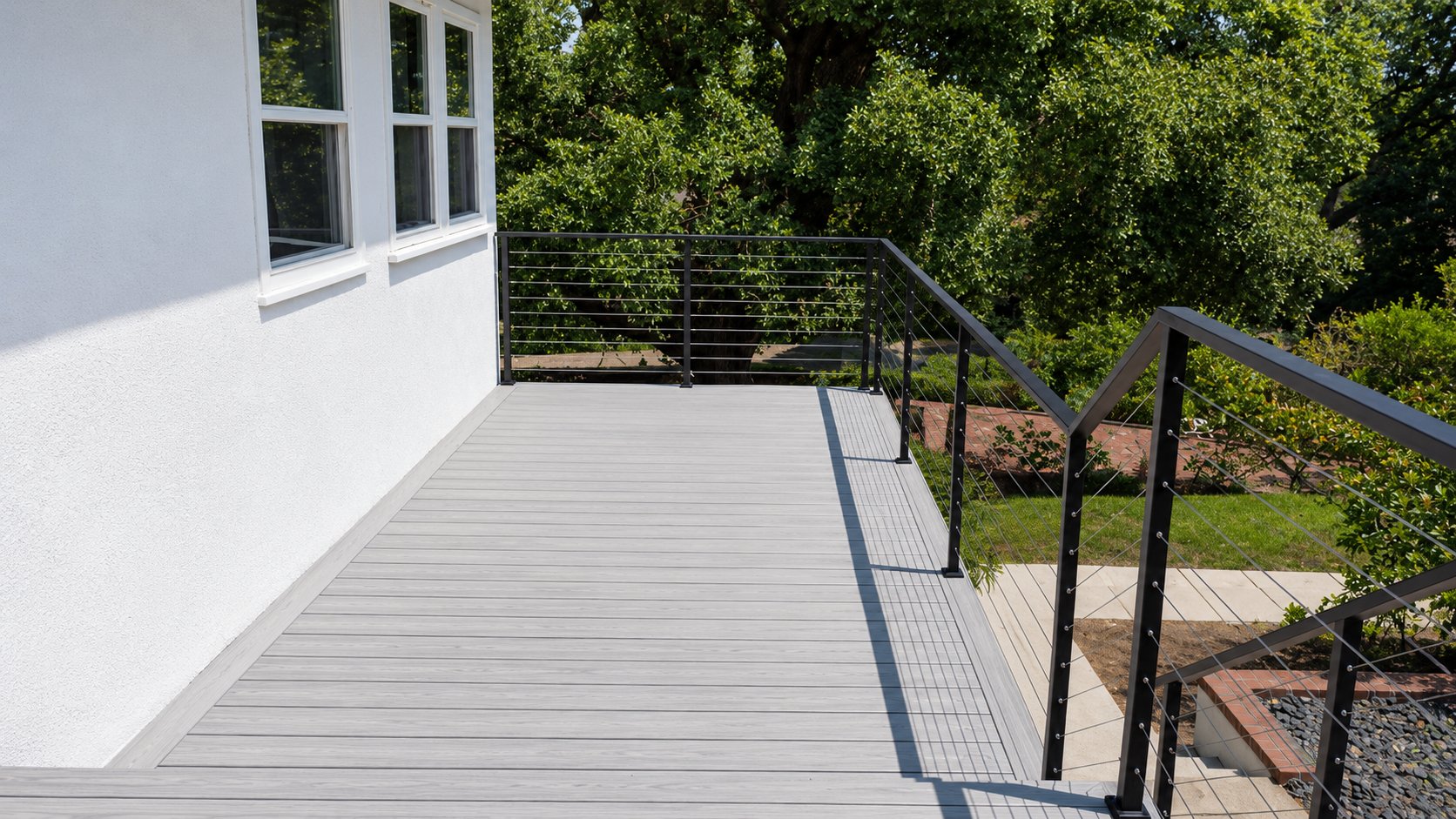
The photos in this post show a recent project we completed on an LA property: a stainless cable railing system on a multi-level gray composite deck, wrapping the deck perimeter and following the stairs down to the garden. The build features matte-black powder-coated posts anchored into reinforced framing, 316 stainless cable tensioned for a crisp horizontal line, a clean top rail, and exact stair transitions.
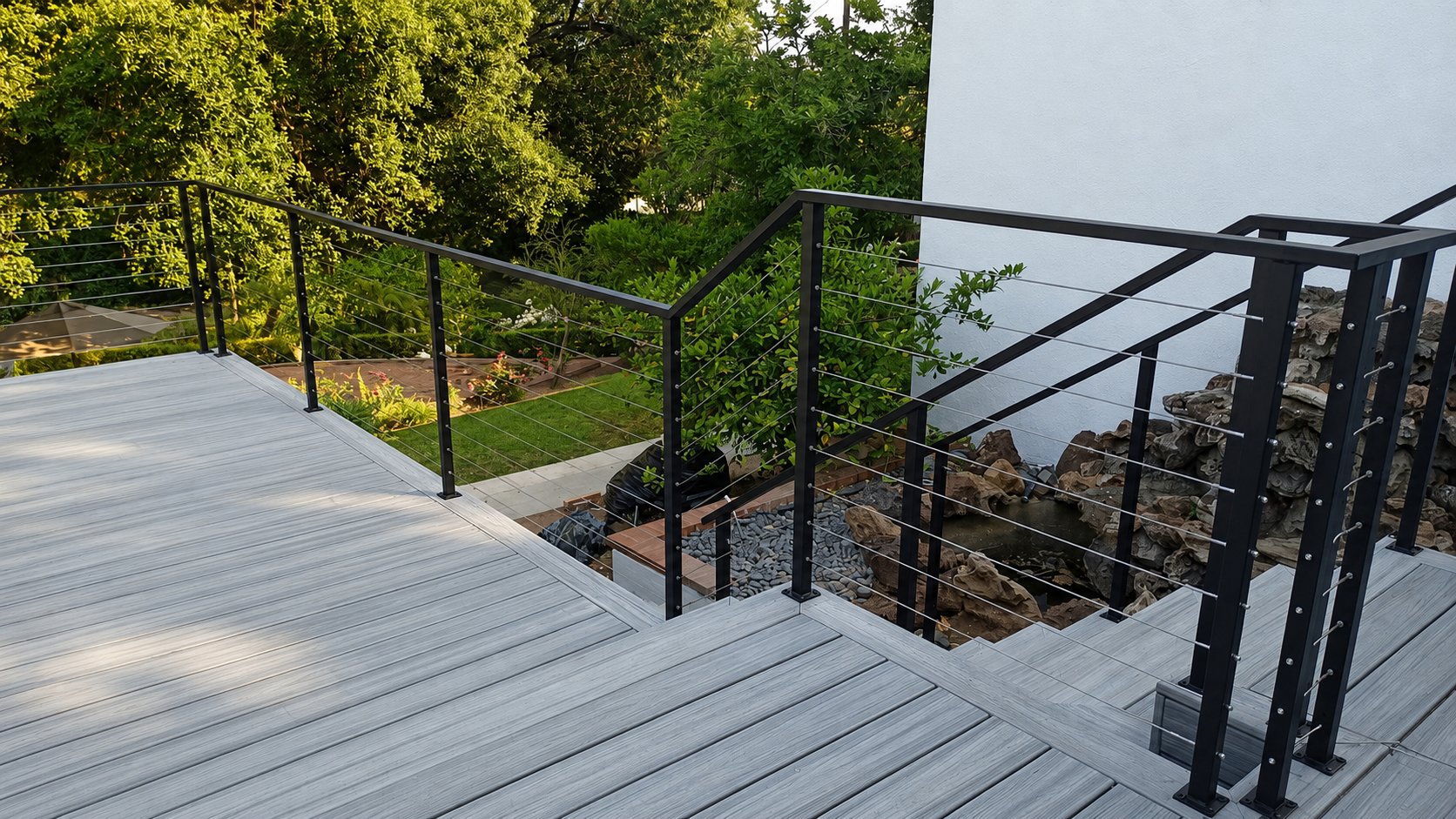
The railing was designed to protect the elevated deck while keeping the rock water feature and garden fully in view from inside the home. Post locations were planned with the deck framing so every post landed on solid blocking, and the cable spacing was jigged for even, code-compliant gaps from end to end.
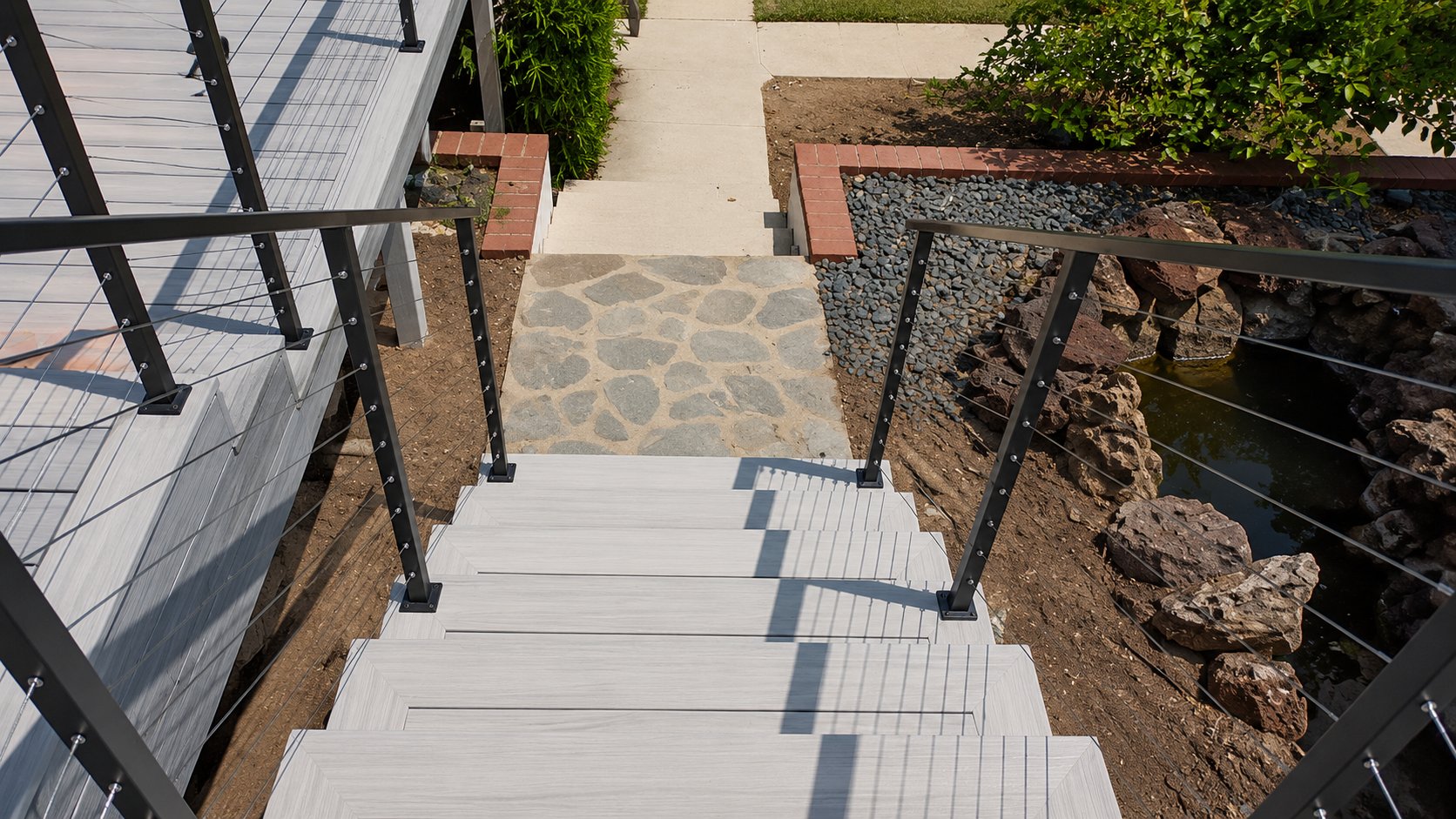
This is the standard we bring to every railing project: structural anchoring, the right marine-grade hardware, precise tensioning, and a finish that holds up to the LA sun and adds real value to the home.
Get a Quote on a Cable Railing in Los Angeles
If you are considering a stainless cable railing for your deck, balcony, or stairs anywhere in Los Angeles, Glendale, Burbank, or Pasadena, we would be glad to walk the site, check the structure, and put together a clear written estimate. We handle the full project from framing through final tensioning — no subcontractor handoffs, no surprises.
Contact us to schedule a free on-site consultation.
2 Responses