
Full restoration and repaint of a classic wrought-iron fence at a Los Angeles property — original fleur-de-lis finials, decorative vertical pickets, and the faux-brick stone pillars kept exactly as they were. The ironwork had years of chalked and flaking paint over surface rust. We stripped it back, treated the rust, primed, and finished the whole run in a crisp exterior semi-gloss white. The fence reads as new; the character of the house stays period-correct.
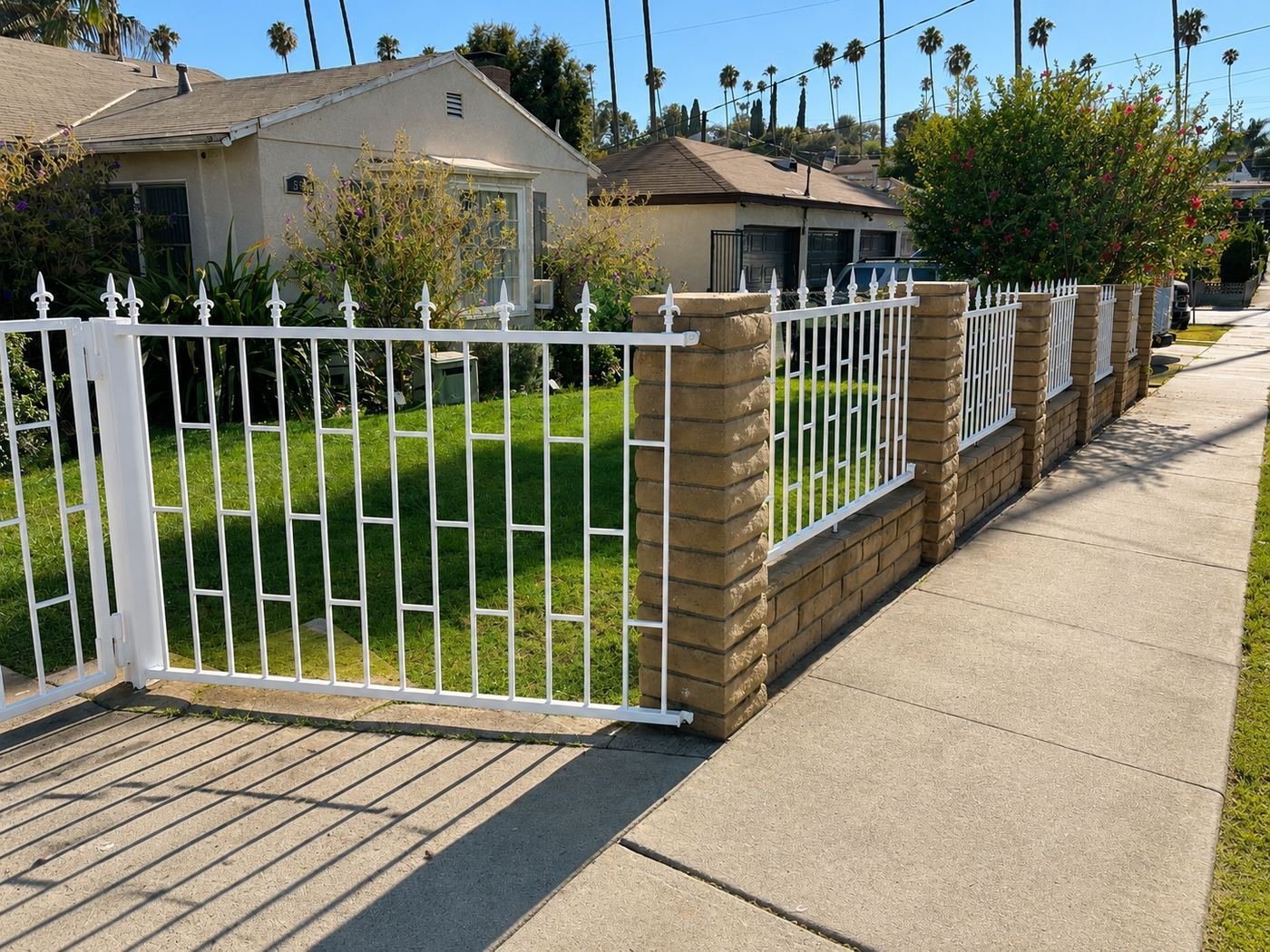
Project overview
- Location: Residential front yard, Los Angeles
- Scope: Full wrought-iron fence and gate restoration — surface prep, rust treatment, prime, two coats of exterior finish
- Original fence profile: Classic wrought iron with fleur-de-lis finials and vertical pickets between faux-brick stone pillars
- Finish: Exterior semi-gloss white, two coats over oil-based rust-inhibiting primer
- Hardware: Gate hinges cleaned, lubricated, and re-set so the gate closes square
Why restore instead of replace
The vast majority of wrought-iron fences on older LA streets are irreplaceable — not in a sentimental sense, in a literal one. The spear-point, fleur-de-lis, and scroll profiles were cast and welded in the 1950s–70s and the molds don’t exist anymore. If you tear one of these fences out, what goes back is a modern stock aluminum run that reads instantly as “not from here.” Restoration keeps the original ironwork, the proportions matched to the house, and the fence as part of the property’s story — at a fraction of the cost of replacement.
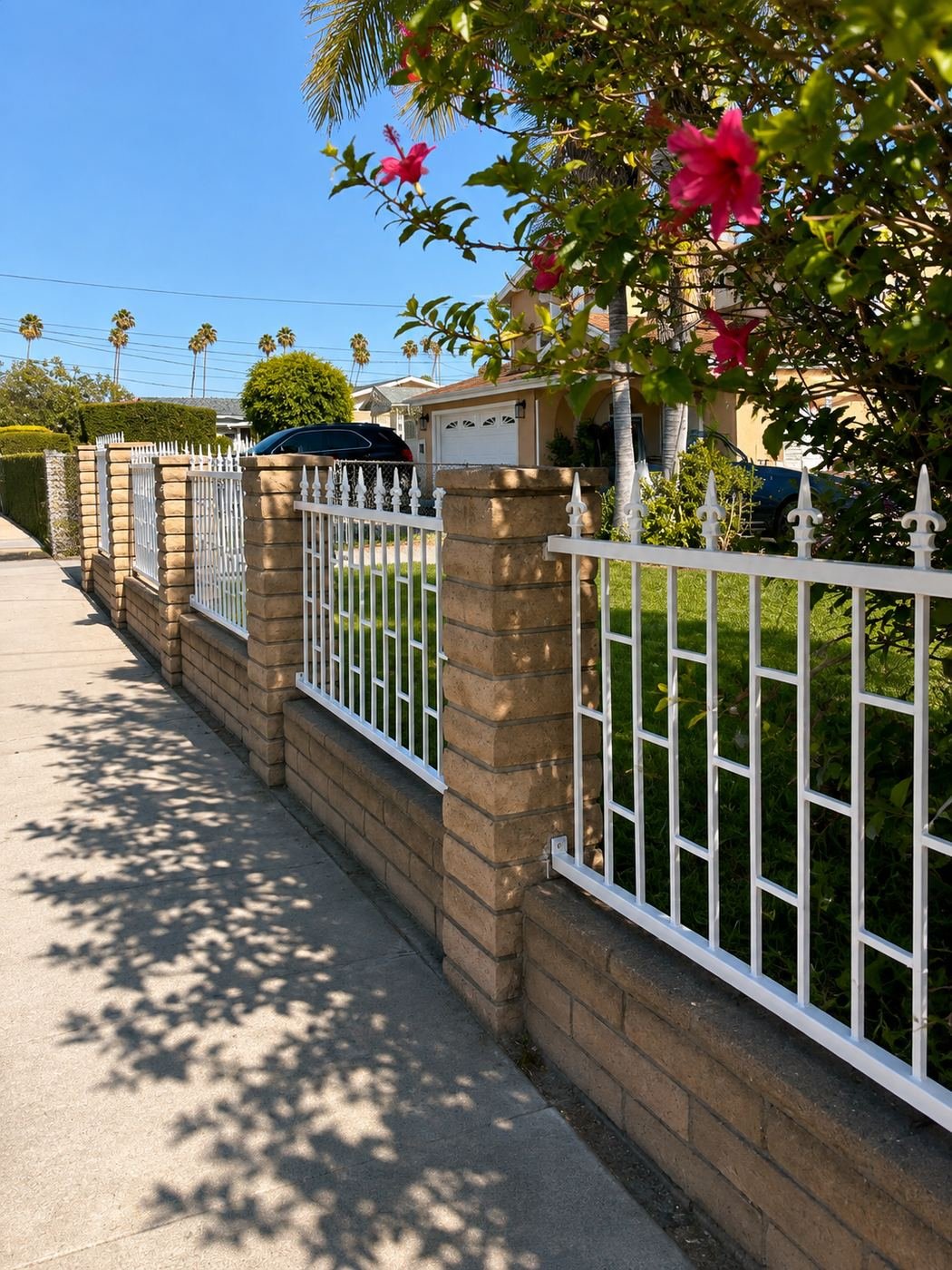
What a proper wrought-iron repaint actually involves
Painting over flaking iron is one of those jobs that looks easy and goes wrong fast. If the prep is skipped, the new coat blisters off within a season. The sequence that holds up:
- Wire-wheel the loose material. Every picket, every joint, every finial — strip back to a sound surface. Loose paint and surface rust come off; the parent metal and well-bonded underlayer stay.
- Rust treatment. Any pitted or active rust gets a converter so the oxidation is chemically neutralized before anything goes over it. This is the step that keeps rust from pushing through the new finish six months later.
- Oil-based primer. One full coat of exterior oil-based rust-inhibiting primer — brush applied so it works into the joints and the back faces of the pickets, not just the showy front.
- Two finish coats. Exterior semi-gloss white, two coats, with full dry time between. Semi-gloss resists dust, irrigation overspray, and street grime better than flat and cleans up with a hose.
- Element at a time. We paint each fence section whole, not touch-ups on top of weathered areas. Touch-ups on sun-faded iron read worse than the original fade — a full-element repaint is the only approach that actually looks right.
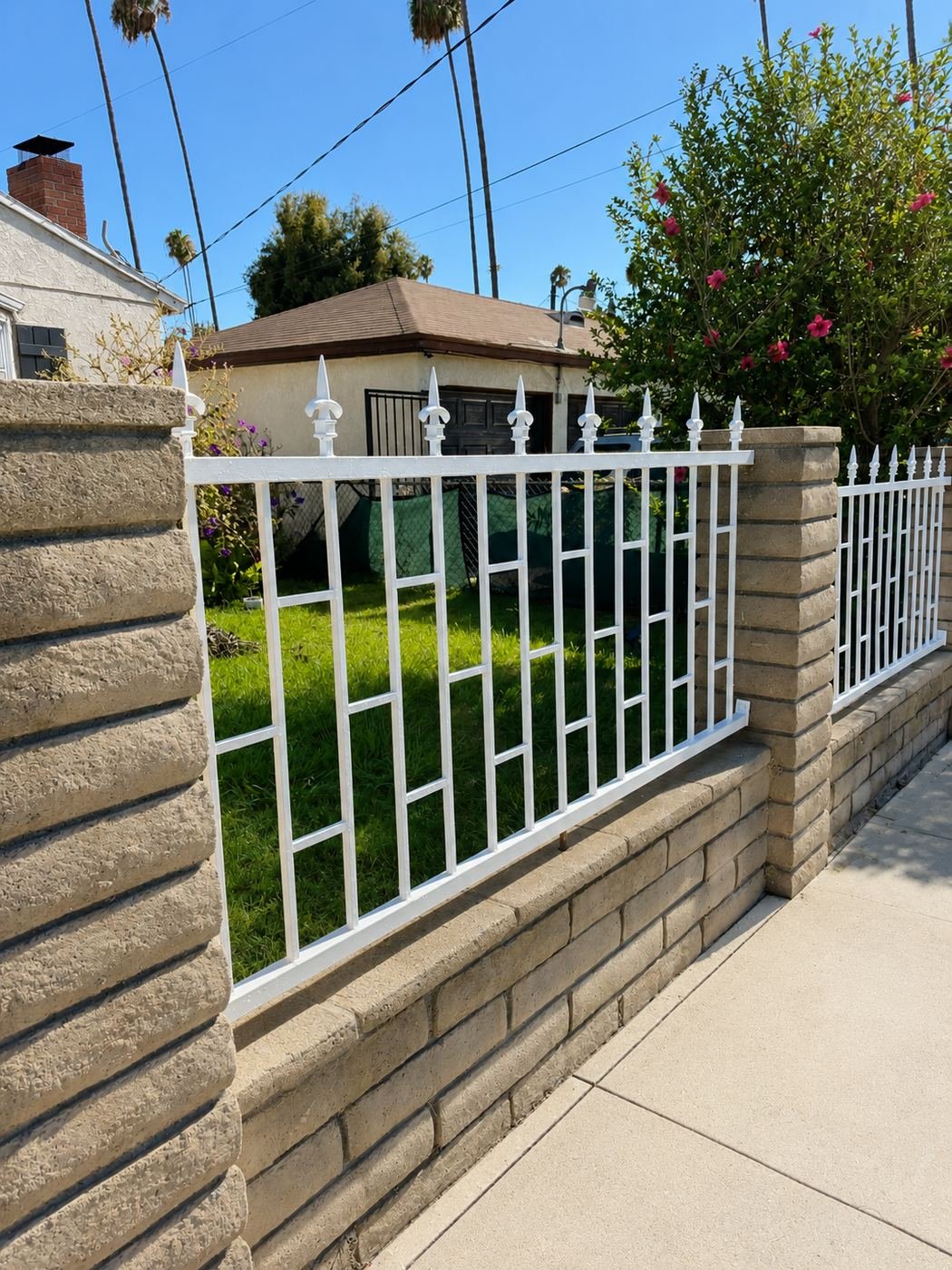
Stone pillars kept as they were
The faux-brick stone columns between fence sections were part of the original build and look right for the house. They weren’t repainted — the weathered patina on the stone is part of what reads as “mature property.” Cleaning them past that point would make the whole fence look mismatched. Restoration isn’t always maximizing everything; sometimes it’s knowing what to leave.
Gate as a separate problem
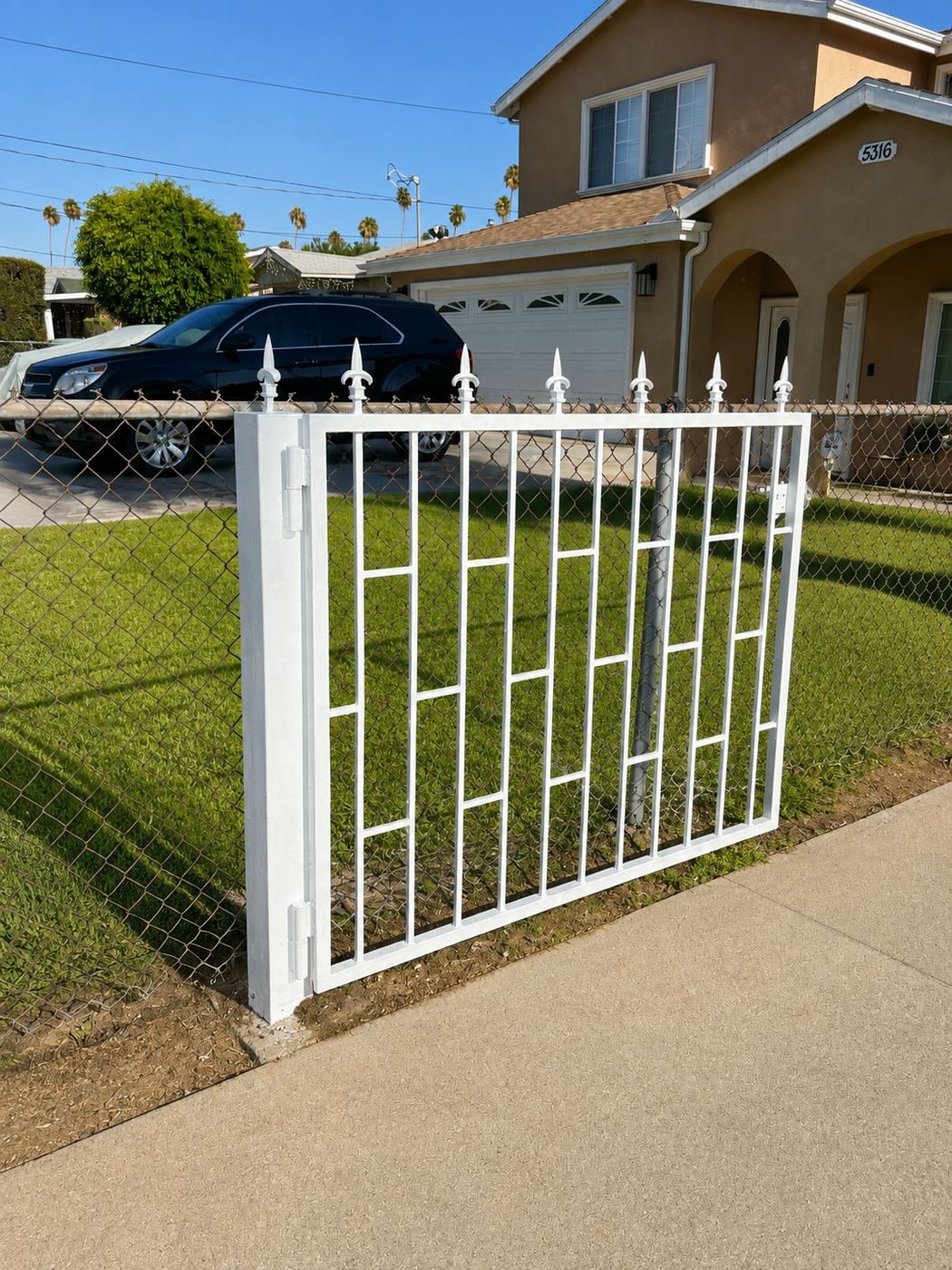
The pedestrian gate from the second property on this project is a good example of why wrought-iron gates fail even when the fence beside them doesn’t. Gates get leaned on, pulled, slammed, and the hinges carry asymmetric load. On the restoration pass we re-set the hinges, re-aligned the latch so it catches on the first try, and painted after the mechanical work was correct — paint over a sagging gate hides a problem for about one season.
Need a wrought-iron fence restored?
If you have a classic wrought-iron fence, gate, or set of railings on an older LA property that’s flaking, chalked, or spotting rust — restoration is almost always the right call before replacement. We handle prep, rust treatment, prime, and finish on fences, driveway gates, pedestrian gates, and railings across Greater Los Angeles. Free on-site assessment.
Call ProHands: (818) 401-7766 · Email: info@prohandshandyman.com · Serving: Los Angeles, Glendale, Burbank, Pasadena, San Marino