A full interior restoration of a Van Nuys apartment after a flood. The client’s unit had a plumbing leak that soaked drywall and framing across multiple rooms long enough that hidden mold started growing behind the walls. We came in to open up the affected areas, confirm the extent of the mold, remediate it properly, rebuild the drywall, and finish the whole interior with a full repaint so the apartment felt new again — not patched.
The brief
Water damage from a burst supply line had already dried on the surface, but the client could smell something off along the lower walls and wanted it inspected properly before any paint went on. Hidden mold behind baseboards and inside wall cavities is one of the most common follow-on problems after a flood, and surface-only repair almost always comes back a few months later as discolored drywall and musty air. The job had to be done the way insurance and best practice both say: open it up, confirm the extent, remove, treat, rebuild, repaint.
1. Containment and inspection
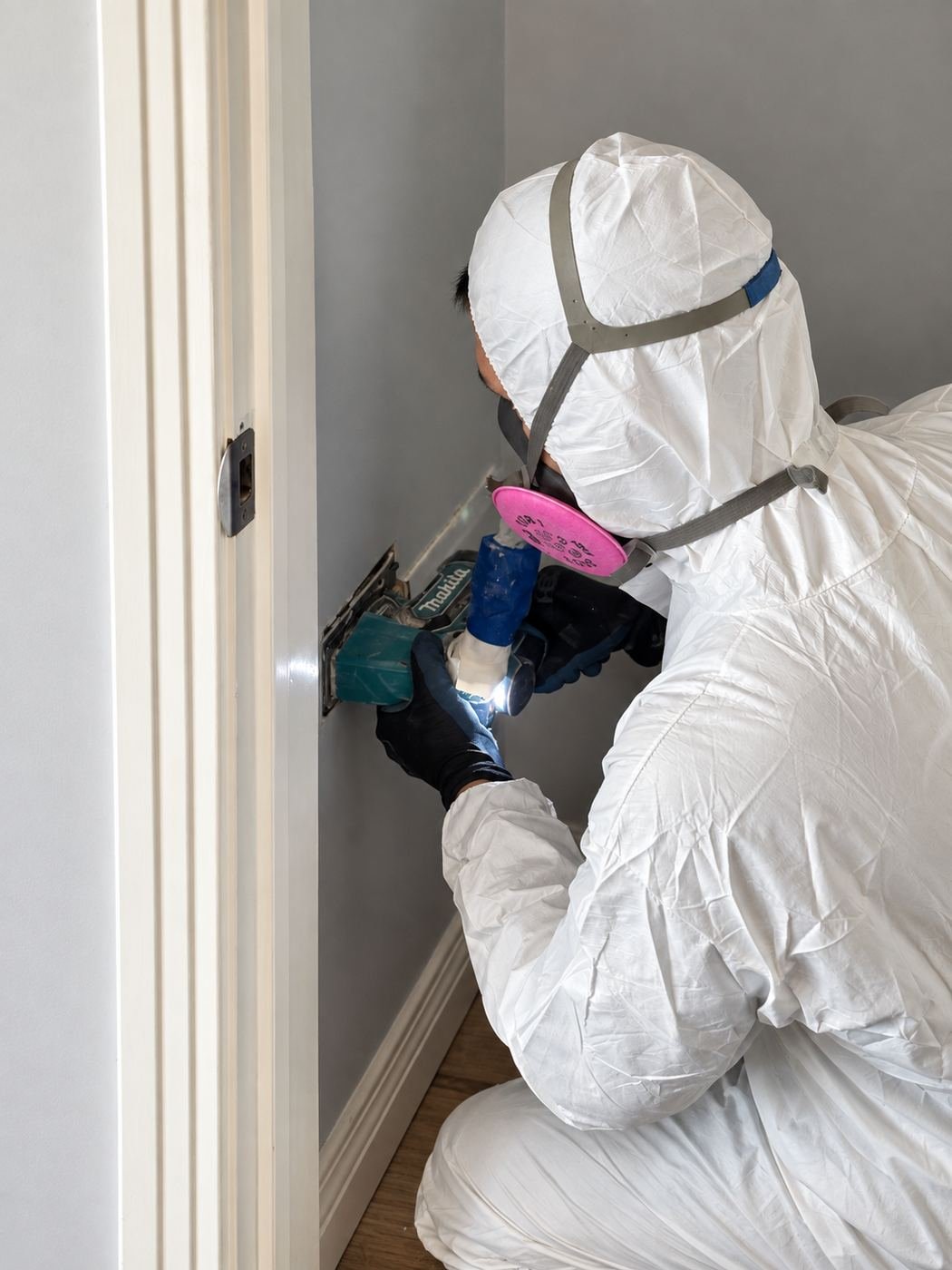
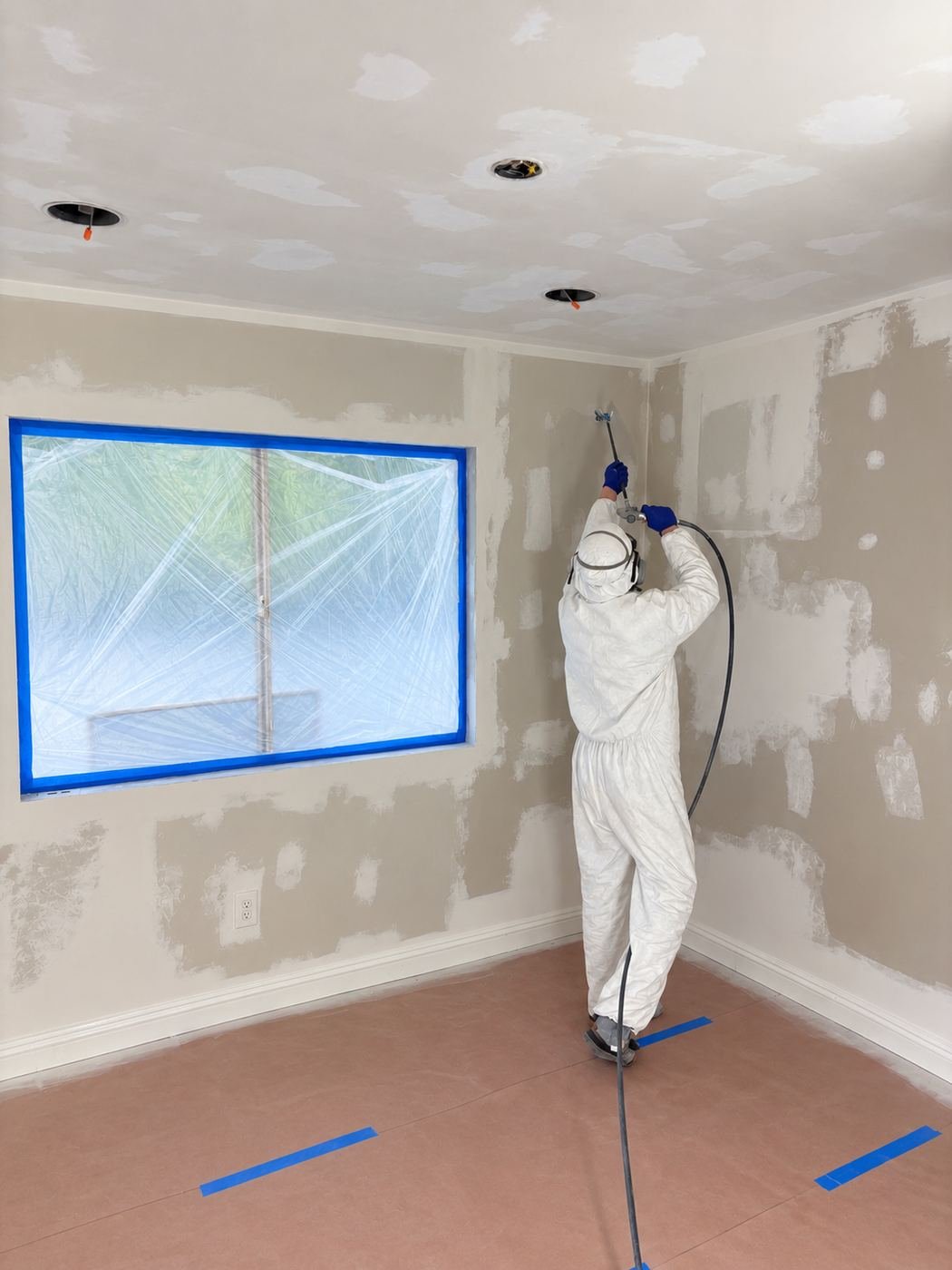
Before any cutting started, we set up full personal protective equipment — Tyvek suits sealed at the wrists and ankles, P100 respirator cartridges — and ran dust-containment on the HVAC. Then we scored the drywall at the baseboard level and cut inspection openings in the suspect areas to see what was actually behind the walls.
2. Opening the affected sections to the studs
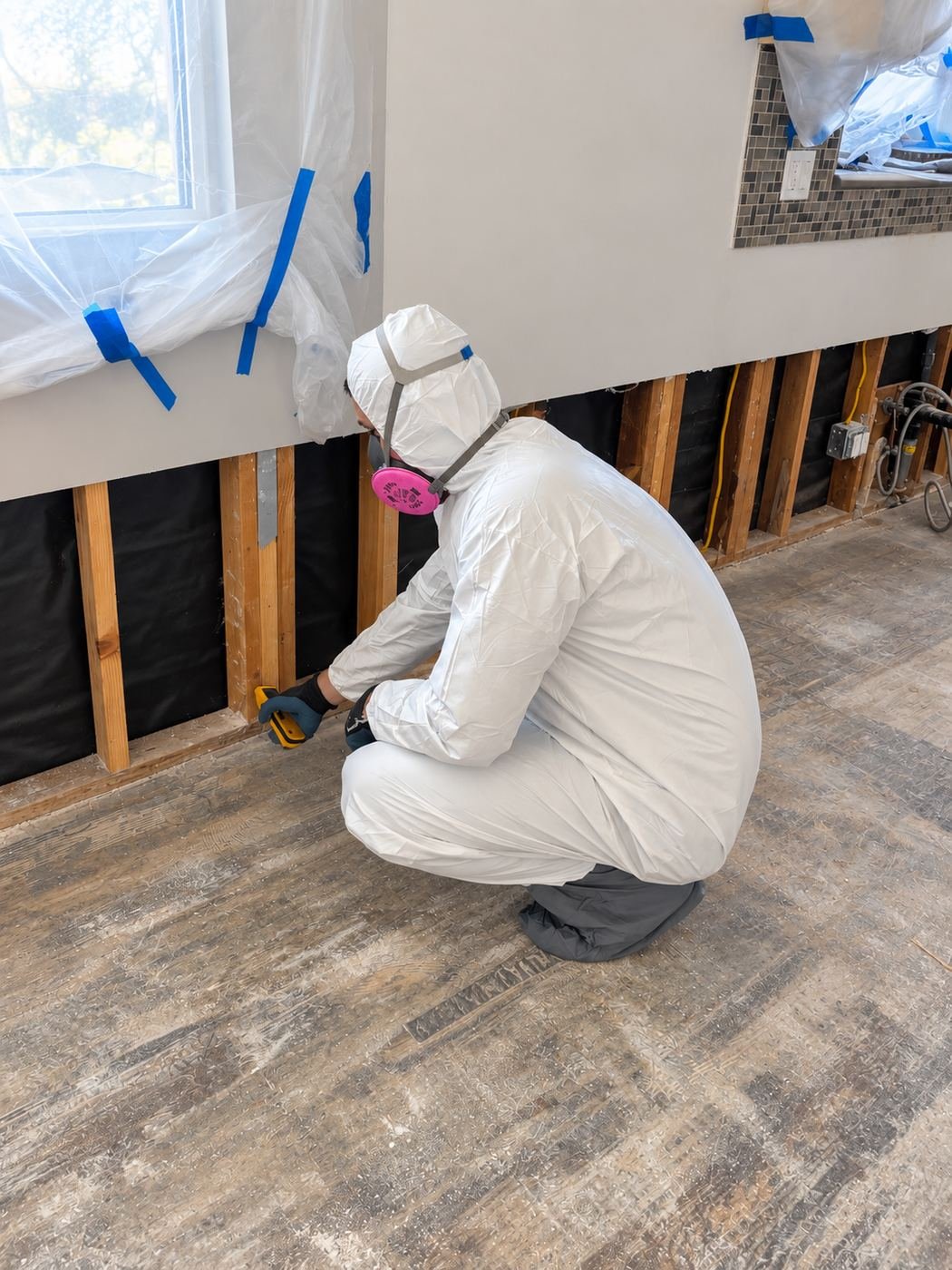
Where the inspection showed mold-contaminated drywall and wet or stained framing, we took the wall down to the studs so the black vapor-barrier membrane and the framing itself were fully visible. Half-measures do not work with mold — if the backside of a drywall sheet is colonized, the sheet comes out. The exposed studs then got full access for drying, inspection, and antimicrobial treatment.
3. Professional antimicrobial treatment
We applied a professional-grade antimicrobial treatment to the exposed framing, sheathing, and remaining substrate before any new drywall went up. The point is not just to kill what is visible — it is to make the surface inhospitable to regrowth once the wall is closed up and the moisture profile returns to normal. We give the treatment the full dwell time listed on its data sheet before closing the wall.
4. New drywall, taped and finished
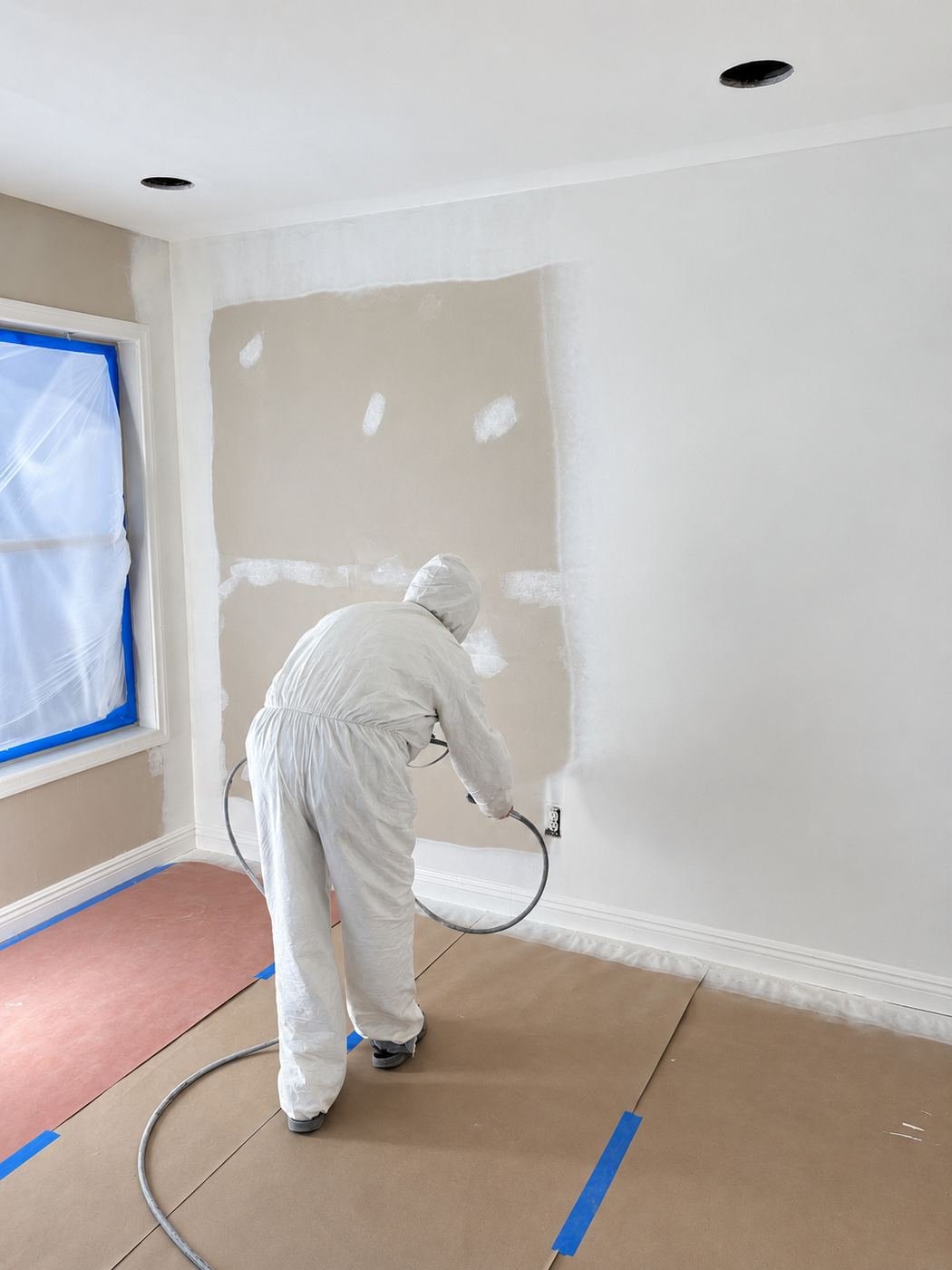
Fresh drywall sheets went in where the old wall came out, screwed into the studs on standard spacing, taped and finished to a smooth level ready for primer. All of the opened sections were brought back flush with the surrounding original wall so the finished surface reads as one continuous plane — not a patch quilt.
5. Full-apartment prep before paint
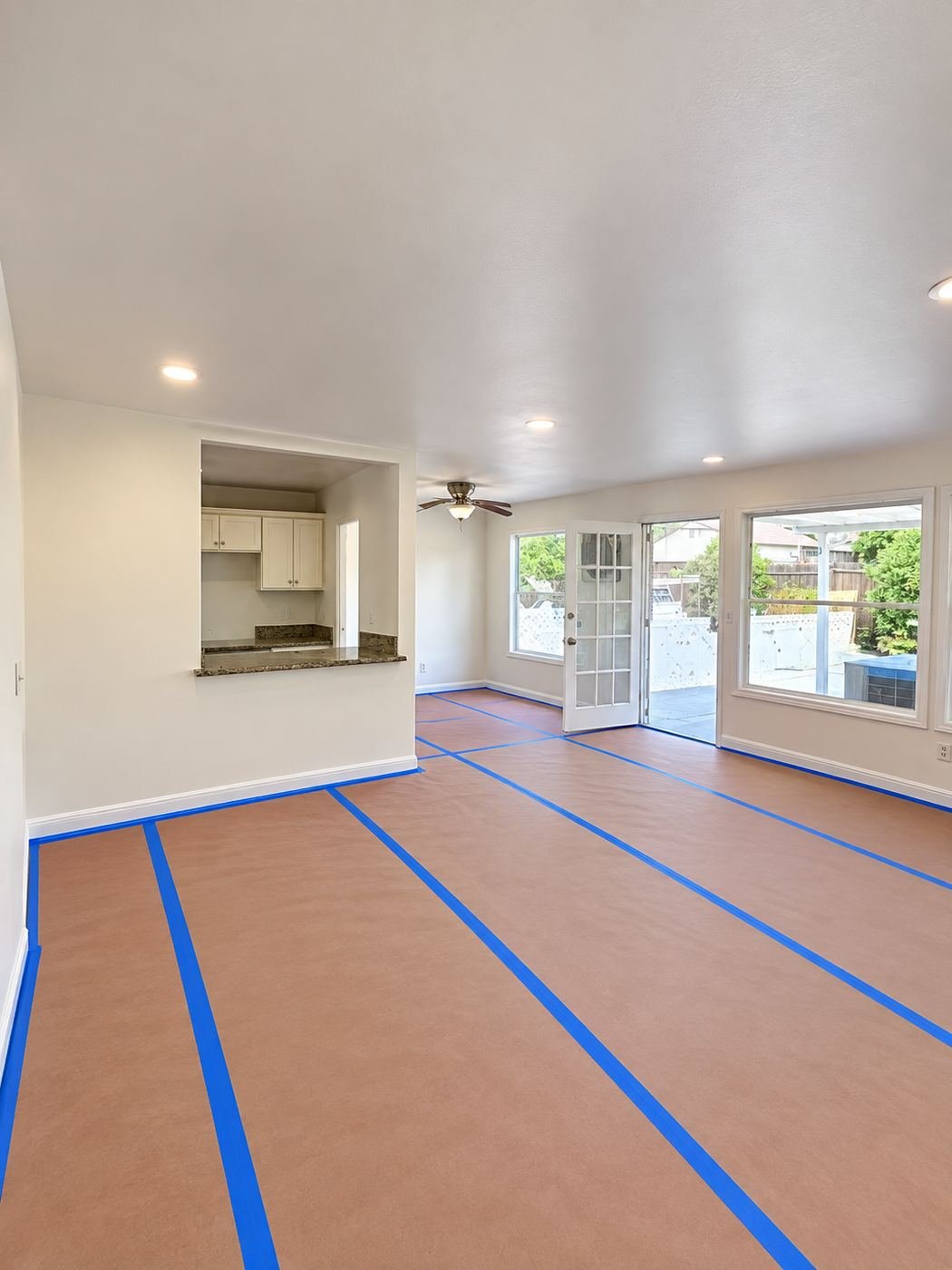
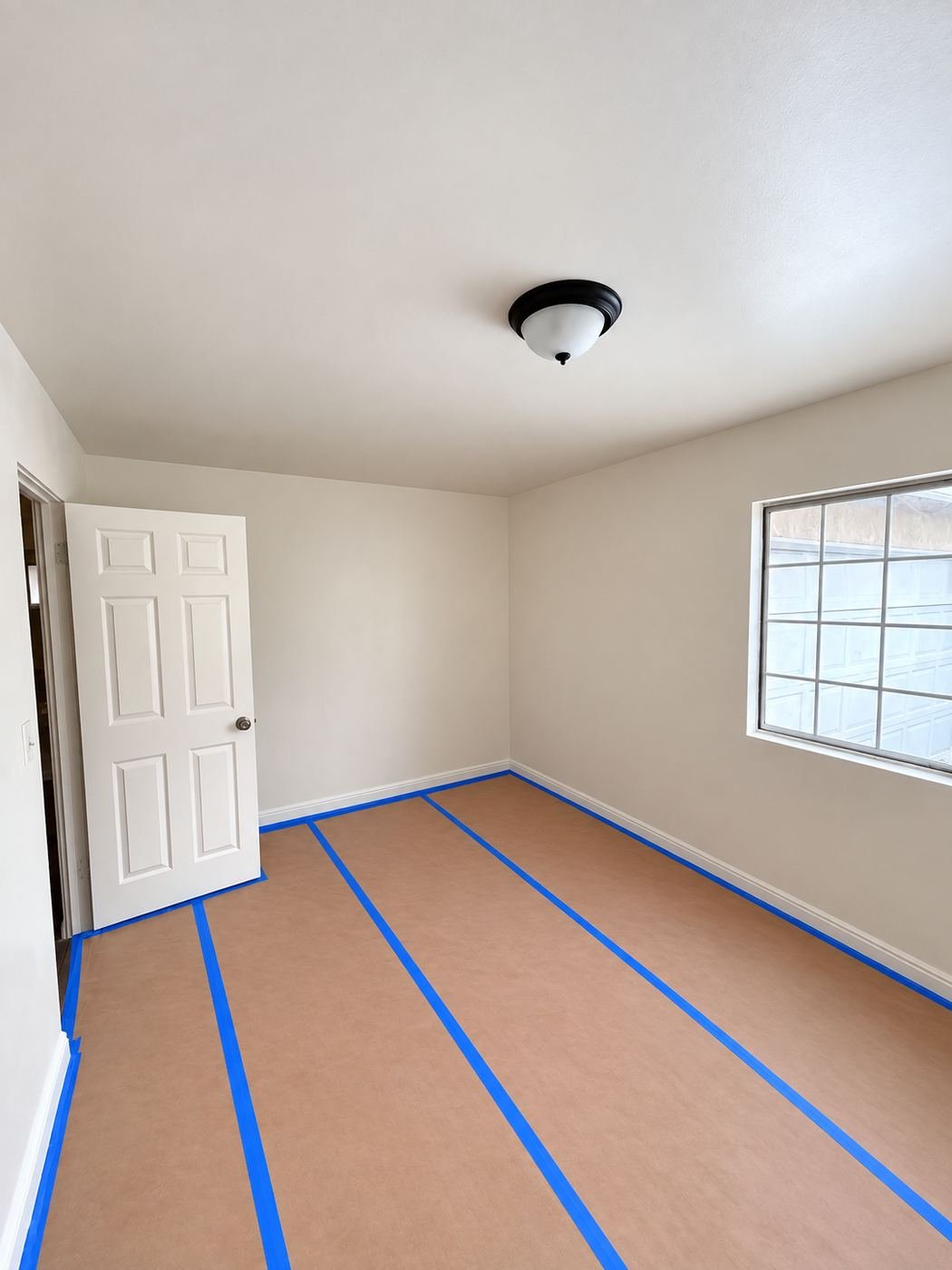
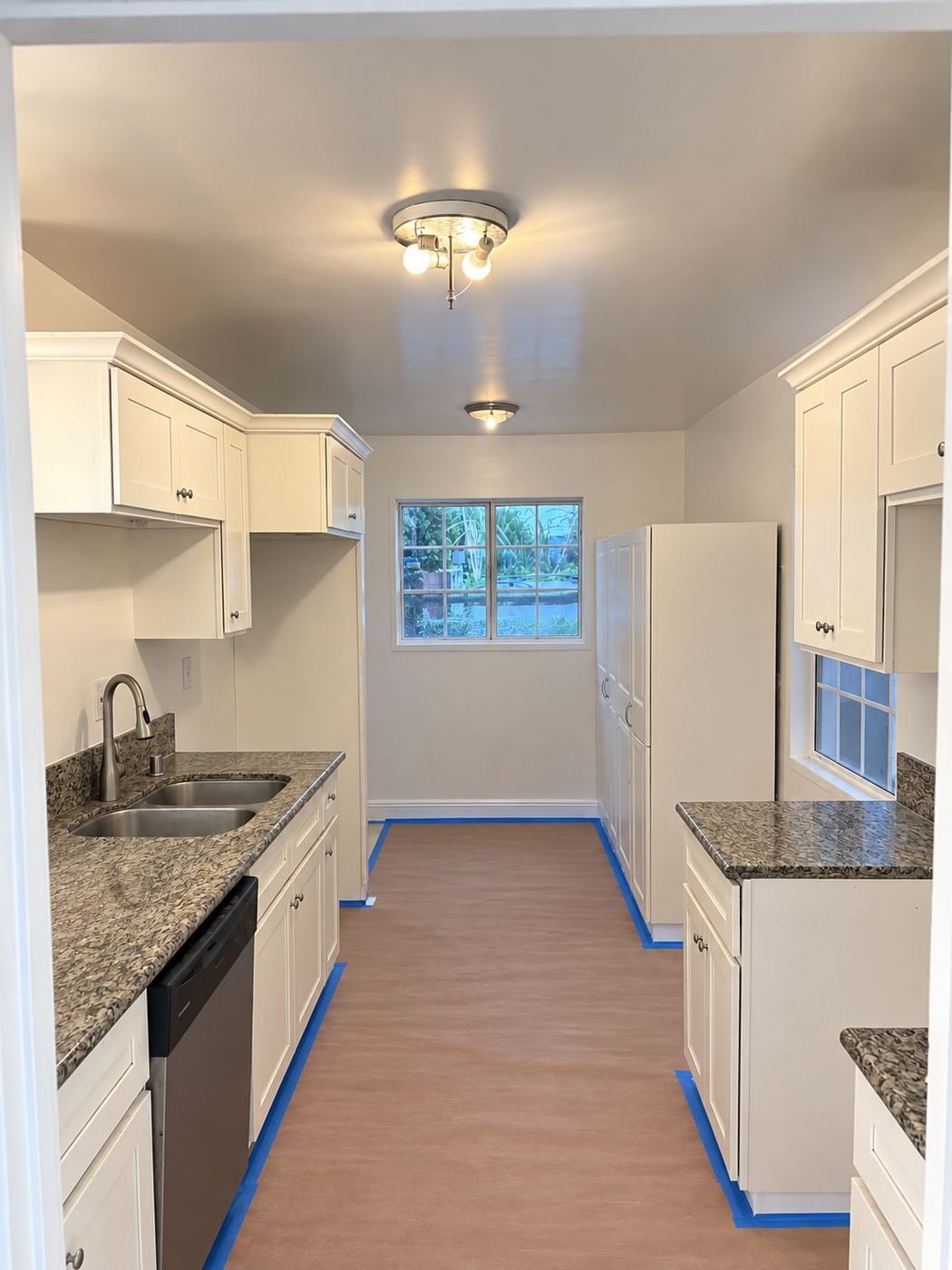
Painting over a mold-remediated interior is not just rolling color onto new drywall. Every surface gets prepared from scratch. The client’s laminate floor stayed in place — it was not affected by the flood, and we were not replacing it — so we masked it fully, edge-to-edge, with red rosin paper taped against every baseboard. Windows and remaining fixtures got poly-and-blue-tape. The entire apartment, not just the restored rooms, was prepped as one job so the finish color reads evenly across spaces.
6. Prime and spray
New drywall patches got stain-blocking primer first so they would not flash through the top-coat. Then the entire apartment — walls, ceilings, trim — got sprayed with an airless unit for an even factory-style finish, back-rolled where needed. Painters stayed in full Tyvek because spraying atomizes paint and you want it on the wall, not in your lungs.
The finished apartment
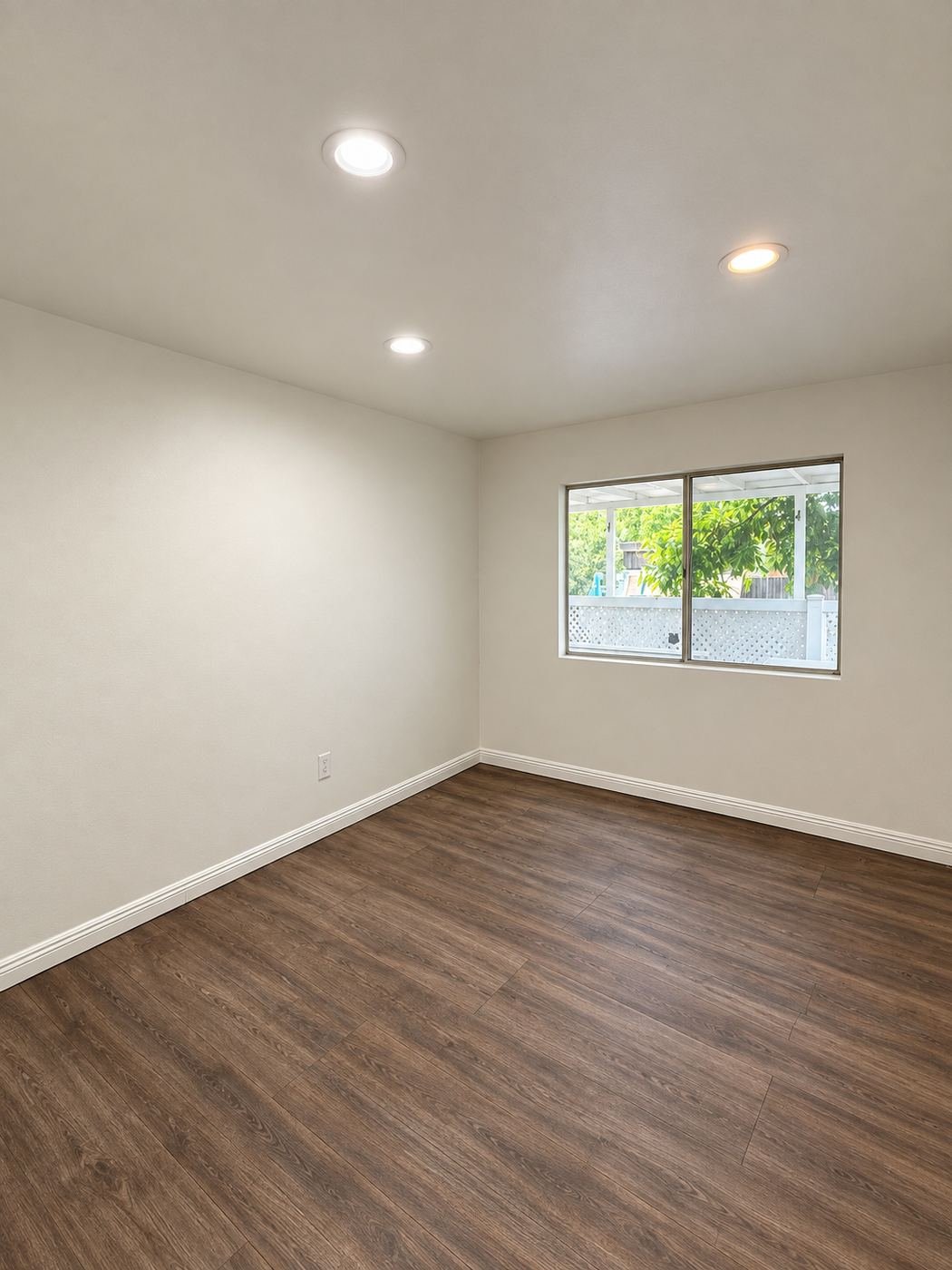
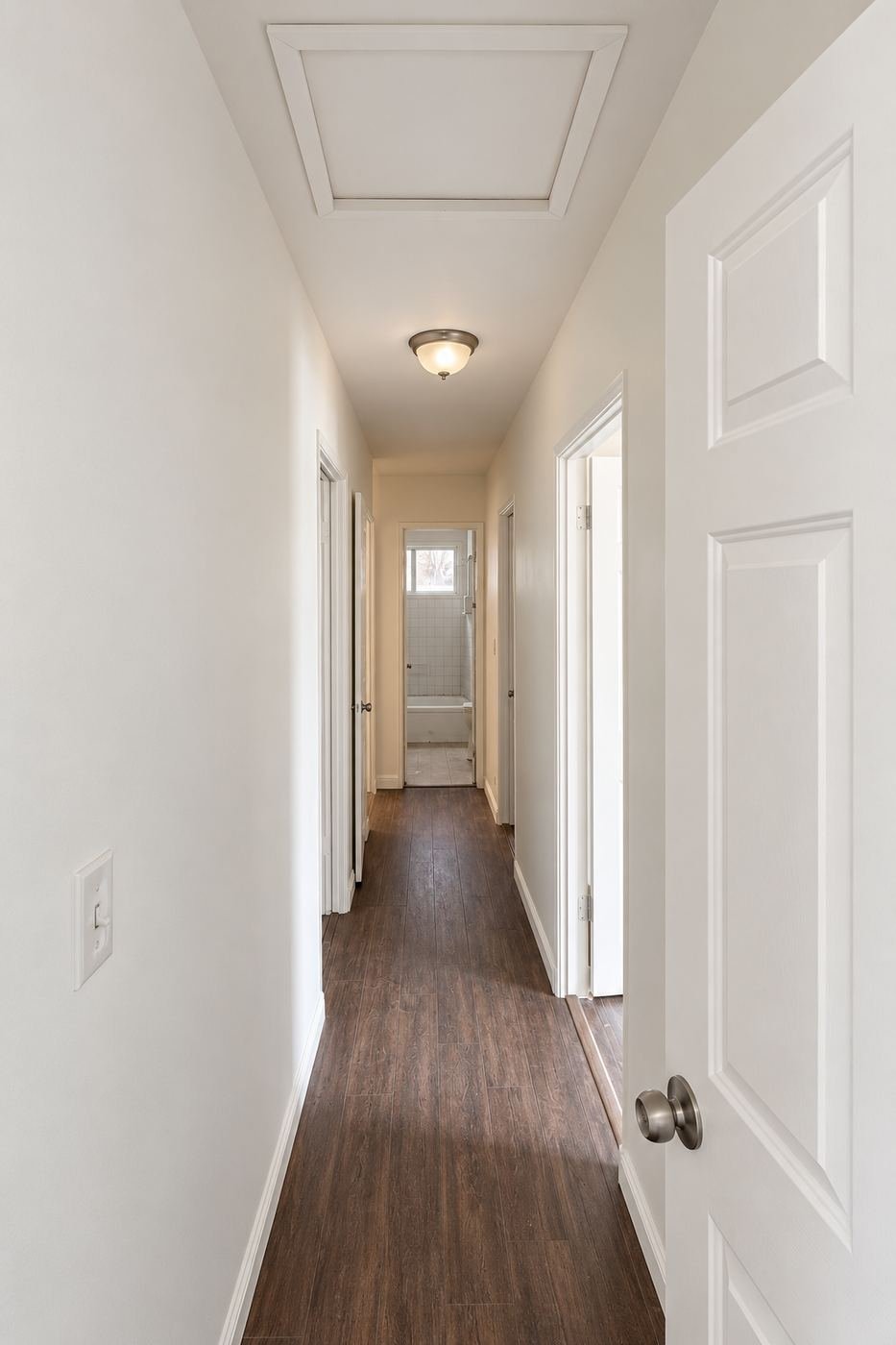
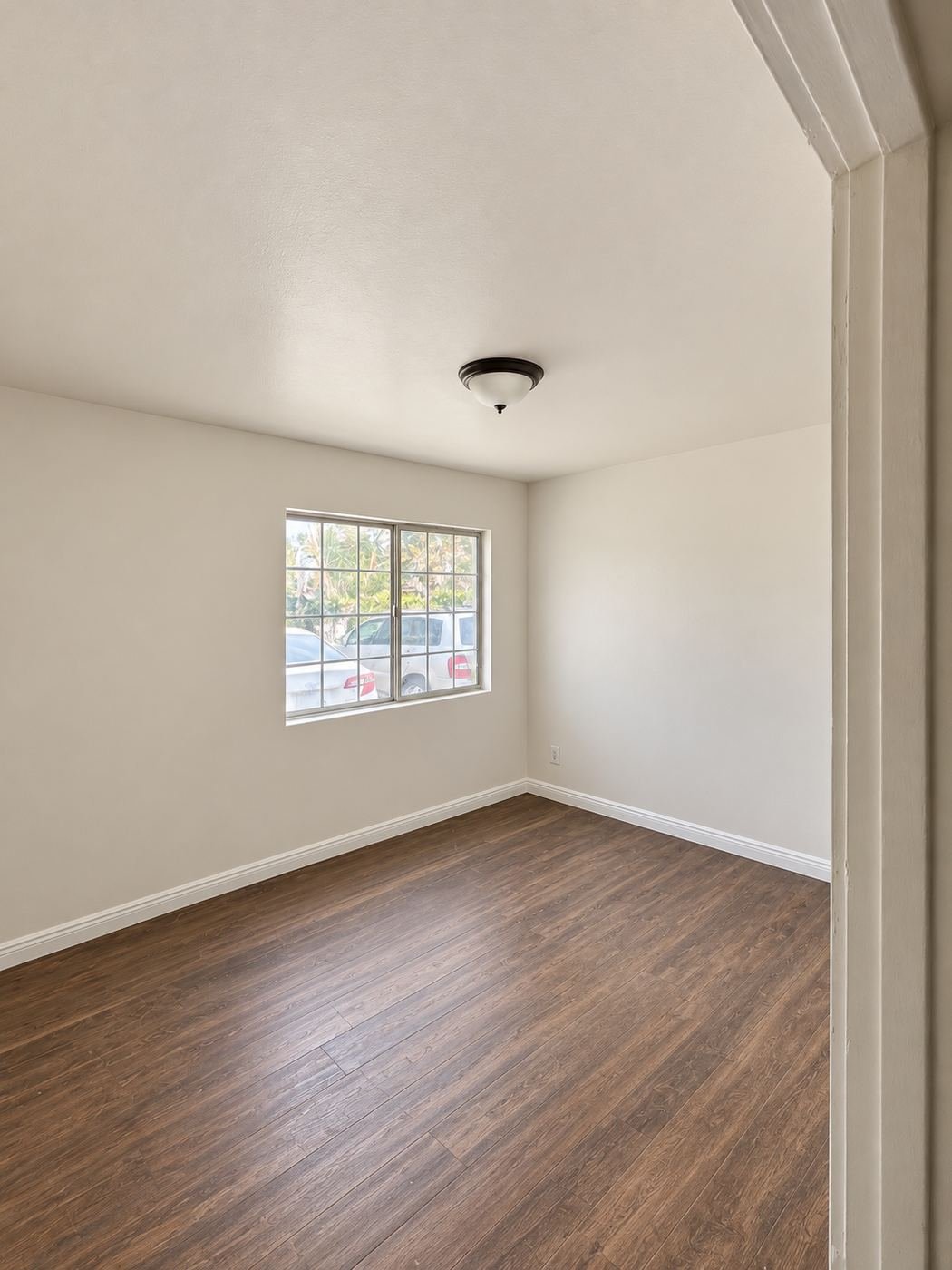
Fresh warm-white walls and ceilings throughout. Original kitchen cabinets left in place and cleaned around rather than replaced — the client wanted the units preserved, and they were still in good shape. The client’s dark laminate floor was never touched, protected under rosin paper for the entire project, cleaned, and revealed intact when the paper came up on the last day.
Why the PPE and the prep matter
Interior repaints after water damage are the easiest place in home improvement to cut corners — you cannot see what is behind the wall, so a quick painter can roll color over moldy drywall and the apartment will look fine for a few months. We do not do that work. If a wall is affected, it comes out. If a floor is not ours to replace, it stays fully covered until the last day. The Tyvek, the respirators, the rosin paper and the blue tape are the only things that make the finished result honest.
Had a leak or flood and need the drywall opened up, inspected for mold, treated and repainted properly? Call ProHands at (818) 401-7766 or email info@prohandshandyman.com for a free on-site walkthrough. We serve Van Nuys and all of Greater Los Angeles.