
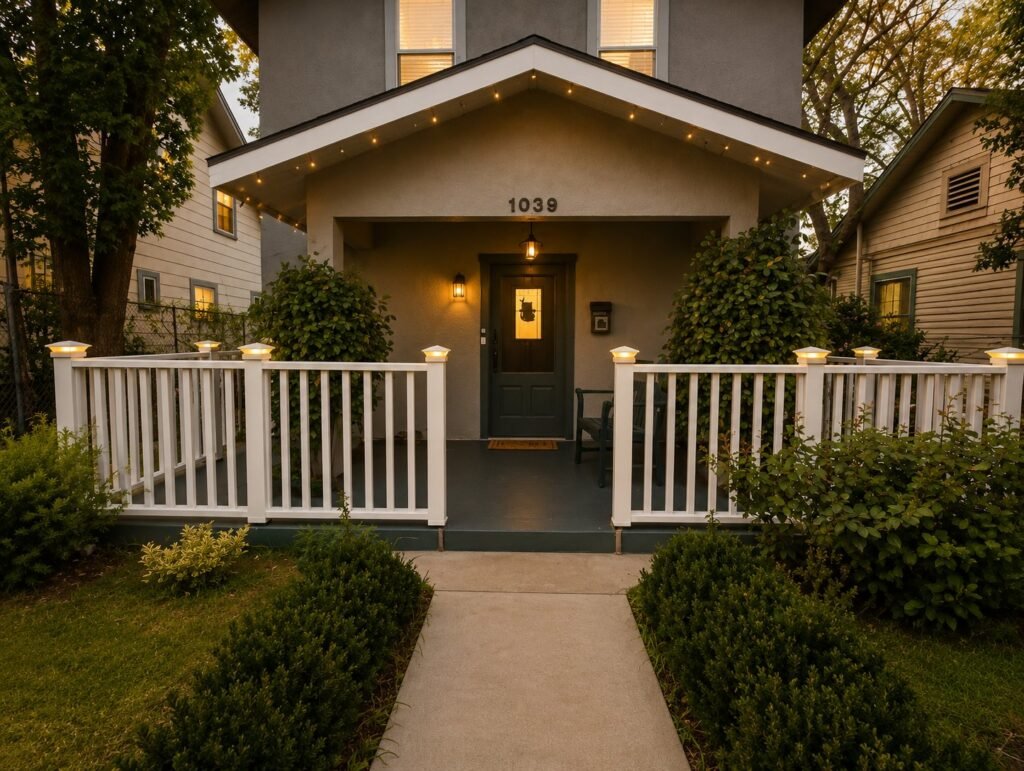
This front-porch project sits in a Los Angeles Craftsman-bungalow neighborhood where the homeowners had two requests we hear a lot: keep the character of the house, and make the porch look sharp without adding a maintenance chore. They didn’t want a railing that would be gray and chalky in three summers, or gates they’d have to re-hang after the first wet winter.
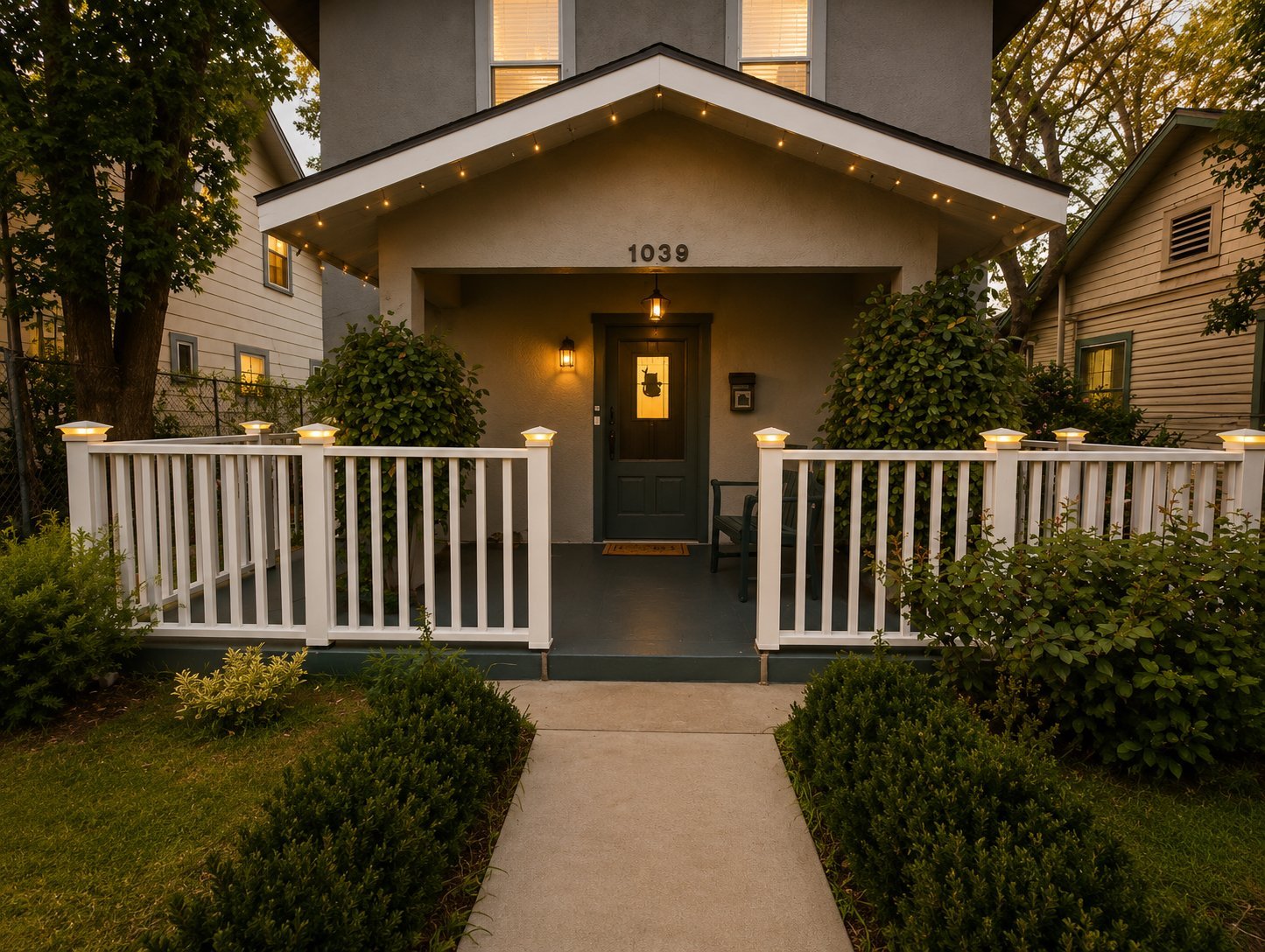
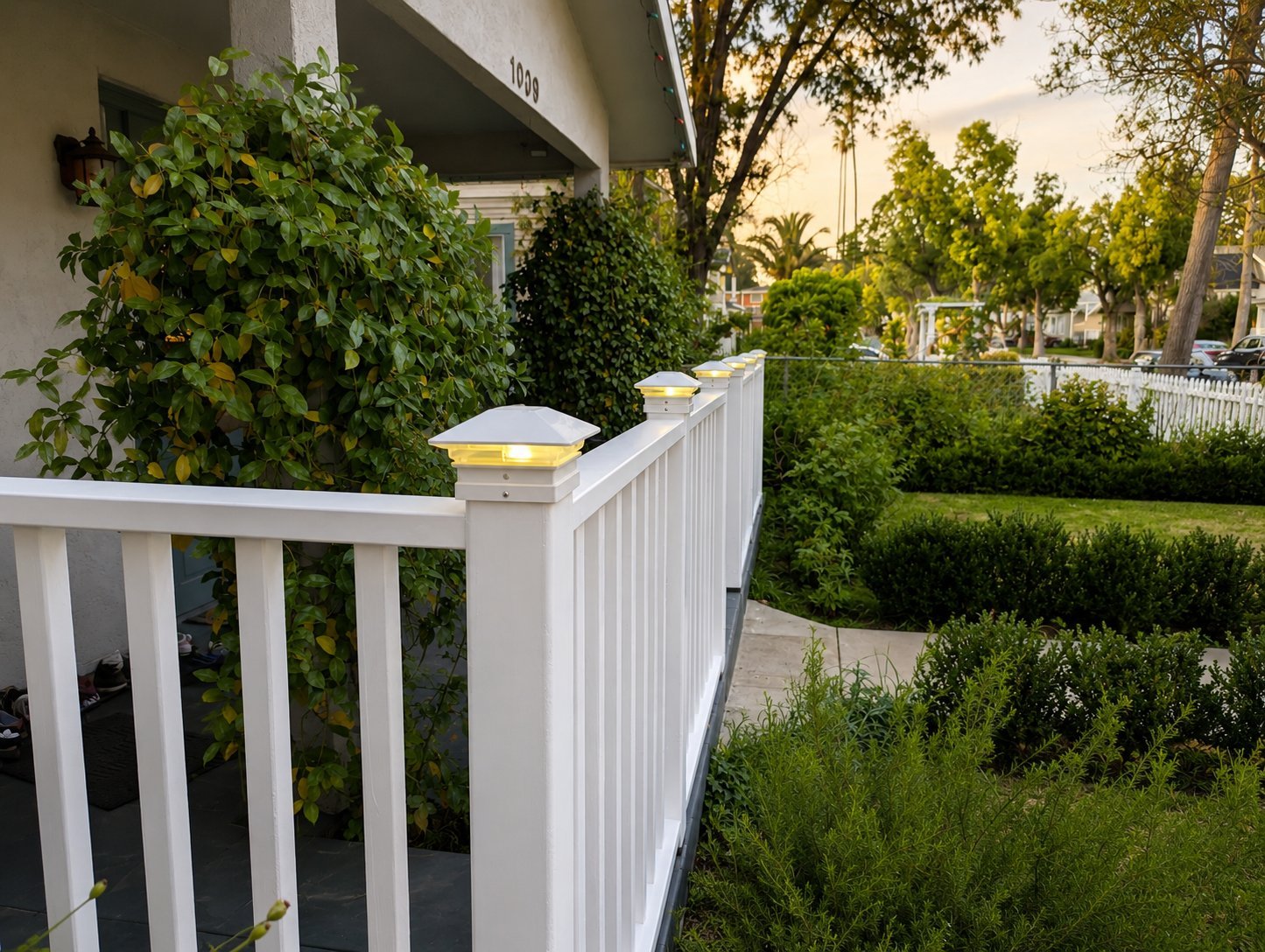
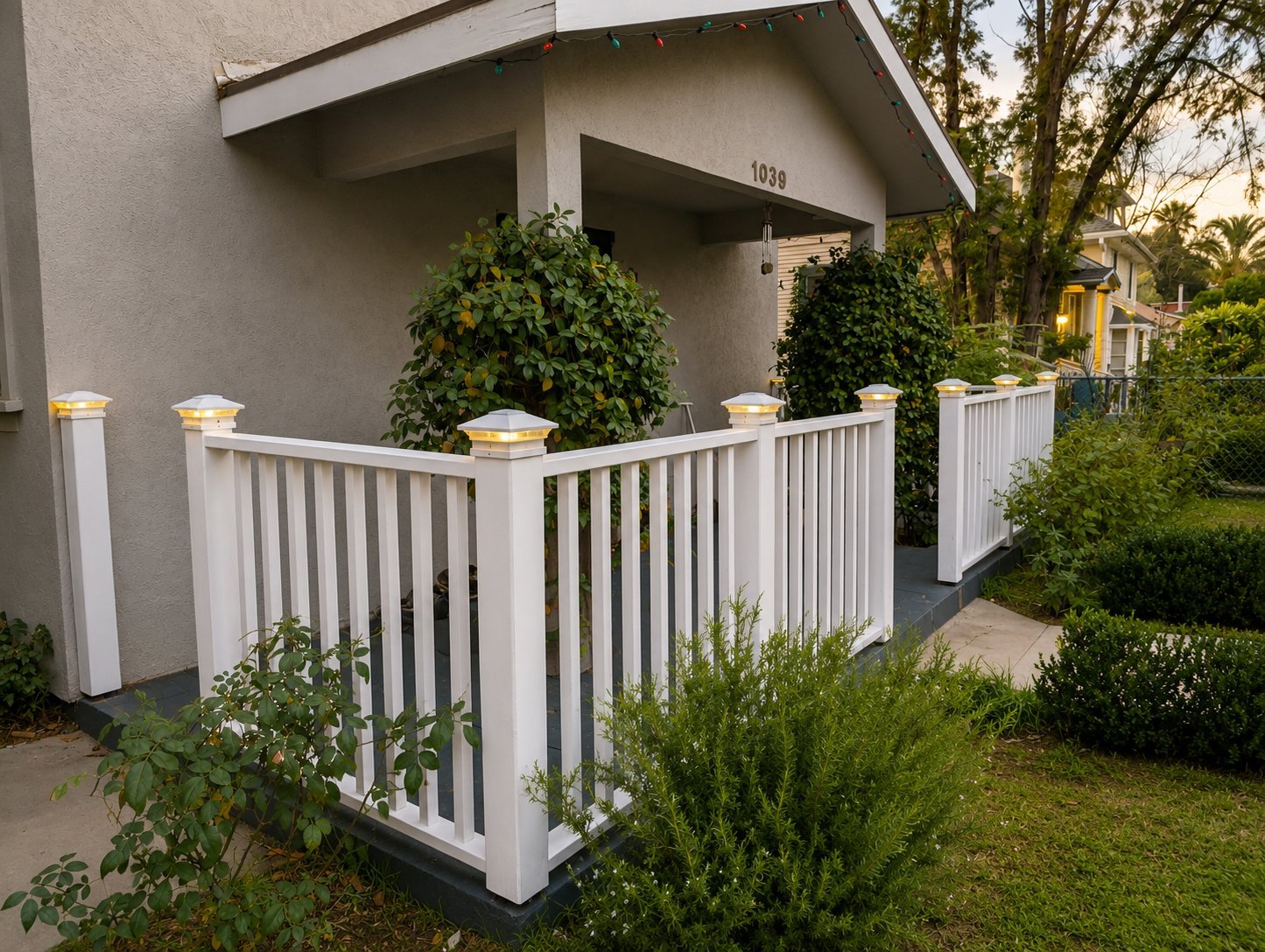
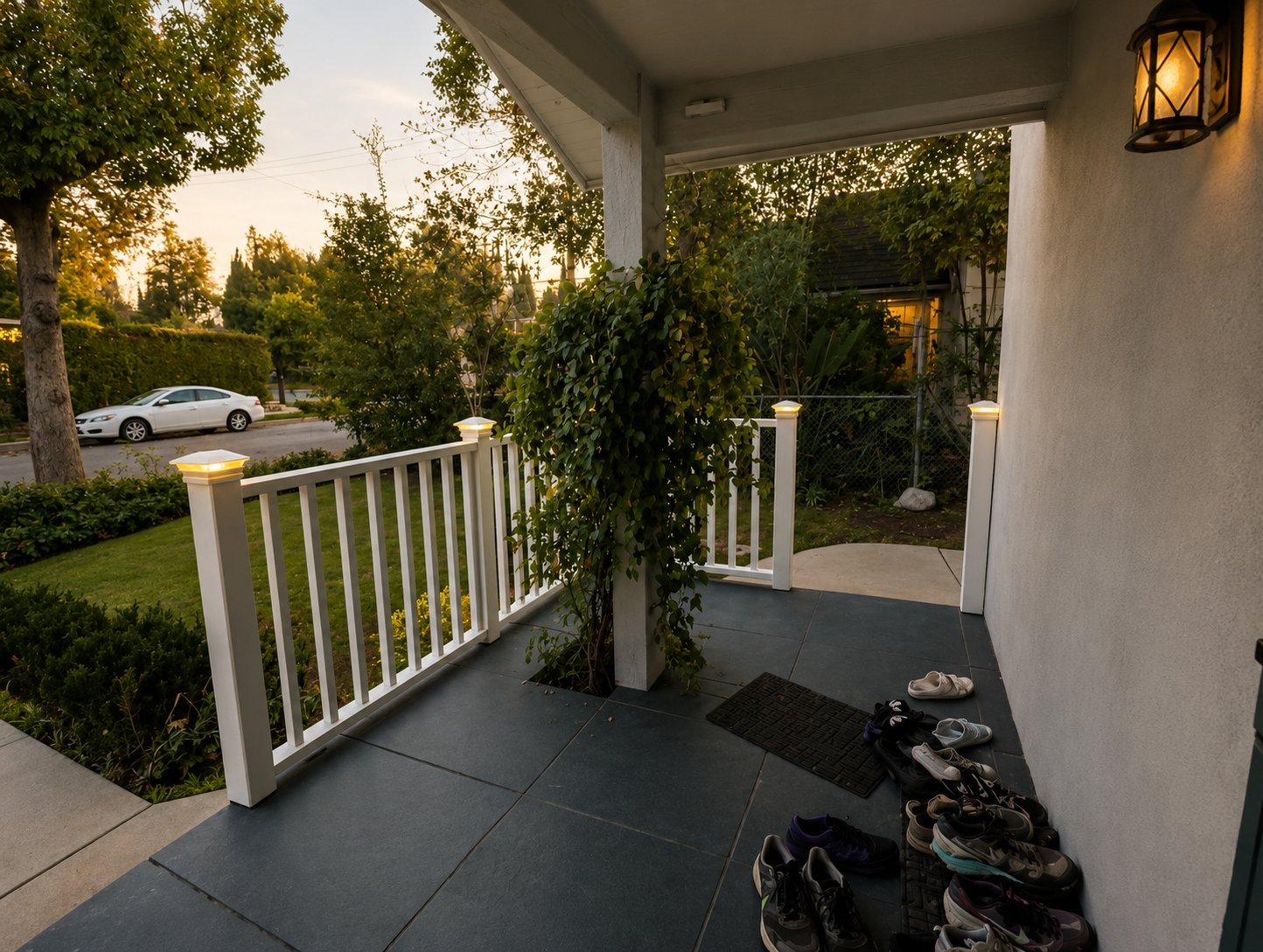
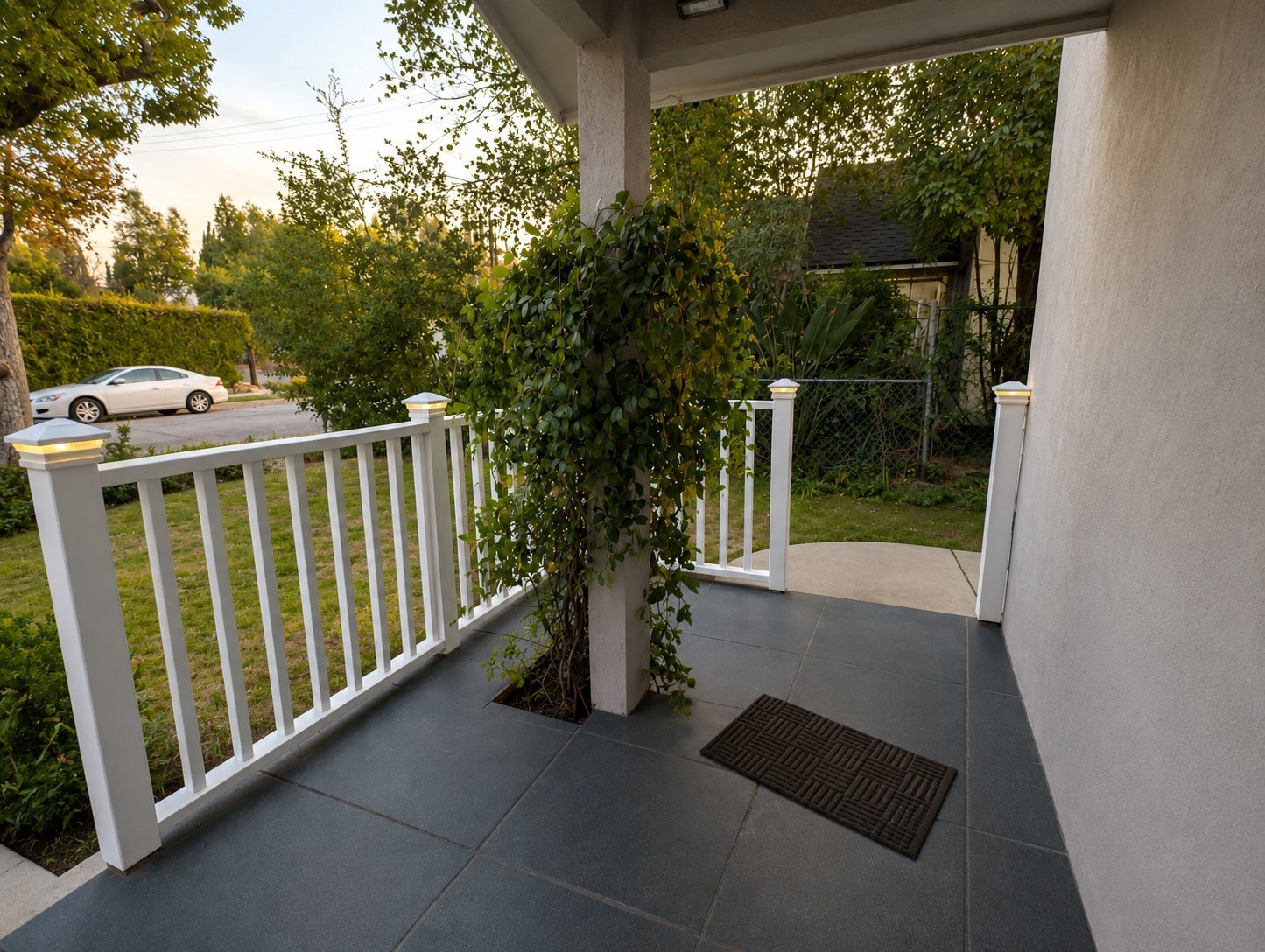
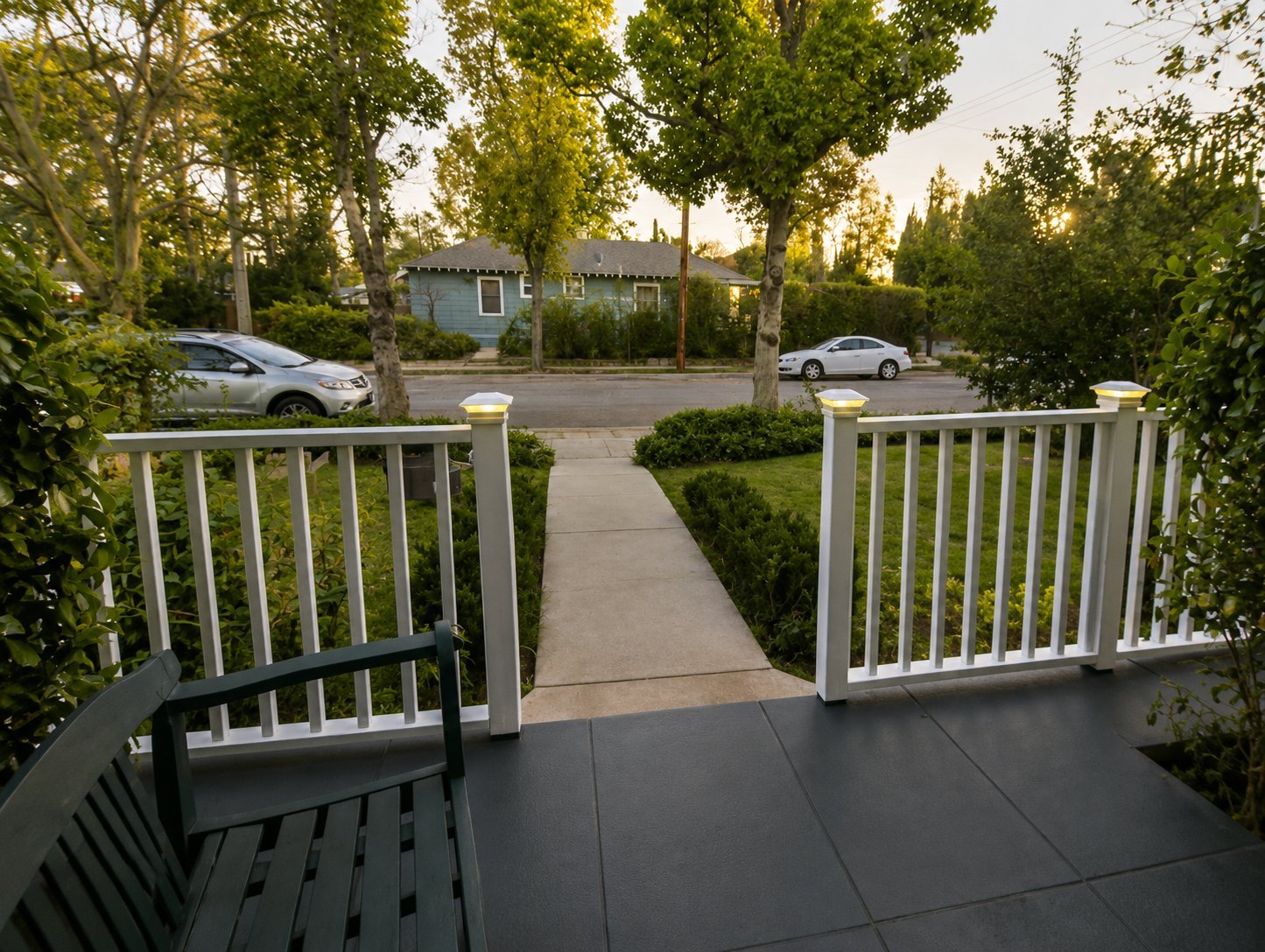
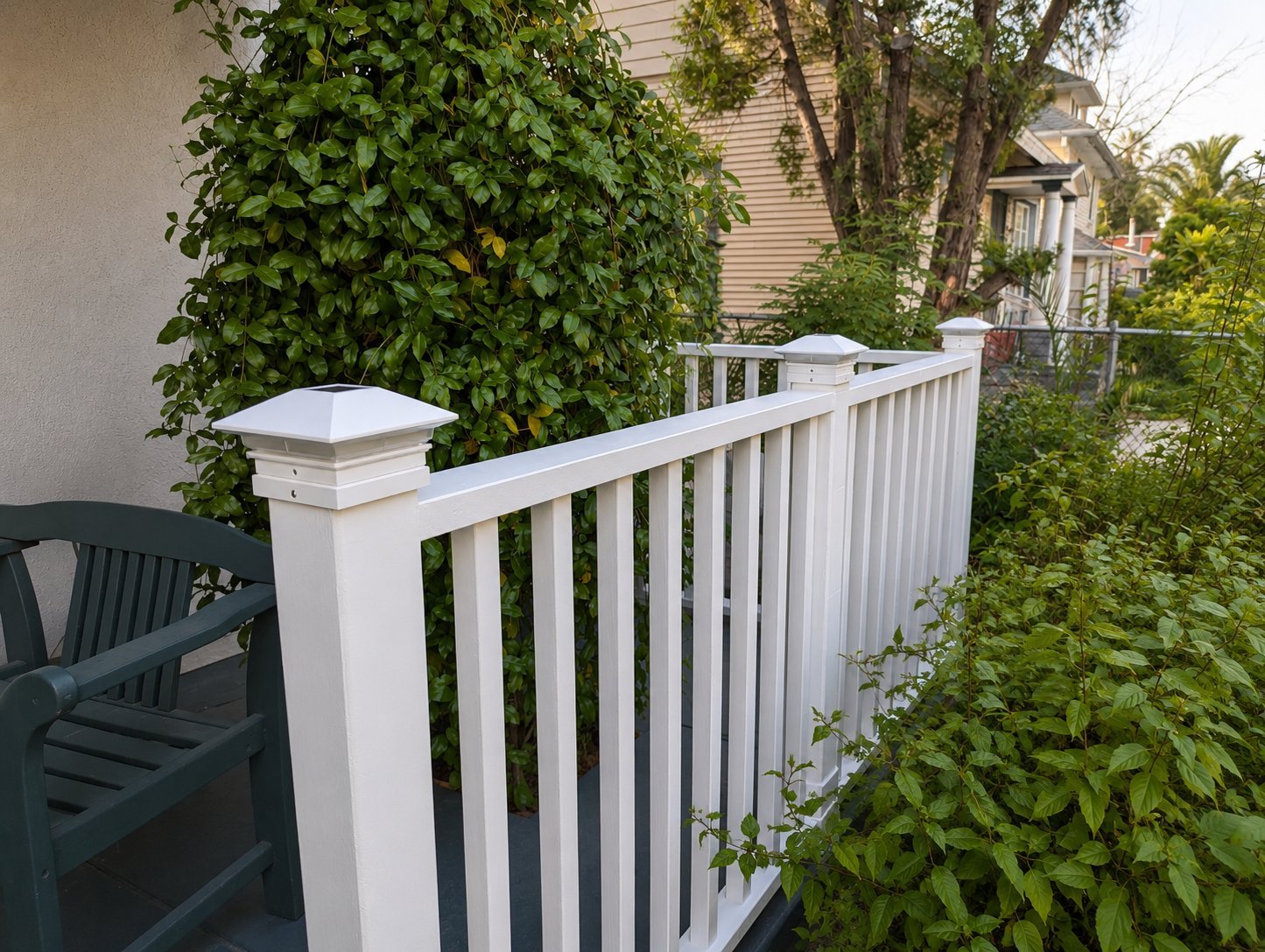
We built the entire front porch railing in white vinyl (PVC), added two matching pedestrian gates flanking the front steps, capped each post with a solar-lit pyramid cap, and refinished the porch deck in deep charcoal to make the white read cleanly against the paint. Total time on site: three days.
The homeowners’ brief
The house is a classic 1920s LA Craftsman with a shallow front porch, a stucco-and-wood mixed exterior, and low steps down to a walkway. Before we started, the porch had no railing at all — visually open but a real trip hazard, especially at night when the walkway lighting didn’t reach the steps.
Three constraints shaped the design:
- Historic character. A dark stained wood railing would have fought with the existing white trim; a black metal railing would have looked like a modern retrofit. Clean white read as period-appropriate.
- Sight lines from the porch to the street. The owners sit out front in the evening. Vertical balusters at conventional spacing let them see through without the railing feeling like a cage.
- Safety, plus lighting. With grandkids visiting and the steps being unlit, the railing needed to double as a light source — hence the solar caps rather than a decorative-only cap.
Why white vinyl (PVC) beats wood for an LA porch
In LA specifically, a painted wood porch railing has one predictable enemy: the UV cycle. Direct afternoon sun, big daily temperature swings, and the occasional wet January will crack a paint film in about two years, and then it’s a sanding-priming-repainting job — usually while the homeowner works around the mess. Vinyl (technically rigid cellular PVC) skips all of that. It’s colored through, not surface-coated, so scratches don’t show and there’s no film to peel.
Compared to aluminum, vinyl is warmer to the touch, quieter in wind, and easier to trim on site for gates and out-of-square porch openings. Compared to a cable railing — which we install often for modern homes (see our cable railing guide) — vinyl is the traditional choice, and traditional is what this Craftsman needed.
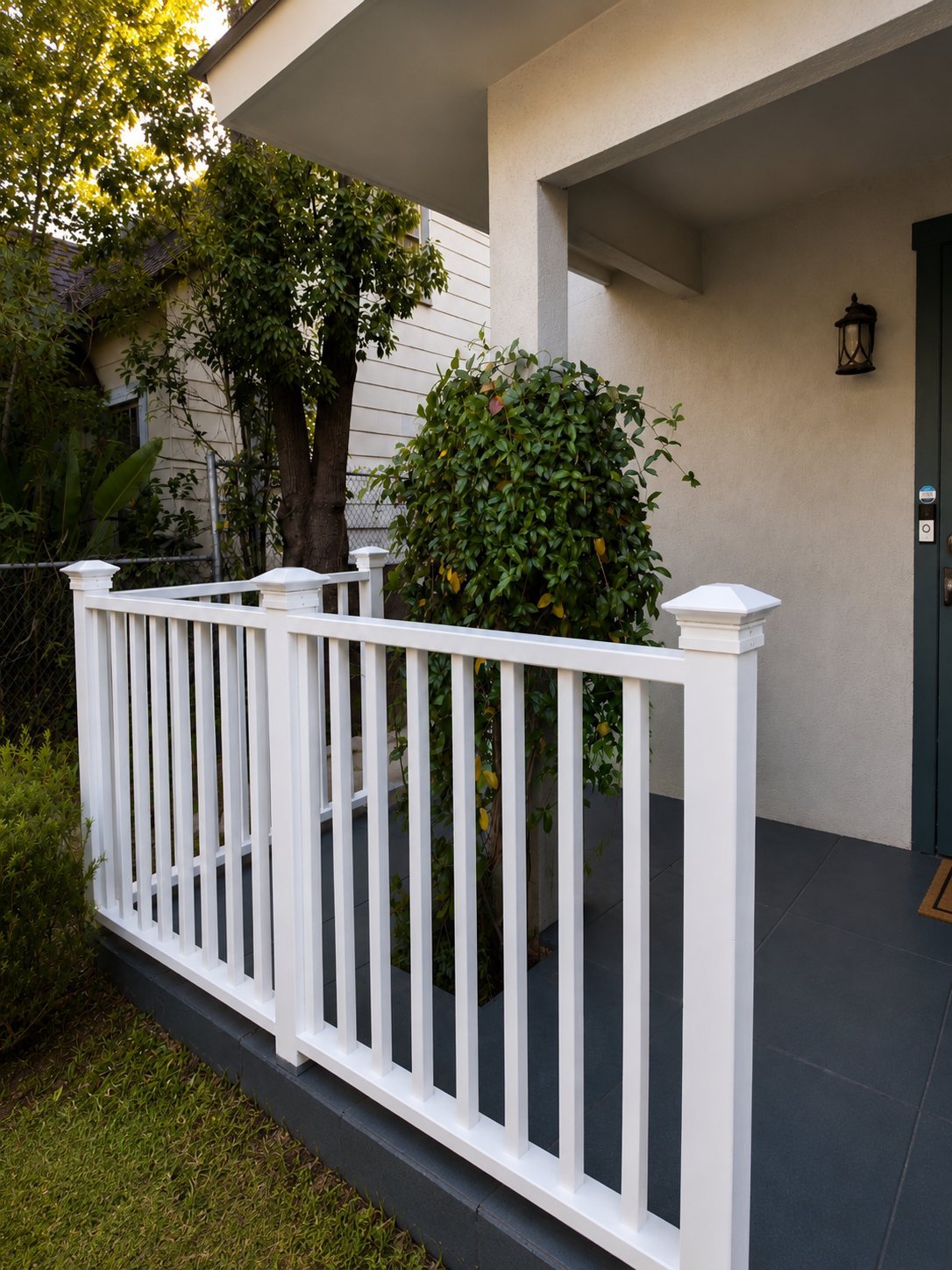
The specific system we used is a heavy-wall PVC railing with reinforced aluminum inside the top and bottom rails. That reinforcement matters: without it, a long span will flex under a hand-lean and feel cheap. With it, the railing feels solid enough that visitors don’t even register it’s vinyl until you tell them.
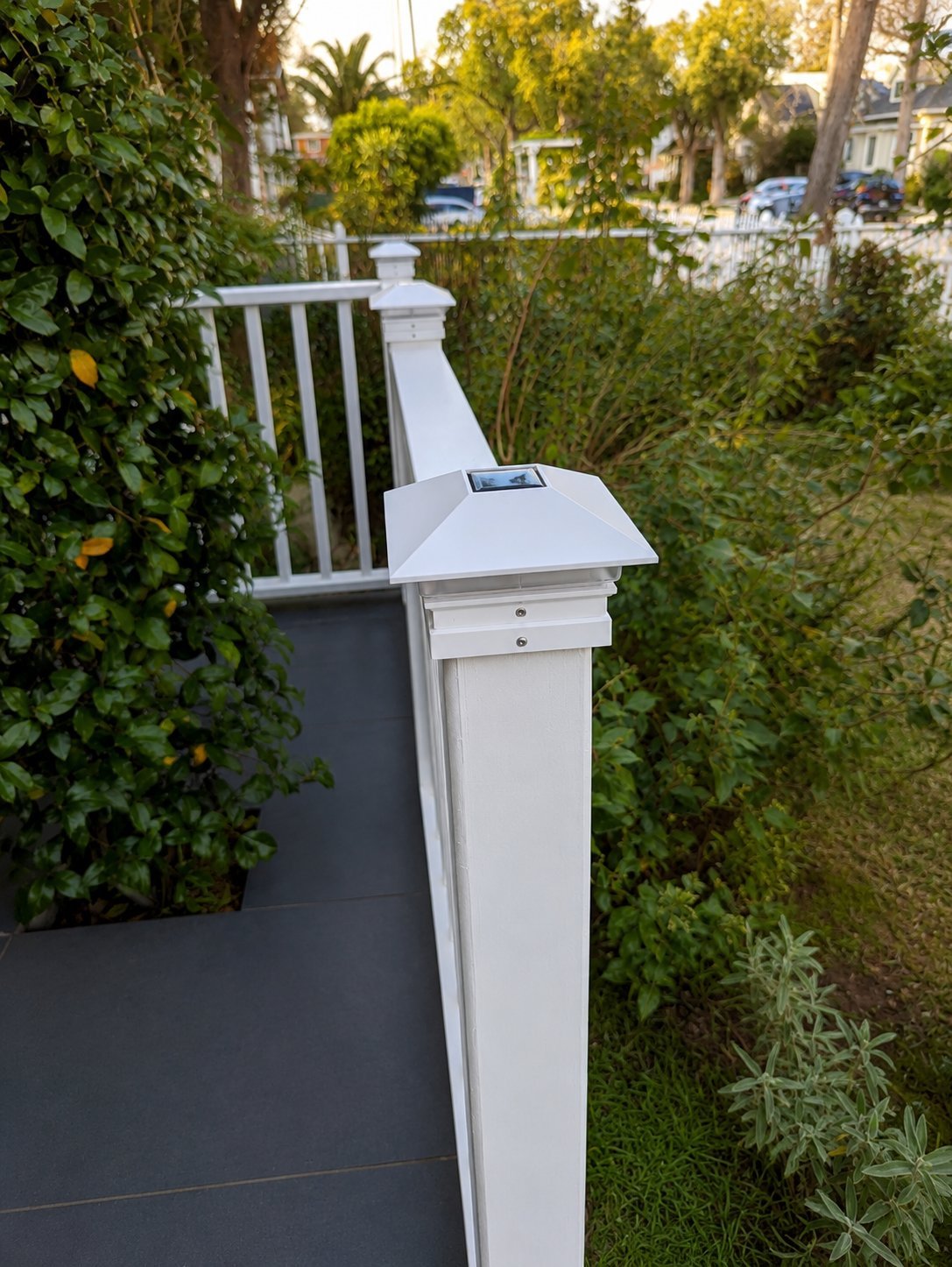
Solar pyramid post caps — how they actually work
Each post cap contains a small photovoltaic panel on the top face, a rechargeable NiMH cell inside, a photocell sensor, and a warm-white LED. The panel tops up all day; the sensor triggers the LED at dusk; the cell holds enough charge for a full night in summer and about six hours in December. No wiring, no permit, no timer to reset when the power flickers.
Two things we learned installing these on hundreds of feet of railing across LA: (1) the solar cell degrades faster if the cap sits under a heavily shaded tree — worth a canopy check before you commit; and (2) the plastic clear-lens caps yellow after a few years, so we default to acrylic-lens versions for anything customer-facing. On this project we used acrylic lenses and expect a decade of service before the LED module wants replacing.
The two matching gates
Both gates were built to the exact opening between porch posts, not ordered off-shelf. Off-shelf vinyl gates come in fixed widths (usually 36″ or 48″), and on a real porch the opening is almost never exactly that. We cut the rails and balusters on site, welded a rigid aluminum-plate insert into the gate frame for a no-sag pivot, and used self-closing hinges rated for exterior wear.
The latches are standard gravity latches with a keyed exterior override — enough to slow a curious toddler or a delivery dog, not a security fence. If you want a real security setup on a front porch, we typically pair a metal frame with a wood or composite infill (see the composite-and-steel pedestrian gate we did in Glendale).
Coordinated porch deck refresh
Fresh white railing on a faded deck looks worse than no railing at all — the contrast makes the deck read as neglected. We prepped the porch floor (light sand, patch, primer) and rolled two coats of a deep-charcoal exterior porch enamel. The choice of dark under white is deliberate: it grounds the composition, makes the balusters pop, and hides shoe scuffs and pot-plant stains that would show on a lighter deck.
Craftsman-bungalow proportions we honored
A few small choices to keep the railing feeling “of the house” rather than tacked on:
- Top rail at 36″. Standard porch-railing code height in California, and it lines up cleanly with the sill of the front-elevation windows.
- Baluster spacing at 4″ clear. Code max for anything a child could try to slip through; visually gives the density Craftsman detailing calls for without going into “picket fence” territory.
- Pyramid caps. Match the pyramid detailing already present on the original porch columns.
- Sub-rail below top rail. A second horizontal echoes the trim band on the existing fascia — it reads like the house’s own woodwork rather than a bolt-on.
Project timeline
- Day 1 — Measure & prep. Confirmed post positions, verified porch floor structure for post anchors, prepped and primed the porch deck.
- Day 2 — Rail install & deck top coat. Set posts with epoxy anchors, ran top and bottom rails, installed balusters, rolled the second charcoal coat.
- Day 3 — Gates, caps, cleanup. Hung both gates, tuned the self-close, installed the eight solar caps, walked the perimeter with the homeowners for punch.
Care and warranty
Yearly wash with a soft brush and a garden hose keeps it looking new. No sealer, no repaint. The vinyl carries a 20-year manufacturer’s warranty against fading and cracking. Our workmanship warranty on the install (fasteners, anchors, gate hardware) is 12 months — see our warranty terms for details.
FAQ
Do I need a permit for a front porch railing in Los Angeles? For a residential porch railing under 42″ on a porch less than 30″ above grade, LADBS generally does not require a separate permit. City rules vary by neighborhood — we check for each project before we start.
Will the vinyl yellow? Modern extruded PVC with UV inhibitors is engineered for two decades of daily sun without yellowing. The older “sun-yellowed” reputation comes from bargain vinyl fencing sold twenty years ago. We only install premium-grade material for railings.
What about hail or wind? The reinforced rail system is rated for the wind loads we ever see in the LA basin. Hail dents are essentially a non-issue for vinyl — unlike aluminum, which will dimple.
Can it be repaired if a car backs into it? Yes. Individual balusters and even a full rail section can be replaced without disturbing the rest of the run — one of the practical advantages of a modular vinyl system versus a welded metal railing.
What does a project like this cost? A porch railing of roughly this size (about 24 linear feet of railing plus two gates and eight solar caps) typically lands between $3,800 and $5,600 installed in the LA area, depending on porch layout, anchor conditions, and whether the deck needs refinishing. We provide free written estimates — request one here.
Project photos
Serving Los Angeles and neighboring cities
ProHands installs custom porch railings, fences, gates, and decks across Glendale, Burbank, Pasadena, La Cañada Flintridge, La Crescenta, Eagle Rock, Los Feliz, Atwater Village, and greater Los Angeles. Free same-day estimates for most projects.
Ready for your own porch upgrade? Get a free estimate → · Or see more work in our Fences, Railings & Gates gallery.