
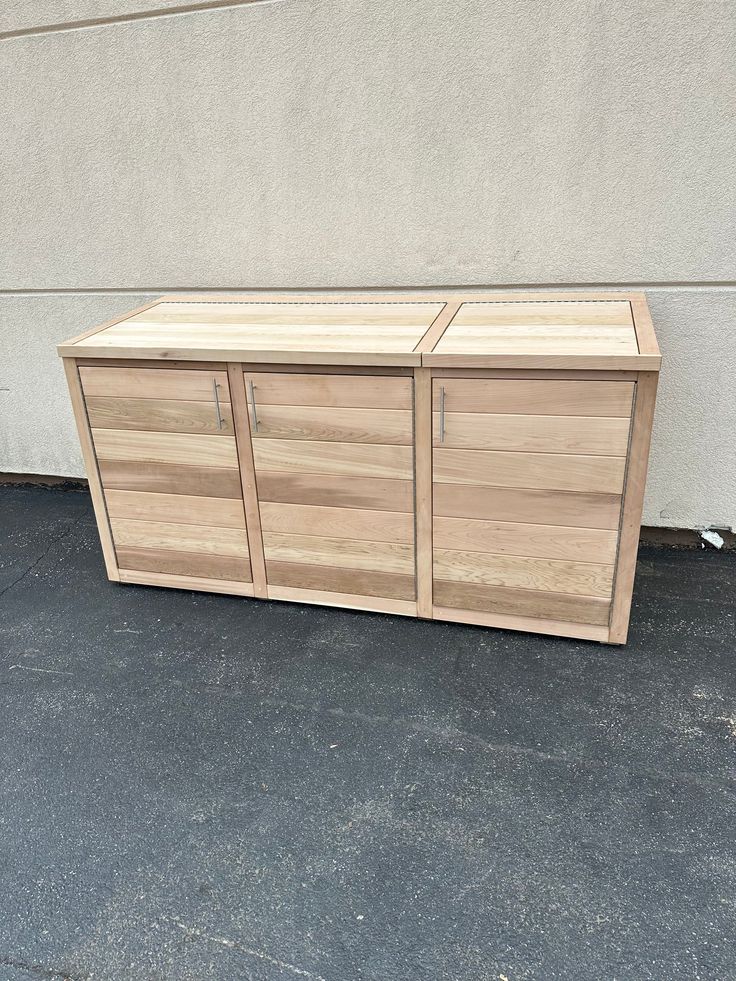
Why Hide Your Trash Cans?
-
Cleaner Curb Appeal. Even the neatest front yard loses charm when colorful plastic bins sit in full view. A wooden enclosure turns that “utility corner” into a tidy landscape feature.
-
Protection from Animals and Wind. Locking doors and lift‑up lids keep raccoons, coyotes, and strong Santa Ana gusts from spreading garbage around the property.
-
Longer Bin Life. Southern California sun destroys plastic over time. A shaded enclosure reduces UV exposure and extends the life of your cans.
-
Neighborhood Standards. Many HOAs require trash to be hidden from sight. A custom box solves that rule in one step.
Main Construction Styles
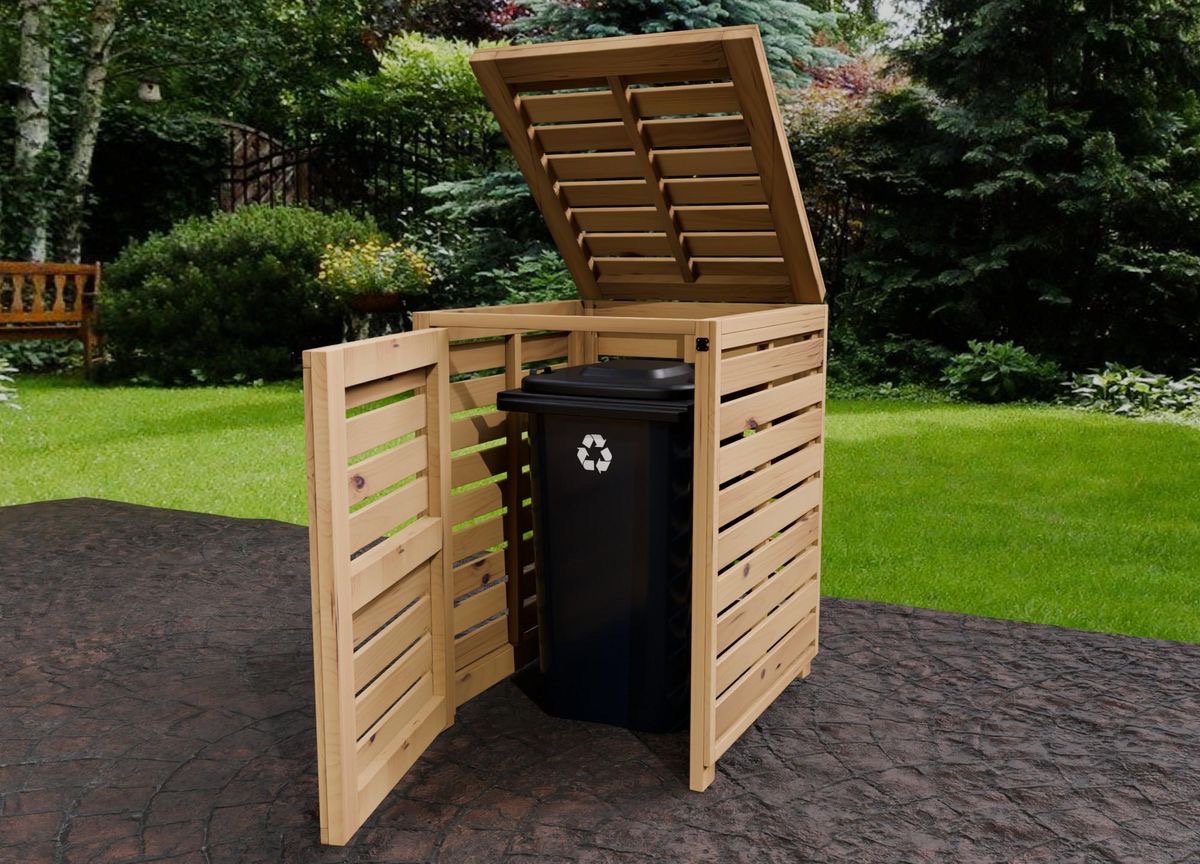
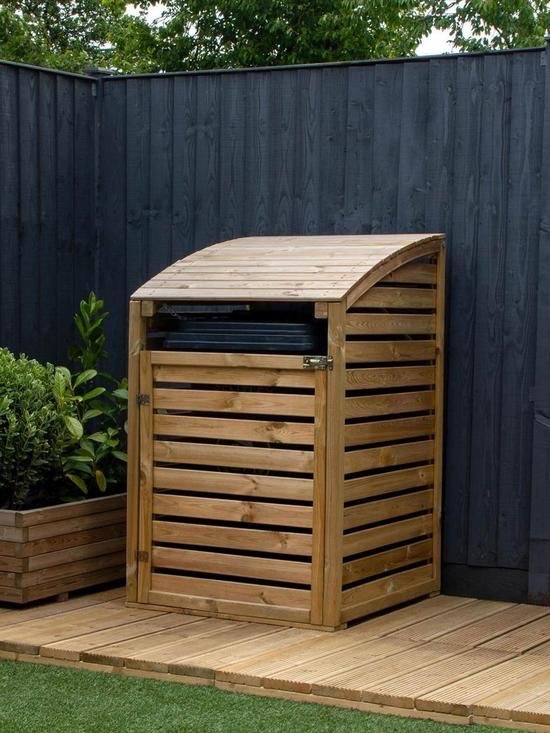
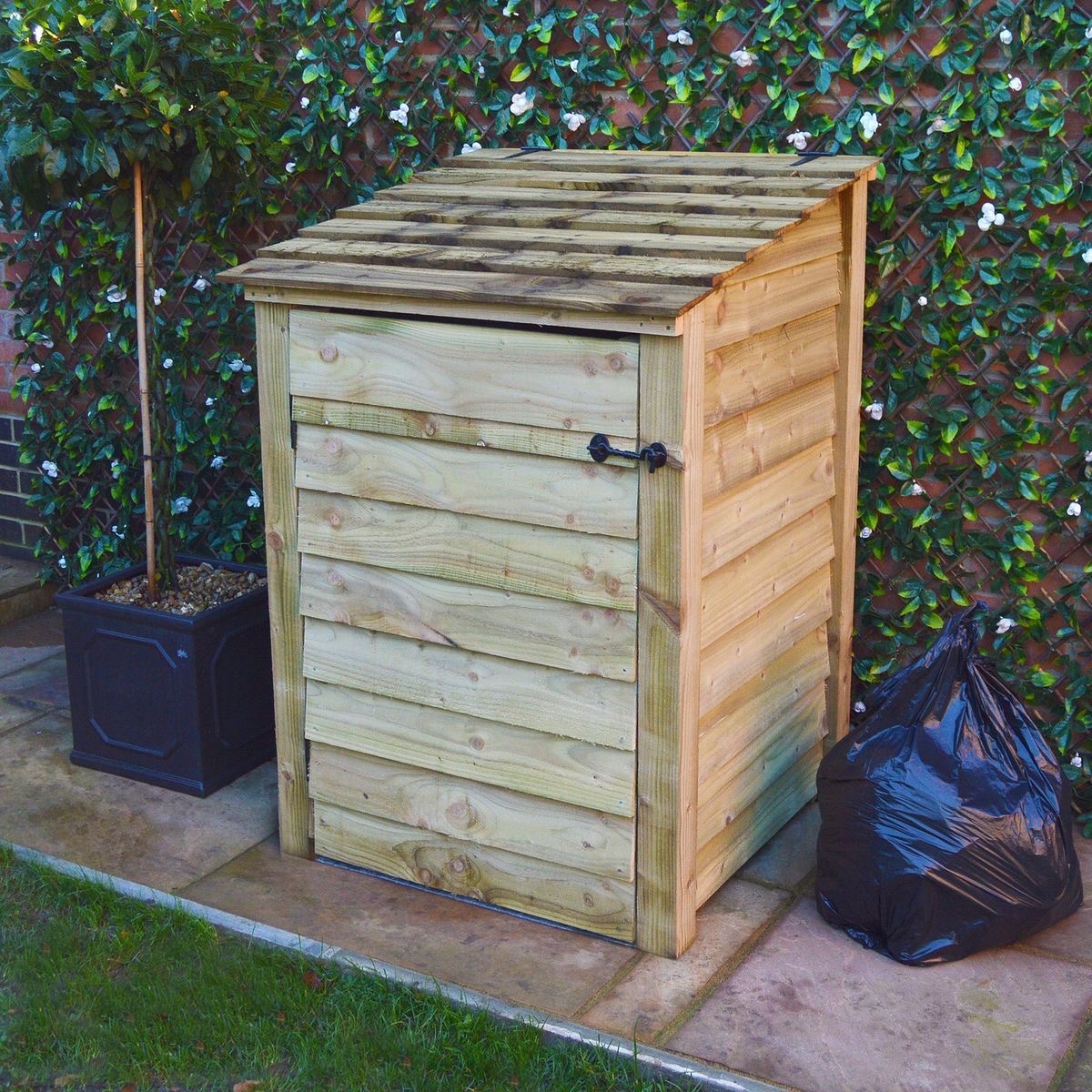
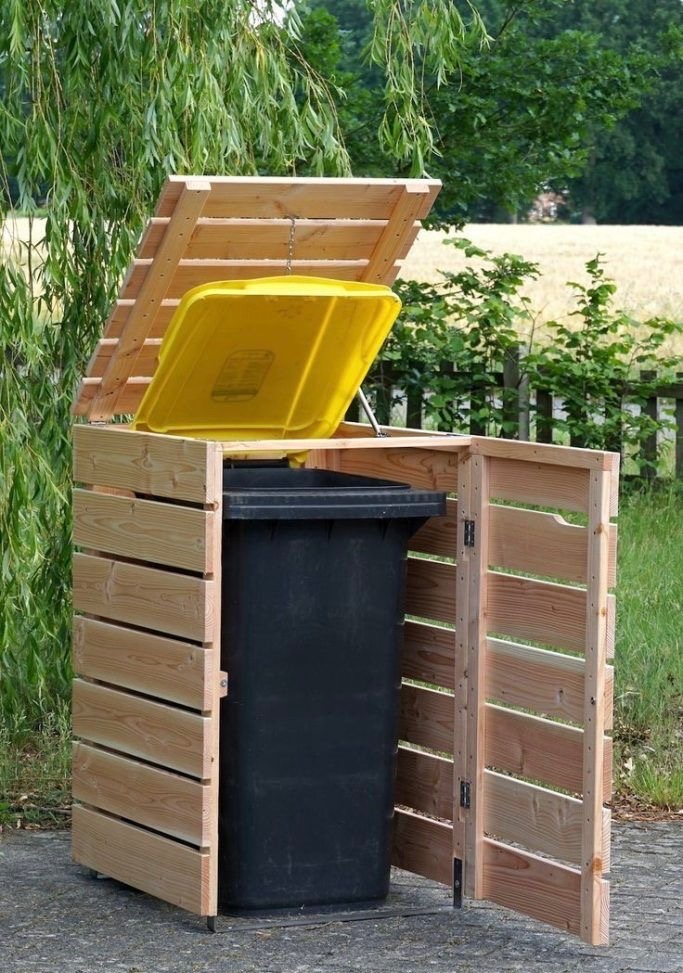
Single – fits one 64–96 gal can (about 24–30 ft³). Frame: 2 × 4 lumber or 1 × 1 in steel tubing. Cladding: cedar, pressure‑treated pine, or larch. Lid on heavy‑duty hinges with gas strut or chain assist.
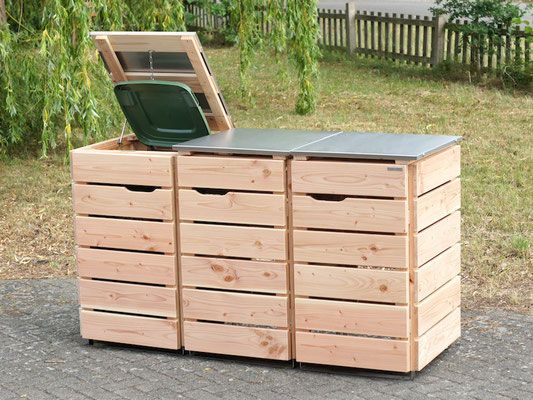
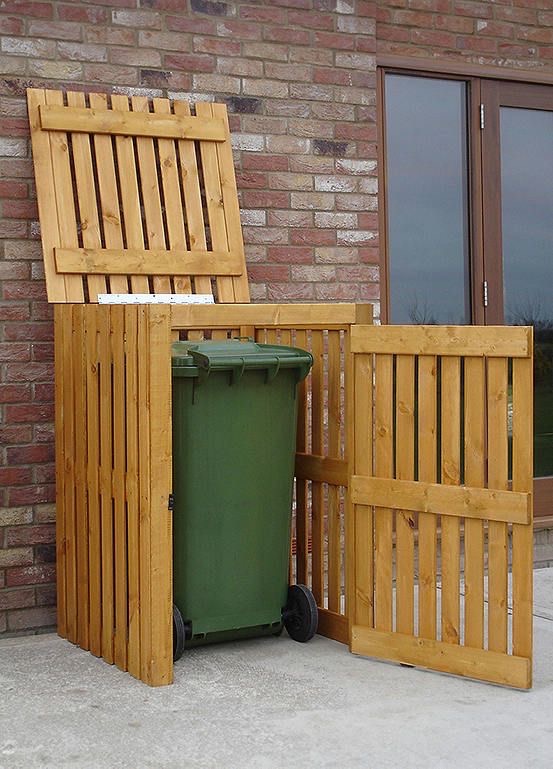
Double – holds two cans (≈ 48–60 ft³). Same material options; two independent lids, each with its own assist.
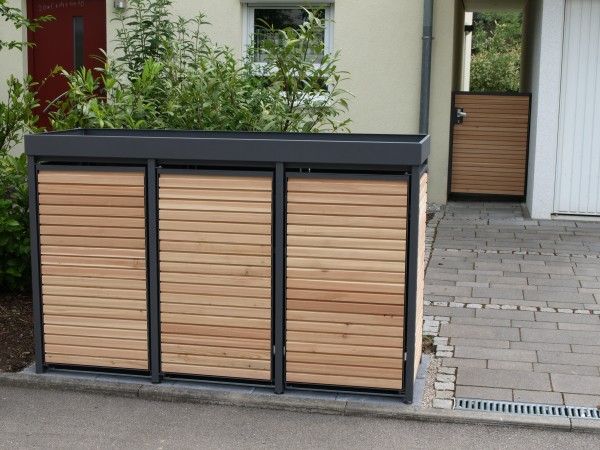
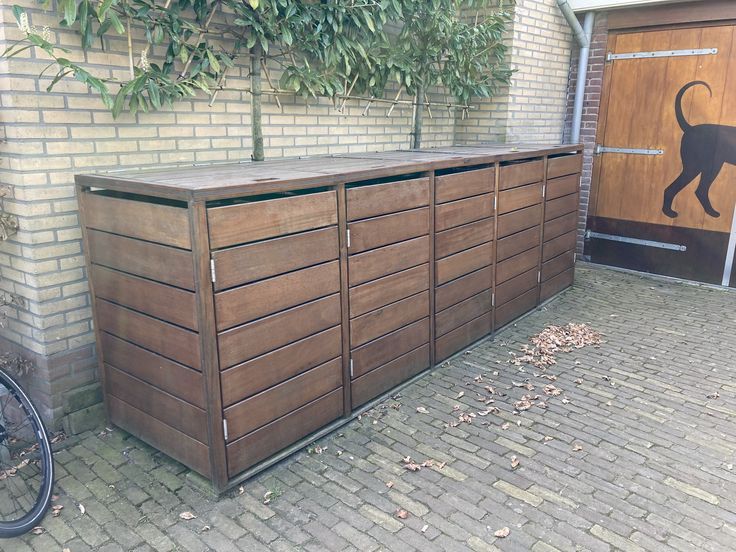
Triple / Quad – built for three or four cans (≈ 72–120 ft³). We usually weld a 1¼ × 1¼ in steel frame and add cedar or thermally‑modified ash slats. Lid can be one large panel or several sections.
Tip: existing metal fence posts can double as enclosure supports, reducing framing cost and install time.
Best Woods for SoCal Climate
Western Red Cedar. Naturally rot‑resistant, light weight, pleasant aroma. Con: higher cost than PT pine. Service life 15–20 years with routine care.
Pressure‑Treated Pine. Budget‑friendly and stocked at any Home Depot. Needs thorough drying and regular paint or stain; resin pockets possible. Service life 10–12 years.
Thermally‑Modified Ash. Perfectly straight boards, rich color without stain, high density. More expensive than cedar and special‑order only. Service life 20 + years.
IPE / Cumaru (tropical hardwoods). Maximum hardness and durability; nearly immune to insects and moisture. Downsides: heavy, hard on tools, highest price point. Service life 25 + years.
All lifespans assume annual washing and re‑oiling or restaining every three years.
ProHands Handyman Build Process
-
Site Measure & Design
• Record can sizes (L.A. Sanitation 64 gal — 26 × 26 × 44 in; 96 gal — 26 × 35 × 46 in) and available space.
• Create a 3‑D sketch and confirm overall height (typically 48–55 in so the bin lid clears freely). -
Framing
• Wood option — 2 × 4 studs, corners locked with ⅜ in galvanized bolts.
• Steel option — 1 × 1 in × 0.065 in tube, primed and powder‑coated RAL 7016 or 9005. -
Slat Cladding
• ⅜–½ in gaps between boards provide ventilation and a lighter visual profile.
• Smooth plywood infill or tongue‑and‑groove available for a panel look. -
Lid Assembly
• 304 stainless hinges.
• 50–80 N gas struts or marine‑grade chain.
• Optional sync‑link so the decorative lid lifts the bin lid for one‑handed use. -
Hardware
• Adjustable latch clamps, aluminum bar pulls, concealed pocket screws rated for exterior use. -
Finish
• Sand to 120–180 grit.
• Two coats of penetrating toner (Cabot Australian Timber Oil).
• Final coat of exterior‑grade polyurethane. -
Installation
• Laser‑level placement.
• Simpson Titen HD ½ in anchors into 4‑in concrete pad.
• On earth, posts are set 18 in deep in concrete footings.
Care & Maintenance
-
Wash yearly with a soft‑bristle brush and mild soap; rinse with a garden hose (skip 2 500 psi pressure washers).
-
Ventilation – keep a ¼ in gap under the lid so moisture and odors can escape.
-
Refinish every 30 months with oil or solid‑color stain
-
Lubricate hardware twice a year with silicone spray to prevent squeaks and corrosion.
Why Homeowners Choose ProHands
-
Made‑to‑measure builds—no need to force‑fit an off‑the‑shelf plastic box.
-
Shop fabrication + one‑day install keeps noise and dust at your home to a minimum.
-
Premium hardware only—Simpson, GRK, Sugatsune; no mystery screws.
-
Three‑year warranty on structure and installation, plus optional maintenance plan.
-
Flexible aesthetics—from rustic chalet boards to clean Scandinavian slats with a steel frame.
Ready to Hide Those Bins in Style?
Call or message us to discuss wood species, color options, and receive a free concept sketch within 48 hours.
Contact: 818‑401‑7766 | info@prohandshandyman.com — ProHands Handyman, serving Glendale, Burbank, Pasadena and nearby areas, daily 8 AM – 6 PM. We’ll make your yard cleaner and more inviting!