
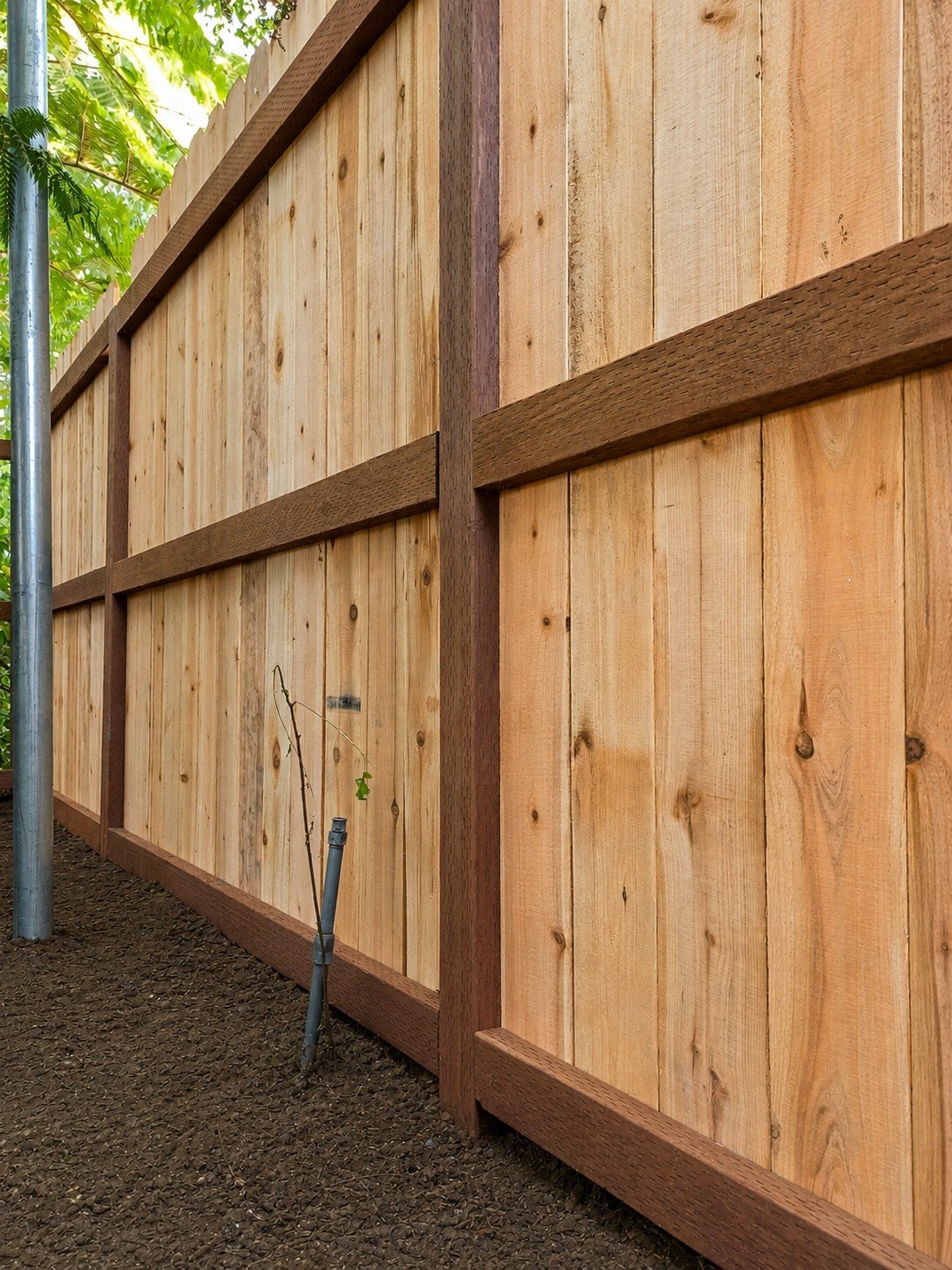
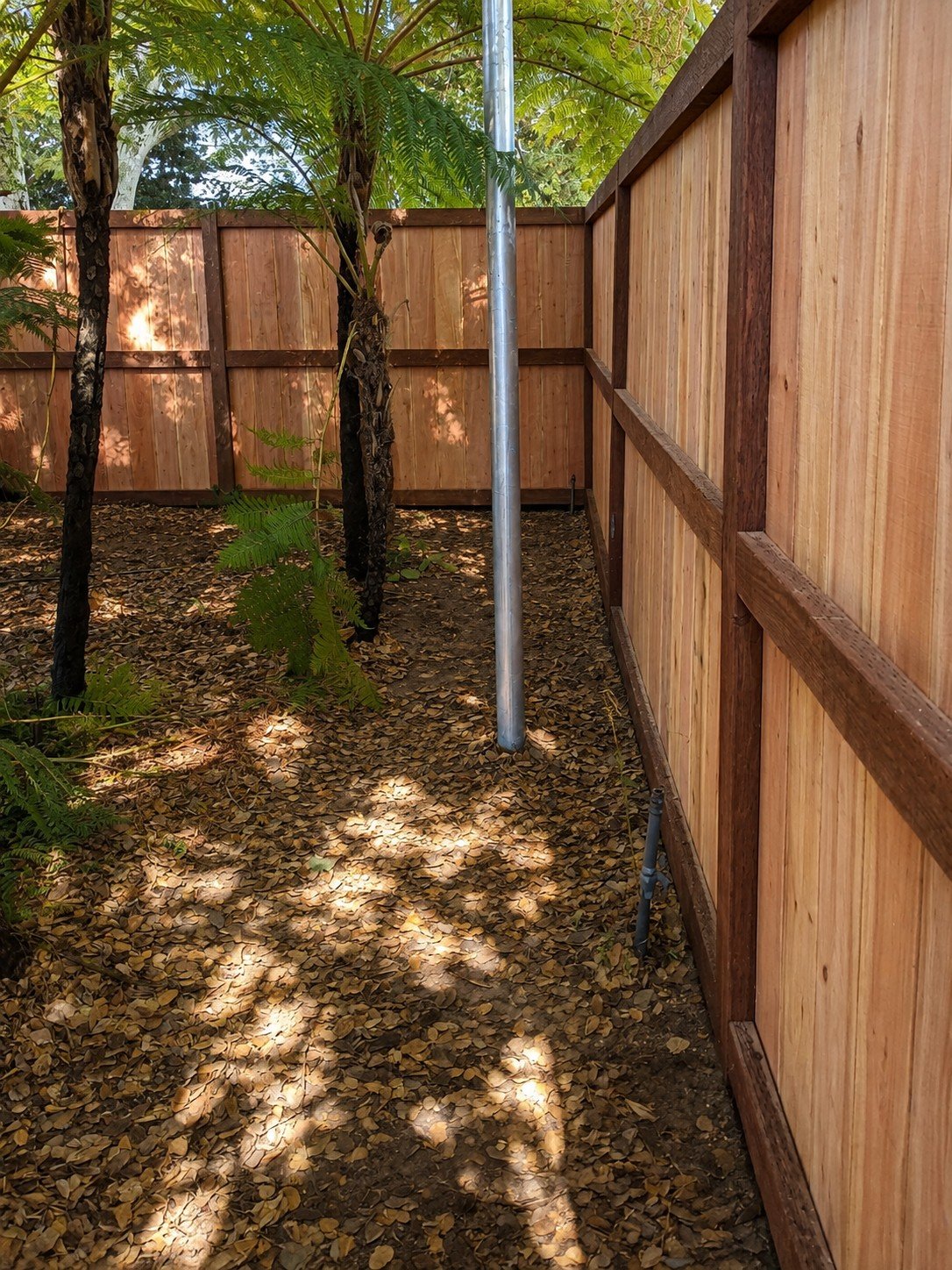
A traditional natural cedar privacy fence for a Los Angeles home, built the way a real cedar fence should be built: western red cedar pickets left completely unfinished, the horizontal rails and posts finished in a deep espresso stain, and every fastener, footing and dimension chosen for a twenty-year life, not for the first weekend inspection.
The reason this specific fence reads clean and stays clean: the natural cedar tone lives against a dark, disciplined structural frame. Two materials, one wood species, one intentional contrast — and the underlying assembly built to the standard the finish deserves.
Project Overview
The build brief for this Los Angeles cedar privacy fence:
- Full backyard-perimeter enclosure, six feet in overall height
- Vertical dog-ear picket field in natural western red cedar, no stain, no oil, no sealer
- Top and mid rails plus posts finished in a deep espresso brown for structural contrast
- Substructure sized and detailed to hold under Los Angeles wind loads, irrigation soak, and seasonal wood movement
- Ground-line detail with an intentional air gap between the pickets and the soil
Why Cedar, and Why Left Natural
Western red cedar sits in a specific place in the Southern California fence conversation. It’s the honest middle answer between throwaway pressure-treated pine and premium redwood — and when the finish choice is honest too (which means unfinished), it does something that neither of its neighbors can quite do.
- Natural resistance built into the material. The heartwood of western red cedar carries its own oils and tannins. Those compounds discourage rot, insects and mold without any pressure treatment or chemistry applied on top. In our climate — heavy irrigation, morning marine layer inland, sustained UV — that intrinsic resistance is the difference between a fence and a maintenance schedule.
- A wood that stays where you put it. Cedar’s low density and even grain mean it doesn’t warp, twist or cup the way box-store pine does after its first summer. Straight pickets that stay straight are most of what makes a finished fence read as intentional work.
- An honest color arc. Unstained cedar under Los Angeles sun moves through a documented sequence: warm cinnamon in year one, honey tone through year two, then a soft driftwood-silver patina from year three onward. Every phase reads deliberate. There’s no ugly middle chapter where the wood looks like it’s failing before it settles.
- The right price point for the specification. Cedar lands below redwood at the yard, well above the cheapest pine at the box store, and in the same conversation as high-end vinyl. For the quality of finish this fence achieves, cedar is where the money is best spent.
The Dog-Ear Picket Top — A Small Detail That Runs the Whole Fence
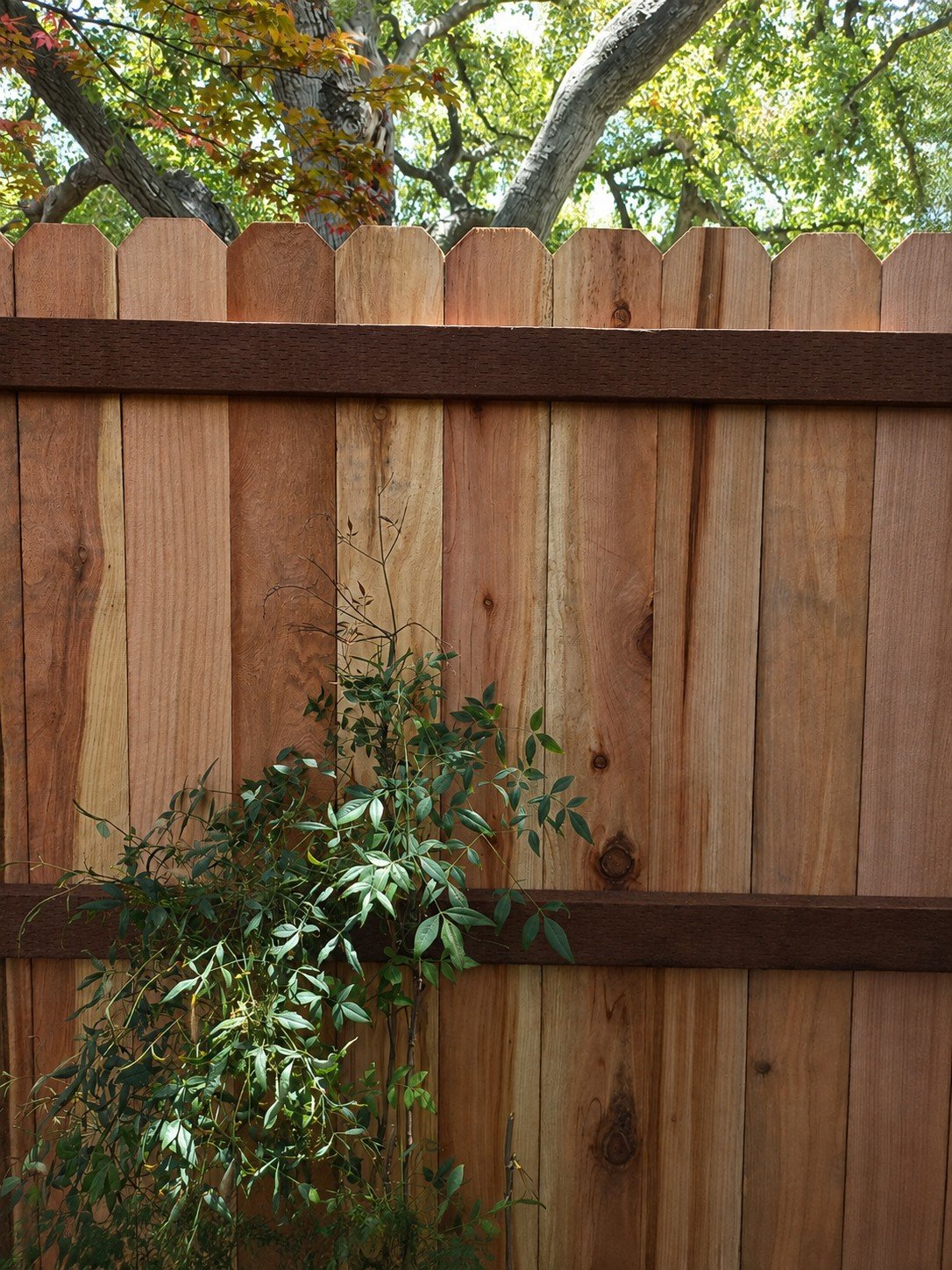
Each picket on this fence terminates with a dog-ear cut: two forty-five-degree chamfers at the top corners, forming a soft cap. It’s the traditional American residential picket top, and it’s a detail that quietly saves the fence over the years.
- End grain protection. A flat picket top holds standing water at the top edge. Water finds the end grain, checking and dark staining follow within two seasons, and the entire top line of the fence begins to look tired long before the rest. The chamfered cap sheds water off both sides — the end grain stays substantially drier and lives longer.
- Visual register. Dog-ear tops read as traditional residential, without pushing into any specific style. Scalloped and gothic point tops carry a stronger design signal; the dog-ear reads as understated, careful, and appropriate to almost any Los Angeles house.
- Camouflage for natural picket-width variance. Milled cedar pickets carry small width differences even at nominal spec. The chamfer detail lets those small differences read as normal wood character across the fence run instead of adding up into visible drift.
Why the Rails and Posts Are Stained Dark
The horizontal rails and posts here carry a deep espresso finish while the picket field is left alone. It’s a two-tone treatment, and every reason for it is functional before it’s aesthetic:
- The stain absorbs the wear. Rails and posts collect more sun, more sprinkler spray, and more everyday contact than the picket field. Dark stain hides the natural transition from year one to year five on the parts that show wear first, so the whole fence keeps reading as a finished piece over time instead of visibly aging in pieces.
- Framing the picture. Left to their own tone, natural cedar rails would blur into the picket field, and the fence would flatten visually. The dark stain creates a clear visual grid — pickets are the content, rails and posts are the frame. That’s why the fence photographs well and why it reads as designed rather than assembled.
- Real protection where the load lives. The rails and posts are the load-bearing members. The stain penetrates the end grain and buys additional resistance to moisture uptake at the exact spots where a badly-built fence loses its structural life. It’s protective coating, applied where protective coating actually matters.
- A modern-traditional read. Fully natural cedar drifts rustic; fully stained cedar drifts toward a late-90s deck aesthetic. The natural-picket / dark-frame combination sits in the middle — traditional enough to belong on a bungalow, restrained enough to belong on a modern remodel.
Under the Finish — The Substructure Choices That Set the Twenty-Year Timeline
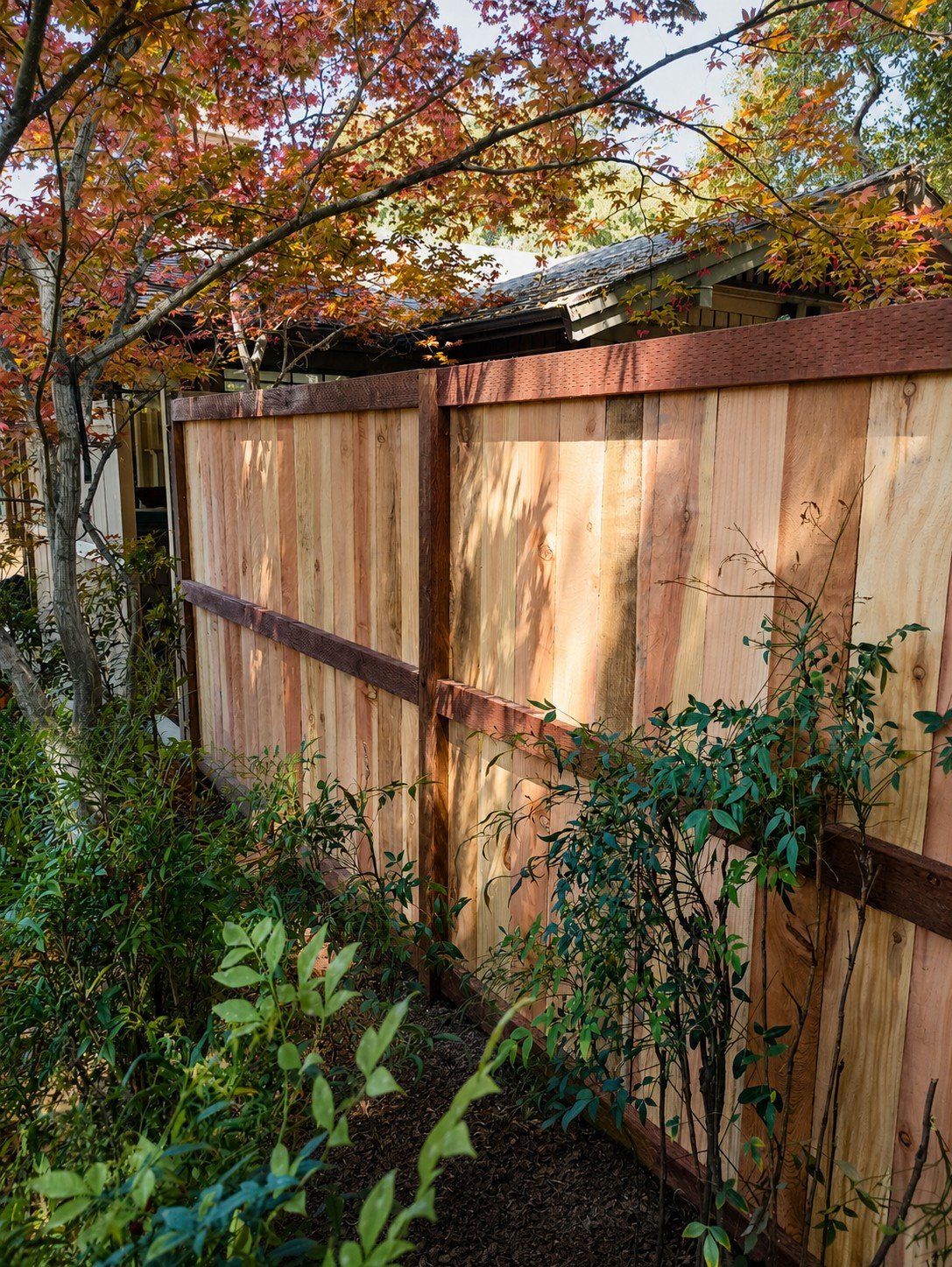
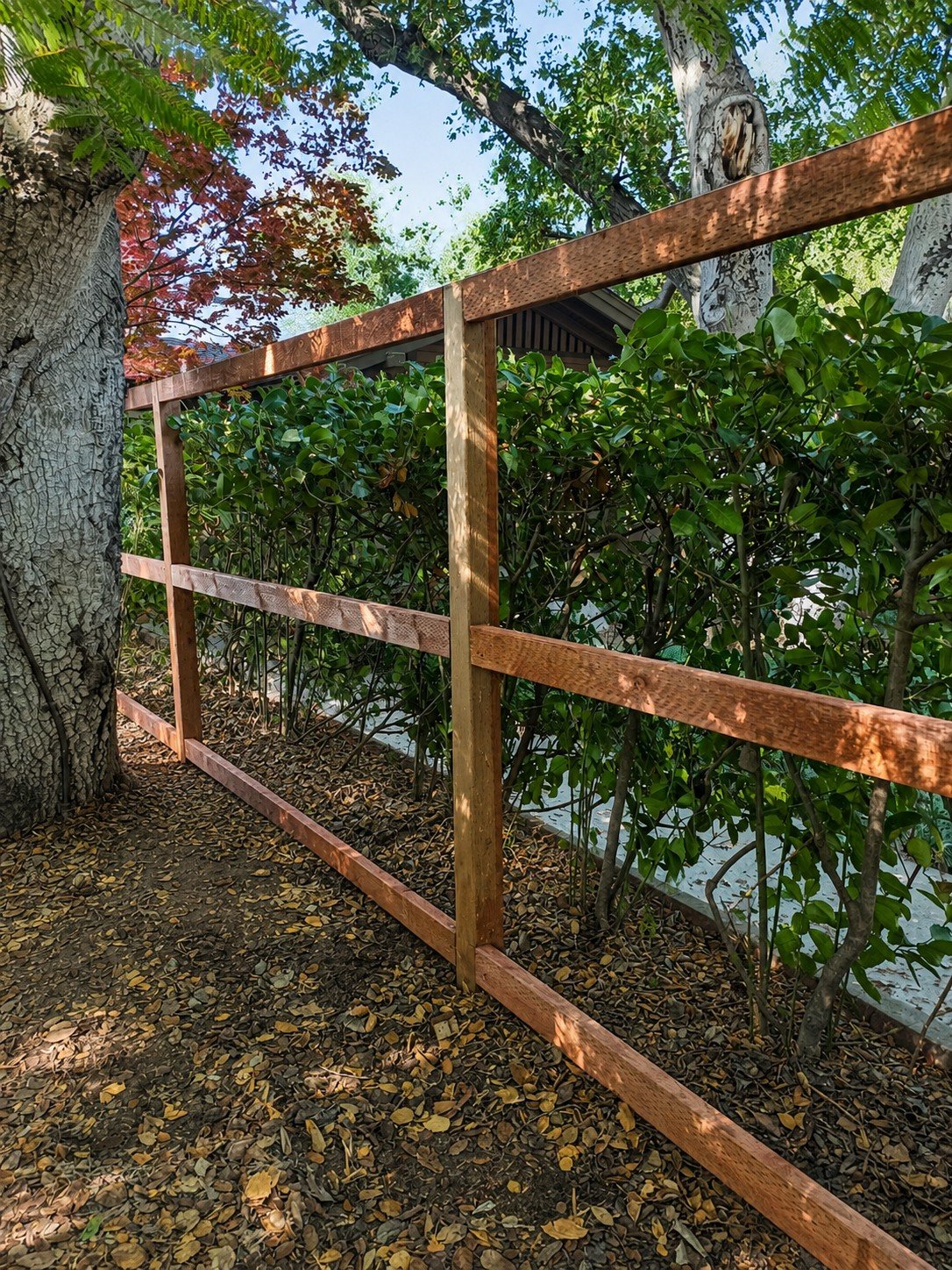
Every detail of a finished cedar fence is decided in the substructure. The picket face is the last thing installed and the first thing anyone sees, but the fence’s real lifespan is determined by choices made below the finish line.
- Two-foot concrete post footings. Every post on this run seats on a full twenty-four inches of concrete, which is one-third of the fence’s total height. That’s the ratio Los Angeles soil demands — clay-loam blends soften enough during winter rain that a shorter footing lets the fence lean by the second season.
- Pressure-treated posts hidden under the dark stain. The picket field is honest cedar, but the posts themselves are pressure-treated for ground contact and finished dark to disappear into the stained-rail language. Cedar posts in soil contact are the single most common failure mode on older cedar fences — the pickets look fine, the posts rot, the fence walks off the line. Pressure-treated post plus cedar picket field is the correct pairing for a fence intended to survive twenty years.
- Structural screws, not nails, at the rail-to-post connection. The rail-to-post joints take every wind load and every seasonal expansion cycle for the life of the fence. Galvanized structural screws hold that joint through those cycles; nails migrate out, joints loosen, rails begin to shift.
- Ring-shank nails for the pickets. Every picket is fastened with galvanized ring-shank nails. The rings on the shank grip the picket wood as it moves through seasonal humidity swings. Smooth nails give up their grip within a few seasons and start backing out — the picket line loses its clean face, and the finish begins to spread.
- Spacer-gauged picket gaps. Every gap between pickets is set by a physical spacer, not by eye. Drift of even three-sixteenths of an inch across a twenty-foot run compounds visibly by the end of the fence.
- Ground-line air gap. The picket bottoms terminate half an inch above the finished soil line. That gap breaks the wicking path between wet soil and picket end grain — the single mechanism responsible for the classic bottom-six-inches rot on every failed cedar fence in this city.
Where Cedar Wins Against the Alternatives
Every fence conversation eventually compares cedar to the material next to it in the yard. Here’s where cedar comes out ahead, and where it doesn’t:
- Compared with vinyl. Vinyl earns its zero-maintenance reputation, but it reads as vinyl on the wall. On a traditional bungalow or a Craftsman it fights the house rather than joining it. Cedar reads as part of the house language, and it ages into a documented color arc instead of holding steady until it suddenly starts to yellow.
- Compared with pressure-treated pine. Pressure-treated pine costs less at the yard and more everywhere afterward. It twists, cups and checks aggressively in the first two summers, and what installed straight starts looking casual within a couple of seasons. Cedar arrives straighter, stays straighter, and reads as intentional throughout its life.
- Compared with redwood. Redwood is the premium natural-wood answer — slightly denser, slightly more durable, slightly richer color out of the mill. Cedar installs at roughly thirty to forty percent less, and with the picket / dark-frame approach used here, matches the visual longevity redwood delivers for most residential applications.
- Compared with composite. Composite makes sense on decks, where every square inch takes footfall. On a fence — a static plane you look at rather than walk on — real wood remains the right material, and cedar or redwood is the honest version of “real wood.”
A Twenty-Year Timeline for This Fence
A cedar-picket / dark-rail fence installed to this specification, in Los Angeles conditions, moves through a predictable arc:
- Year one. Warm cinnamon-red cedar tone throughout the picket field. Espresso stain on rails and posts crisp and defined. No maintenance required beyond a light spring rinse.
- Years two and three. Cedar picket field softens to a light honey-tan. The dark stain still reads clean. An optional coat of clear cedar oil around year two holds the warm tone longer for owners who prefer the original color to the patina.
- Years four and five. Cedar pickets begin their transition into a soft driftwood-silver patina, most visible on the sun-facing sides of the property. The stained rails start asking for a refresh coat around this window.
- Years five through fifteen. Full silver patina on the picket field. Substructure remains structurally excellent — posts, rails and pickets all still in service. Rails and posts benefit from a maintenance stain pass every five to seven years to hold the dark tone.
- Year twenty and beyond. The fence is still doing its job. Individual picket replacement is a possibility if a specific board catches damage, but the substructure — pressure-treated posts, structural fasteners, correctly-sized rails — is still holding the fence line where it was installed.
When Cedar Is the Right Answer
- Your home is traditional Los Angeles residential — Craftsman, ranch, Spanish, classic bungalow — and vinyl reads wrong against the architecture
- You want an honest wood surface, with visible grain and real warmth, rather than a molded imitation
- You’re comfortable letting the cedar age into a natural silver patina, or willing to run an oil coat every two to three years to hold the warm tone
- You want a fence that can be left alone for years at a time between light maintenance passes
- You want the price/durability sweet spot between the big-box pressure-treated fence and the premium redwood option
Considering a Cedar Privacy Fence in Los Angeles?
ProHands Home Improvement designs and installs cedar privacy fences, redwood fences, board-and-batten fences, and custom exterior woodwork across Los Angeles, Glendale, Burbank, Pasadena and the neighborhoods around them. Real western red cedar. Pressure-treated posts under stain. Correct footing depth. Ring-shank fasteners at every picket. Ground-line air gap on every run. The specific choices that separate a fence that lasts two dekades from a fence that leans by year three.
Contact us for a walk-through and a straight-forward quote — real material grade, real installation method, real long-term result.