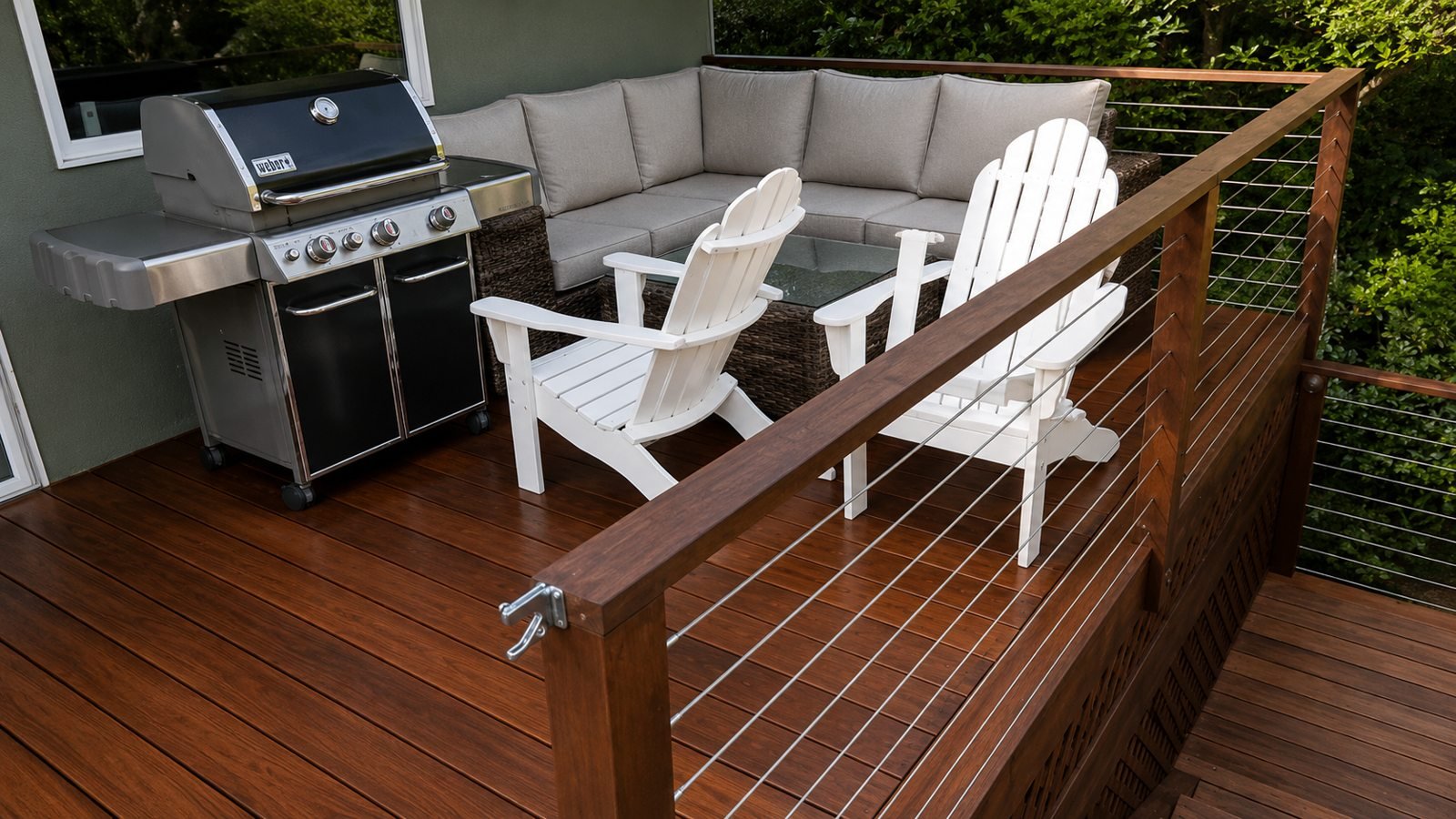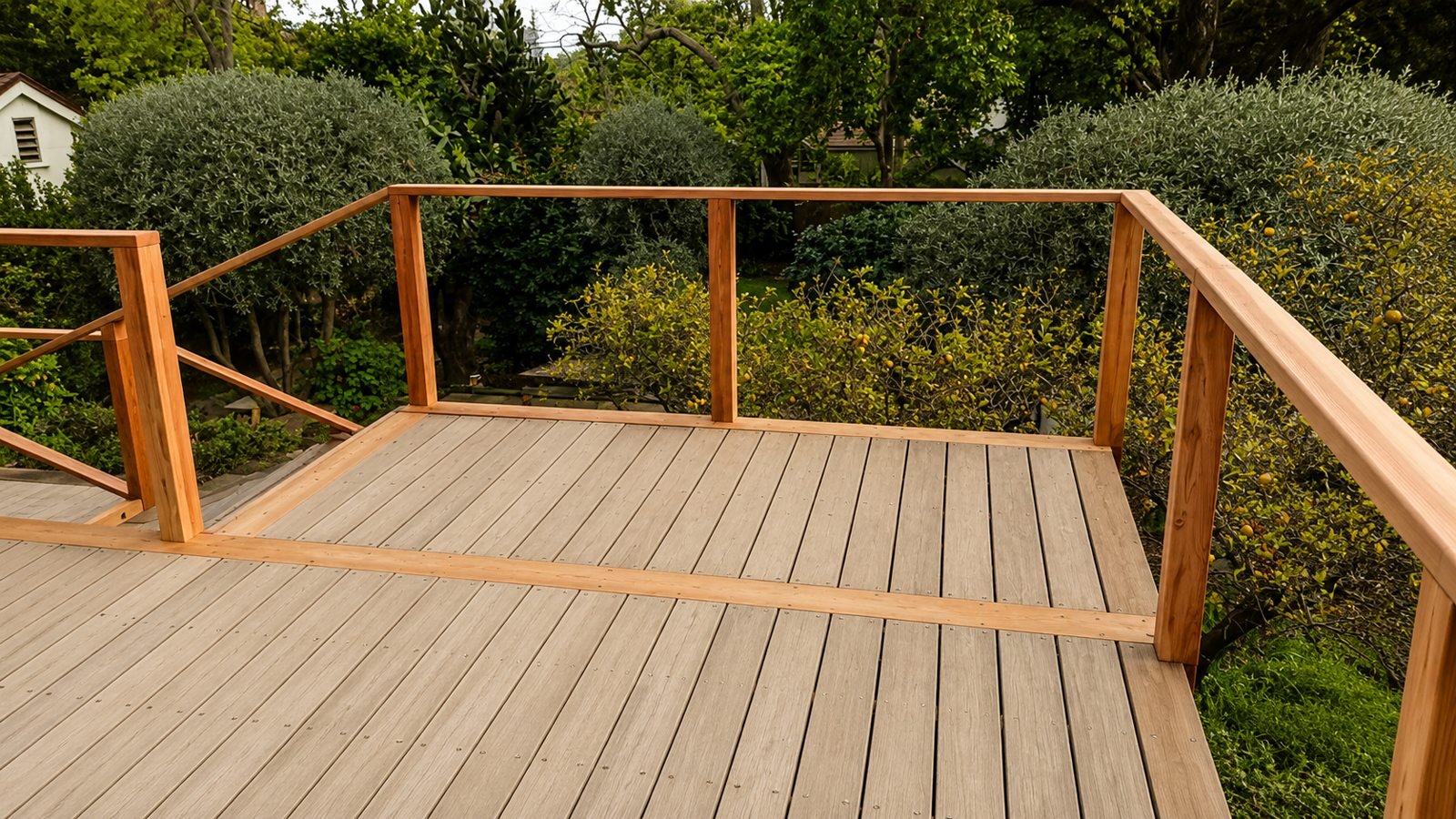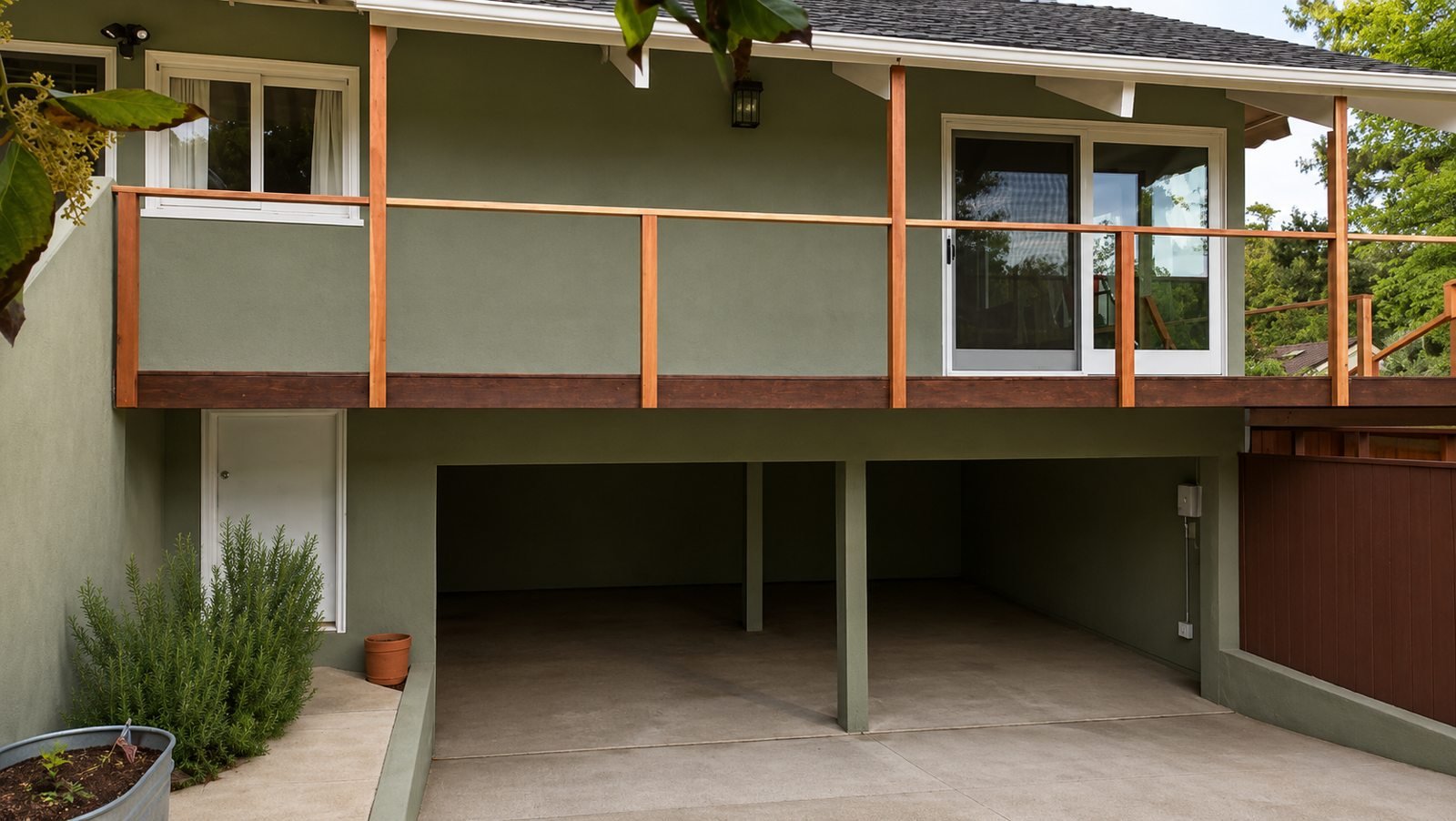
A backyard deck in Pasadena that had served the family for years was starting to feel every one of them. The joists underneath were tired, the fasteners had walked, and a few boards had cupped past the point where sanding would help. But the top-side hardwood itself — dense, close-grained, coloured deep amber by a decade of sun — was still beautiful and structurally sound. Replacing it with new decking would have meant tossing thousands of dollars of premium wood into the dumpster. So we didn’t.
This project was a full rebuild from the ground up, with one important twist: we salvaged, cleaned, and reinstalled the original hardwood deck boards on a completely new substructure. The result is a deck that looks brand-new but keeps the warmth and character of the wood the homeowners had grown to love.
The Homeowners’ Brief
They wanted three things: a deck that would last another 20 years, a railing that wouldn’t block their canyon view, and — if possible — to reuse the hardwood they already had. They were prepared to buy all-new decking if the old boards weren’t in good enough shape. After a walk-through and a close look at a few pulled samples, we told them the boards were fine. What needed replacing was everything underneath.
What We Built
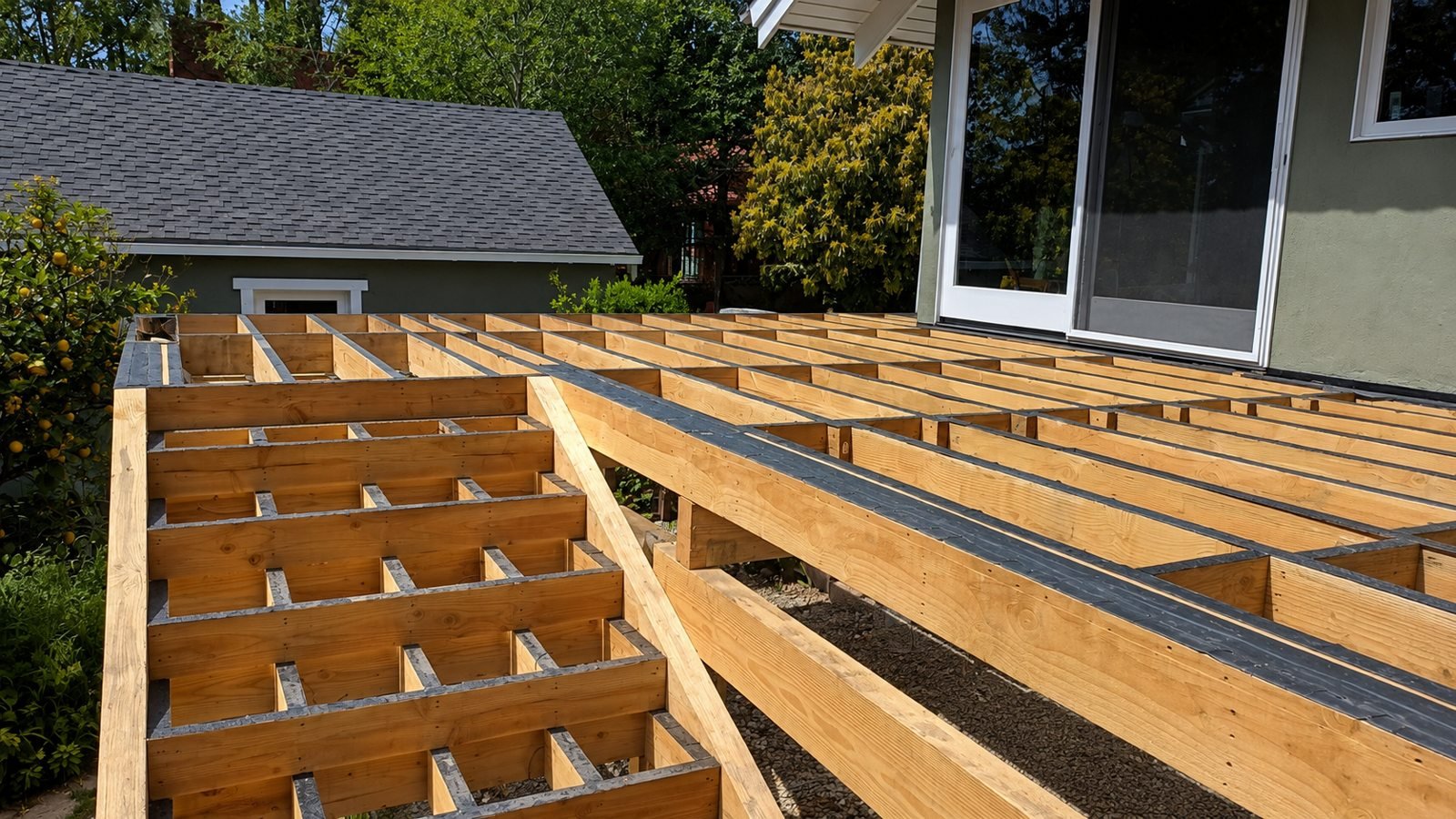
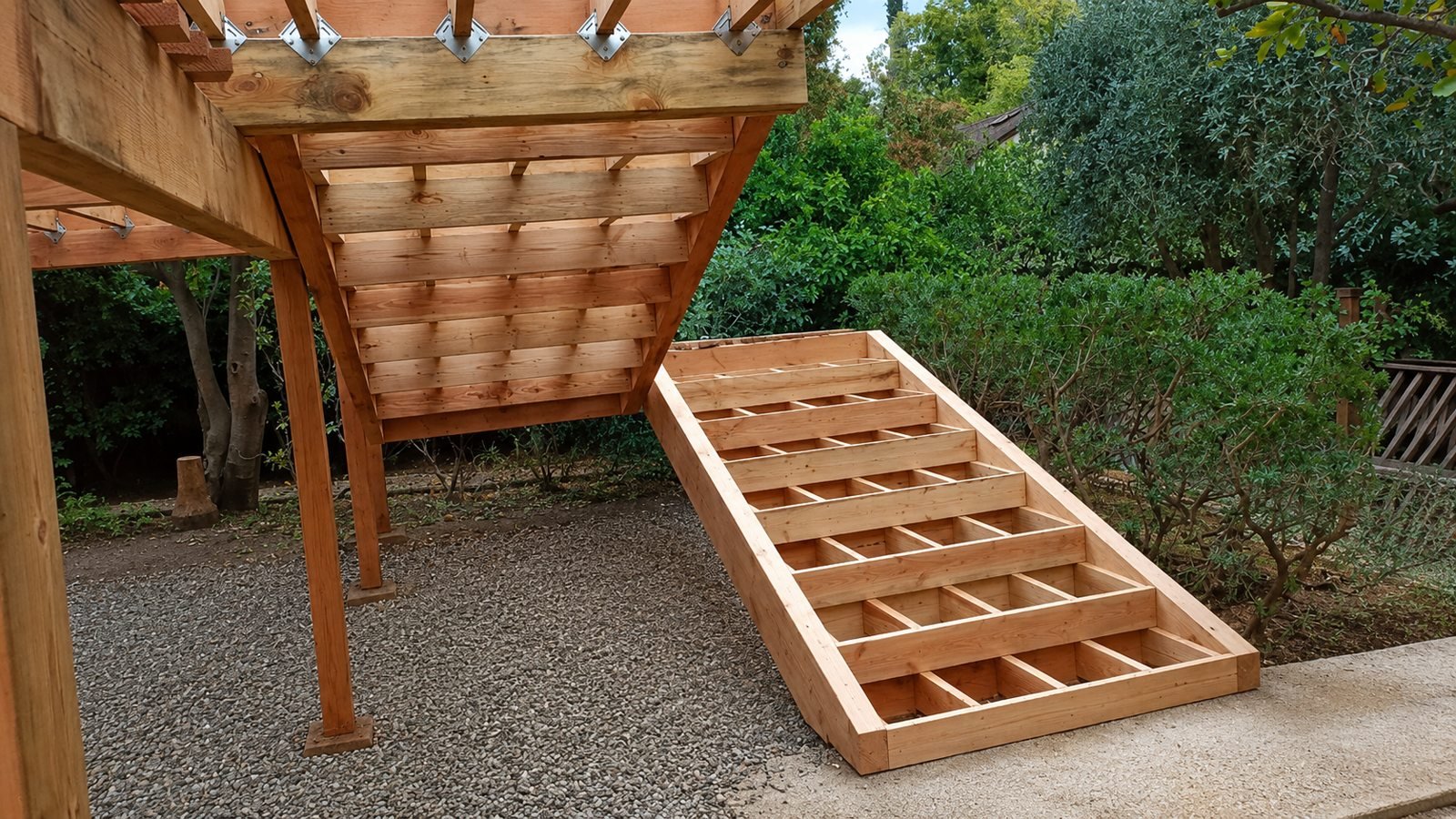
New substructure. We tore out the entire framing system — old ledger, joists, posts — and rebuilt from the concrete piers up. Pressure-treated 2×10 joists at 16″ on center, structural-grade hangers, hot-dipped galvanized hardware, and a properly flashed ledger tied into the house band with lag screws through a spacer to prevent moisture trapping. Every fastener spec’d for coastal SoCal conditions.
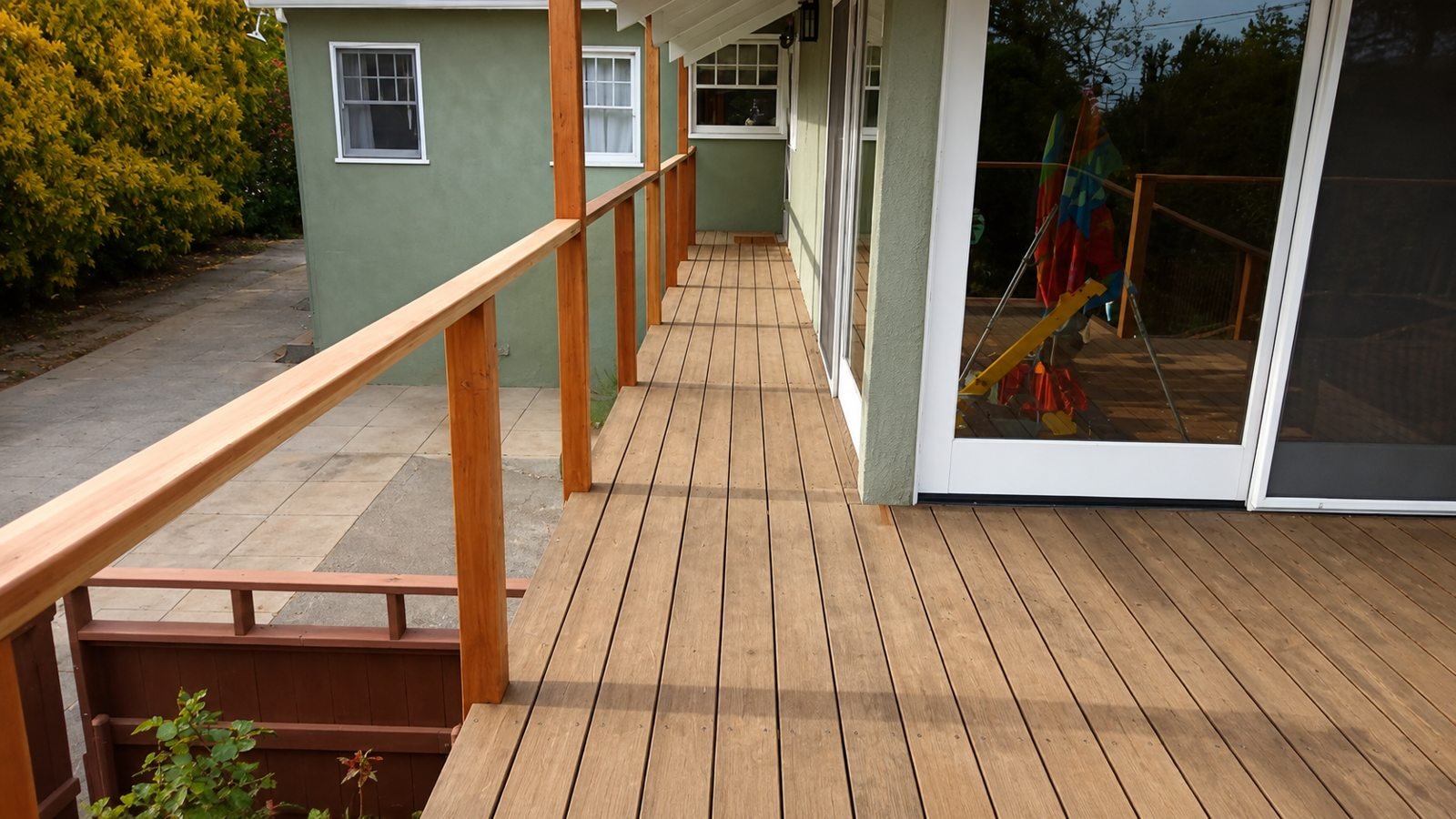
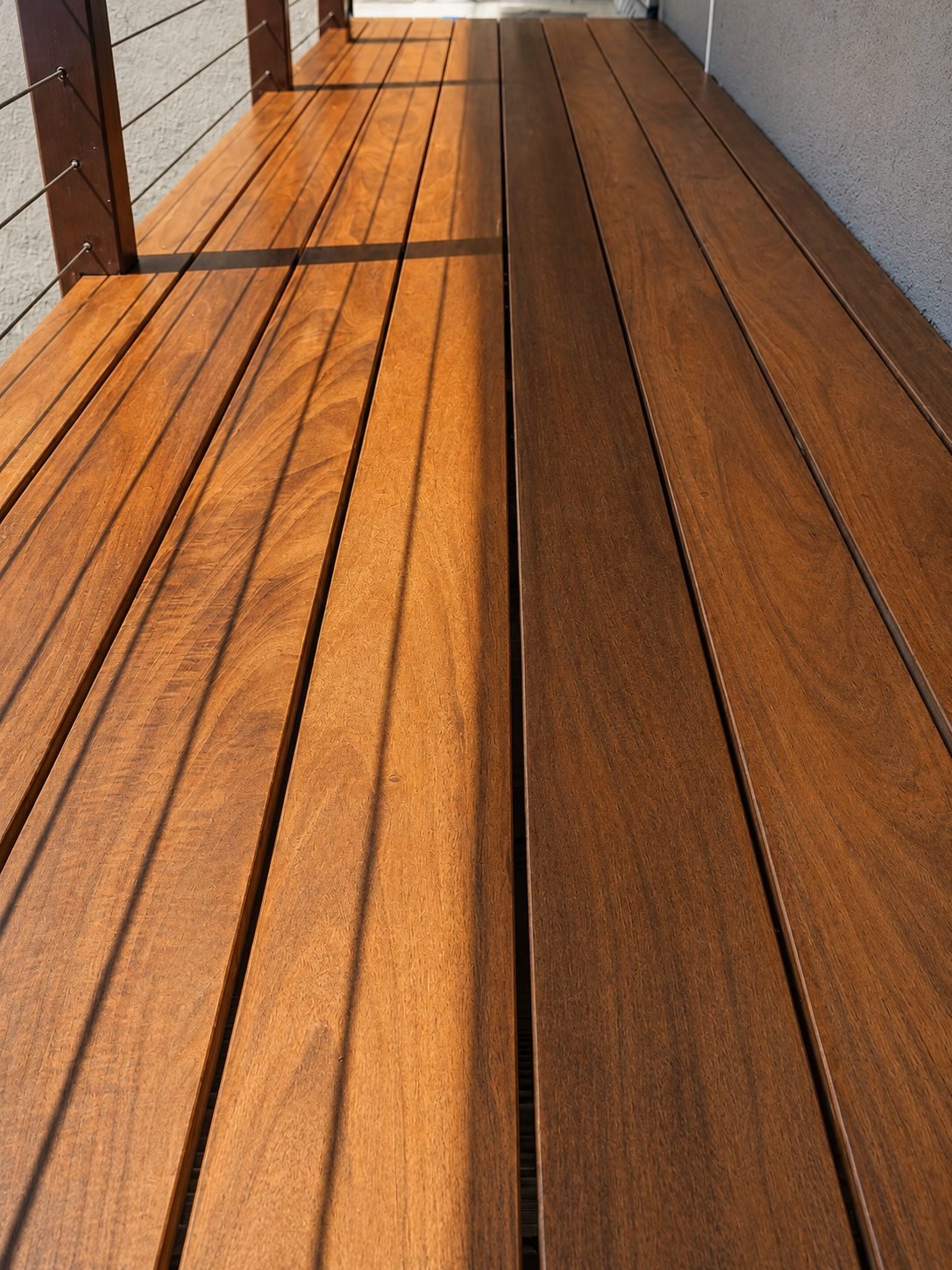
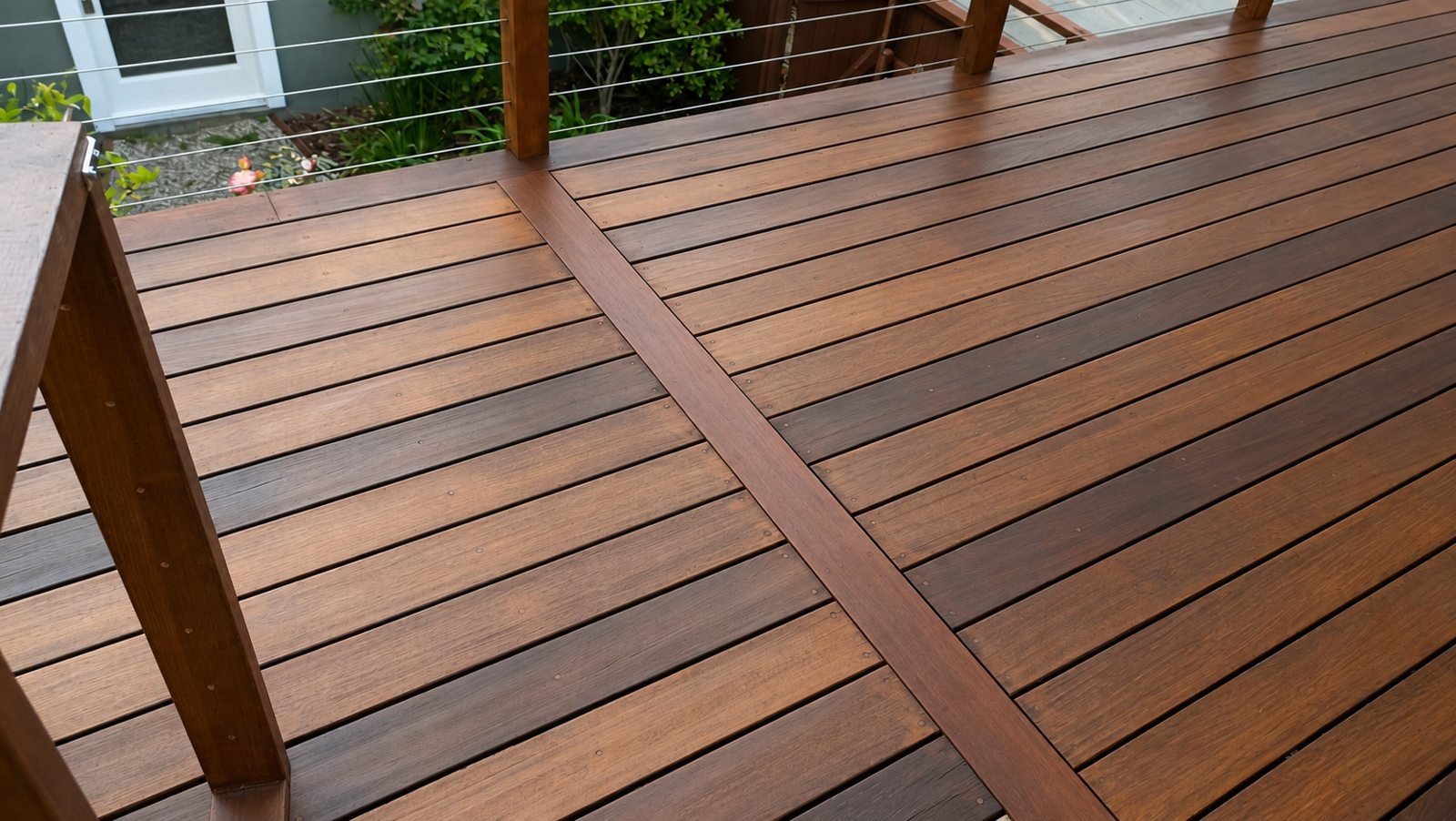
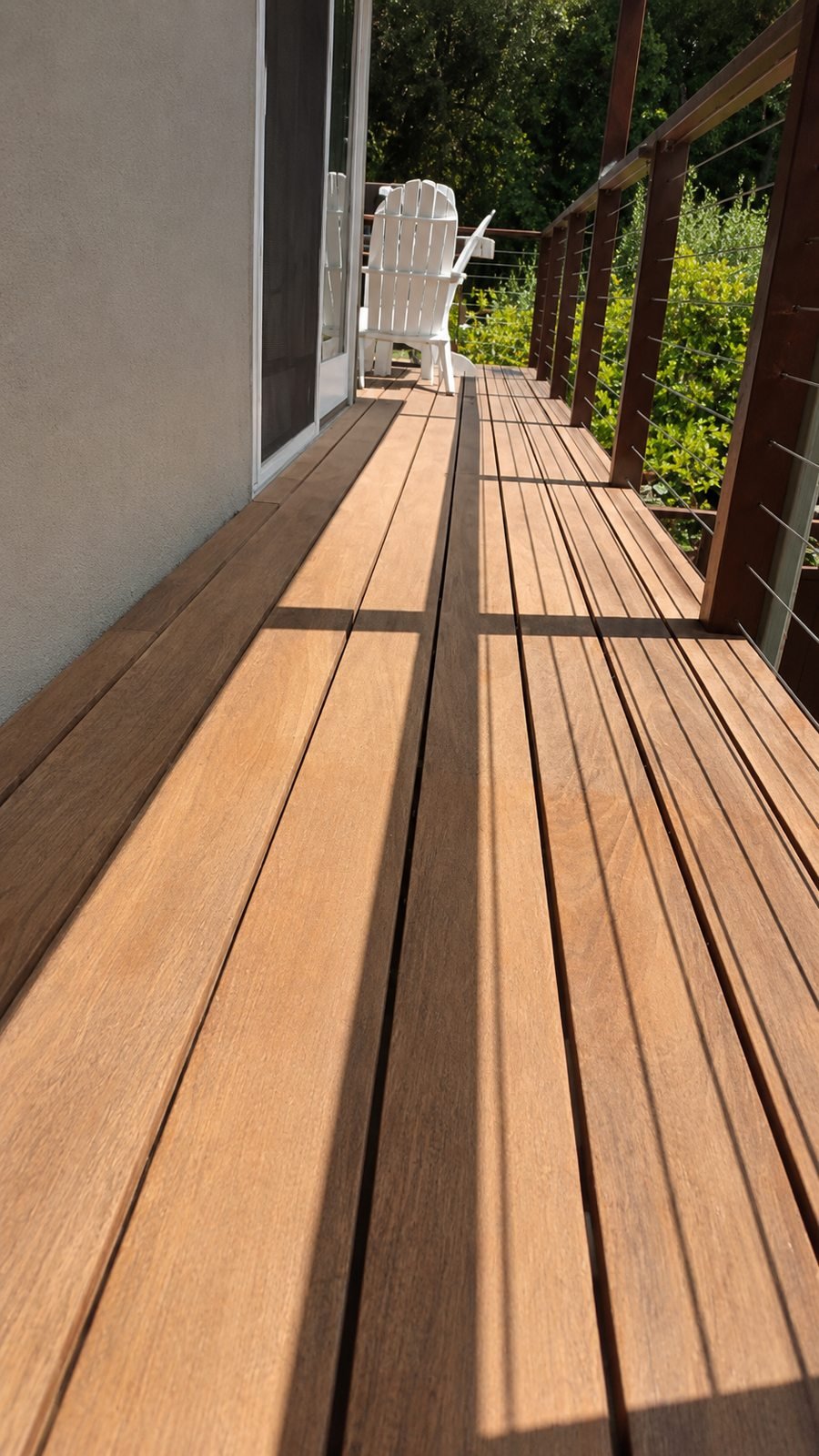
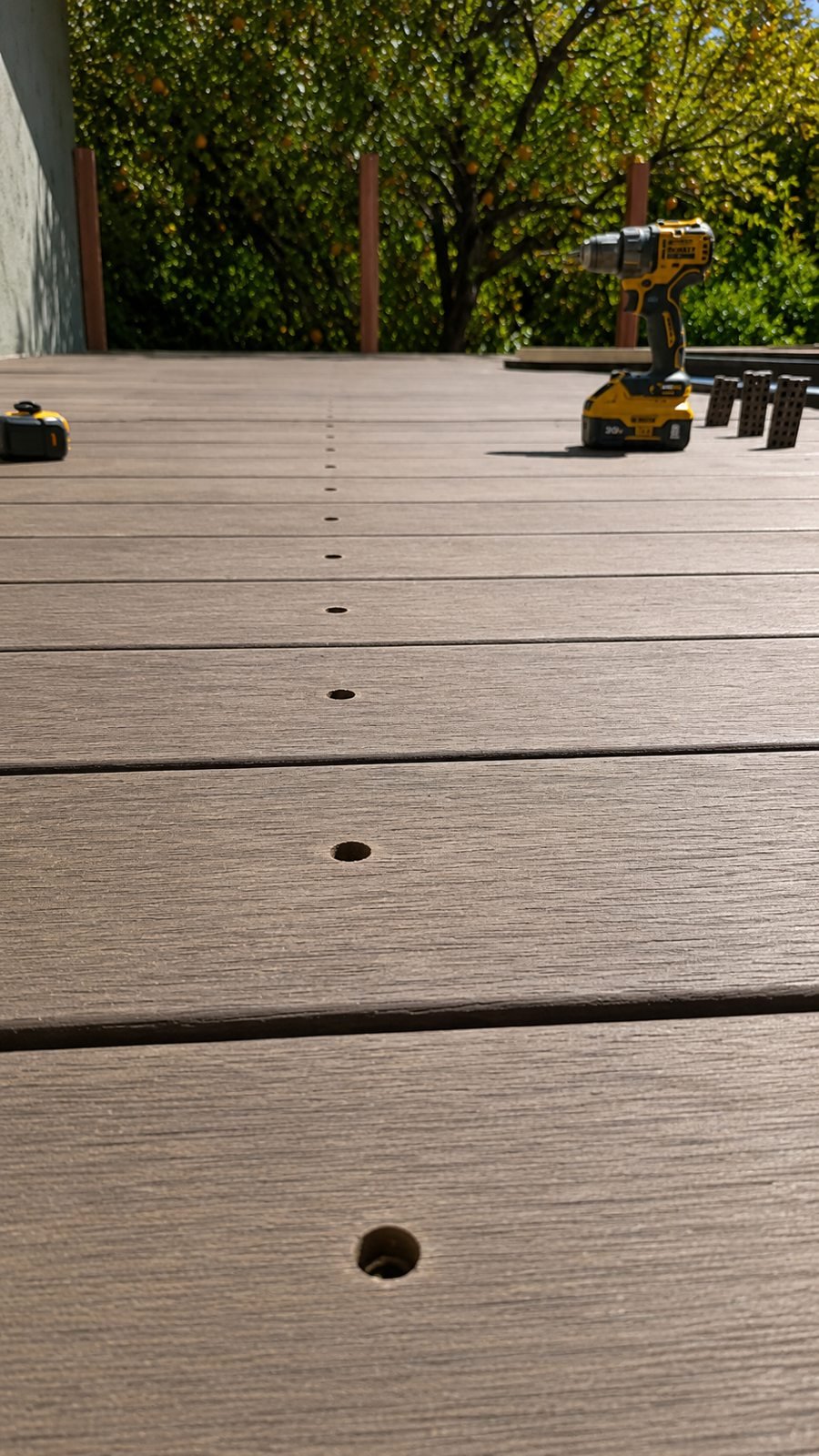
Reclaimed hardwood decking. We pulled every board carefully to keep it intact, ran each one through a light sanding to bring the surface back, and reinstalled with new stainless-steel screws in a fresh pattern. Boards that were too far gone got demoted to blocking; the rest went right back down on the new frame. Colour uniformity is better than it looks in the “before” photos because clean fasteners and a proper sand read the whole surface as one field of wood.
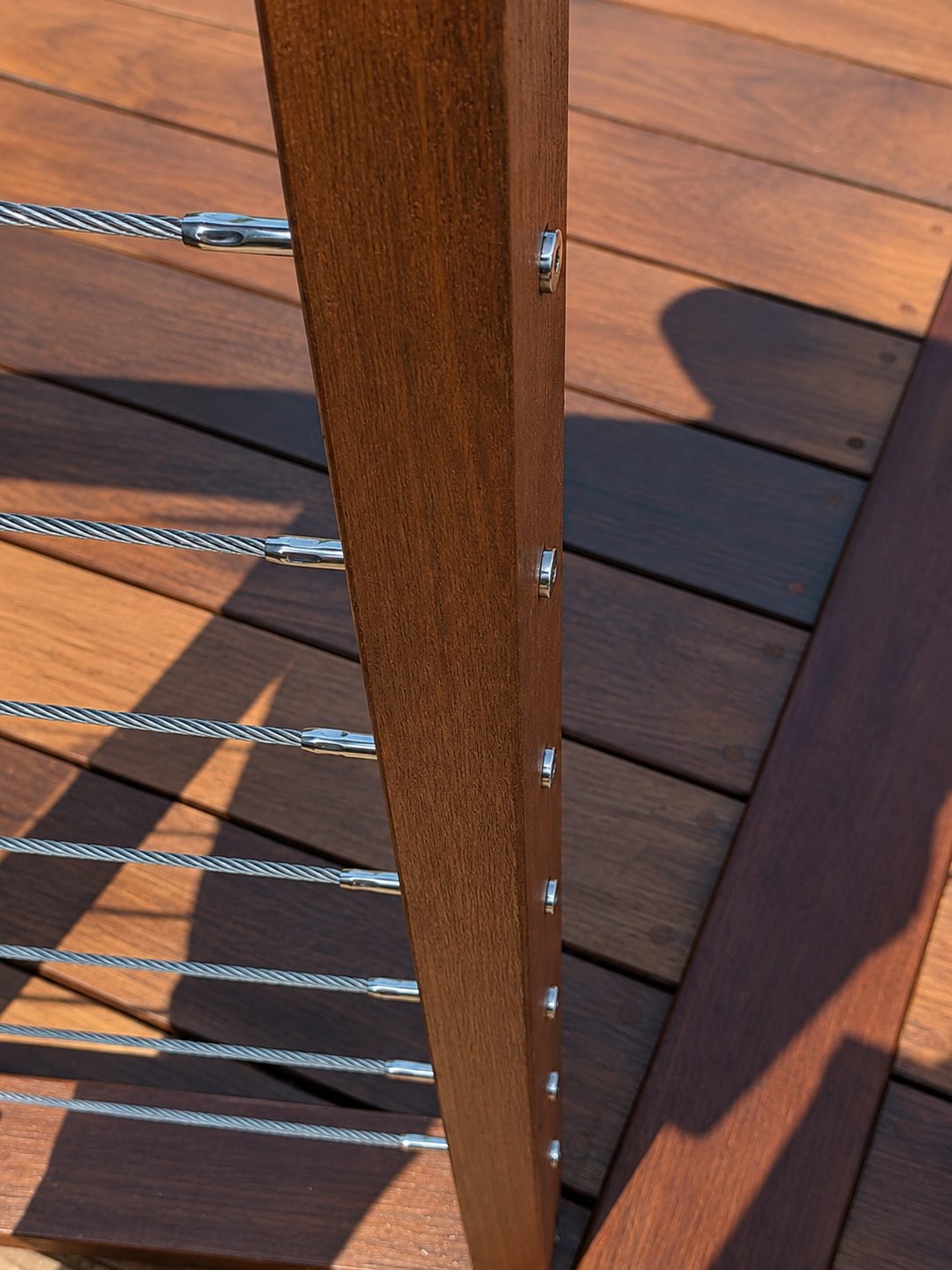
Stainless steel cable railing. Horizontal 1/8″ stainless cables tensioned between hardwood posts, with a wide, comfortable-to-lean-on hardwood top rail. Cable railing was the right call here because the deck faces a tree-lined slope — a solid or picketed railing would have chopped that view in half. Cable disappears from ten feet away.
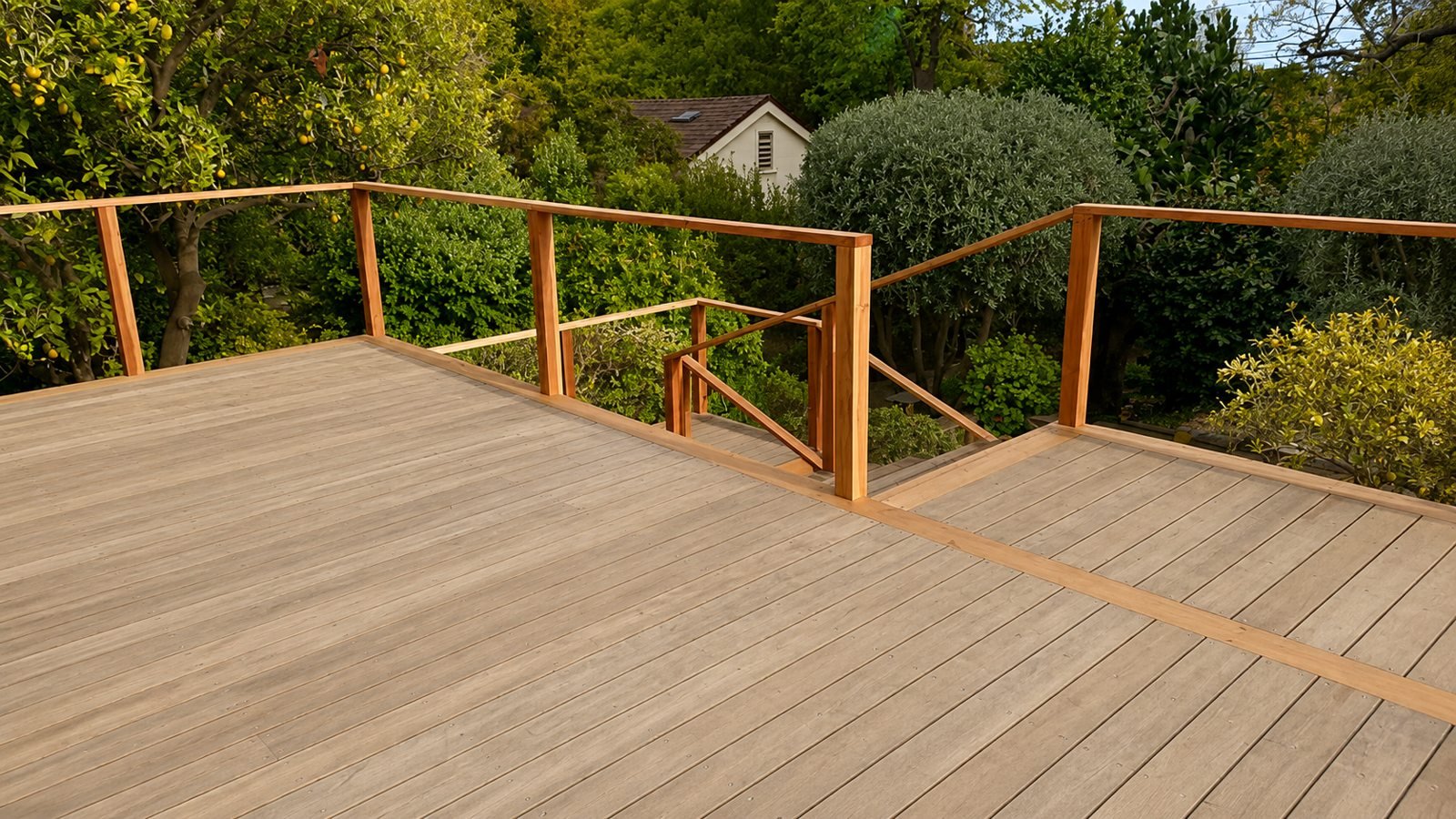
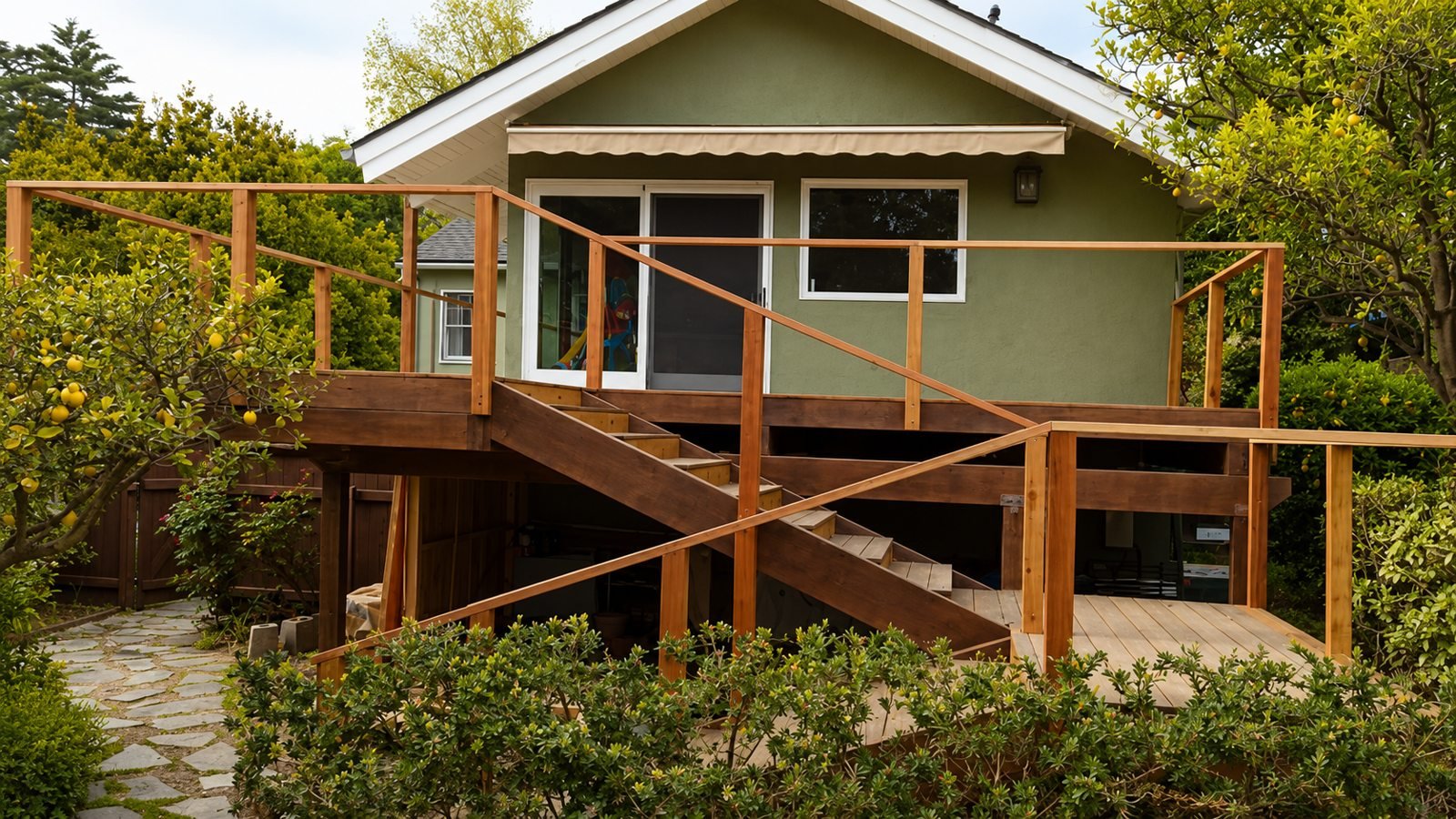
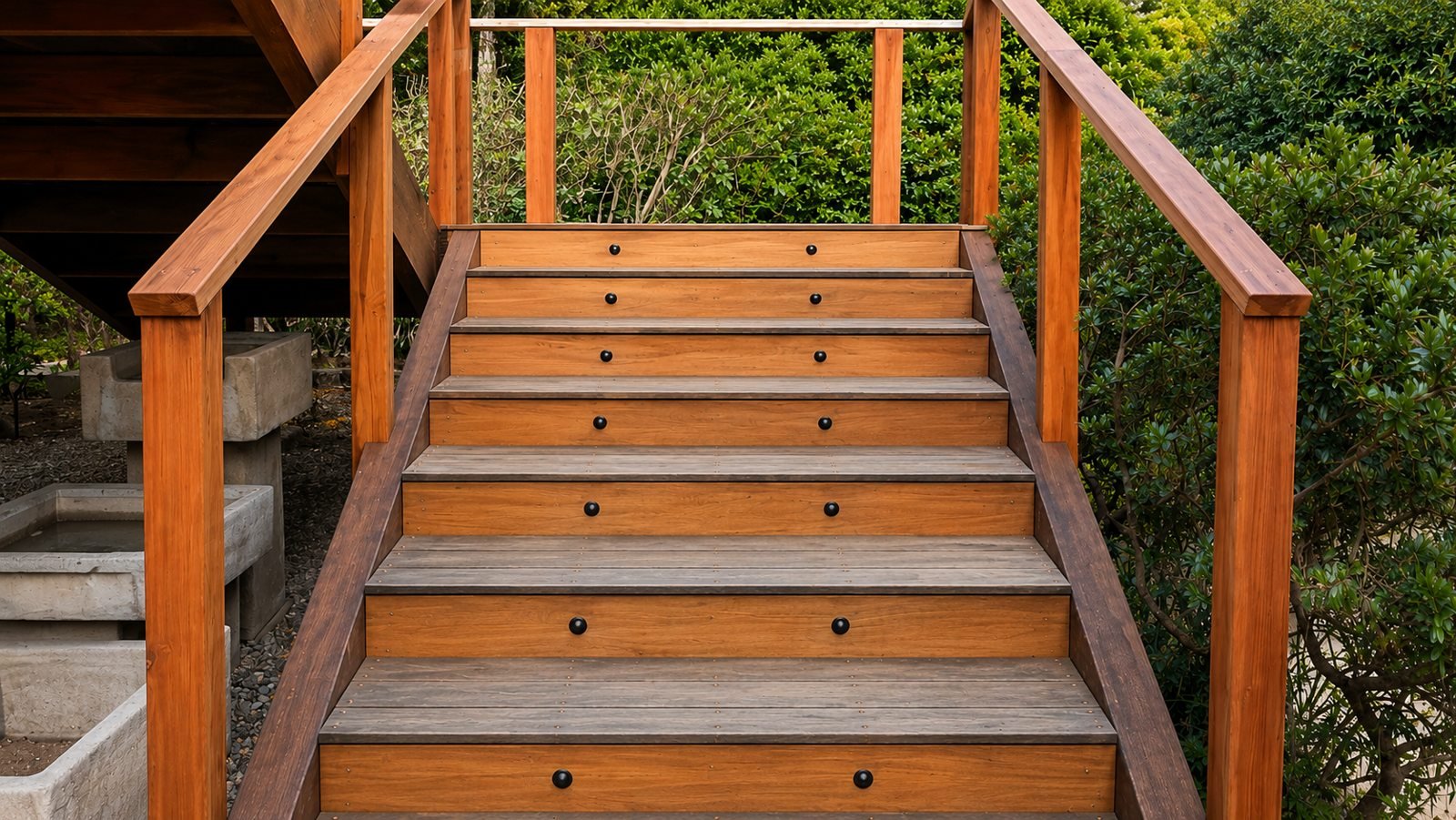
Wood stairs down to the yard. New stringers, closed risers, and the same reclaimed hardwood on the treads. Cable railing continues down the stairs on both sides so the whole run reads as one continuous line.
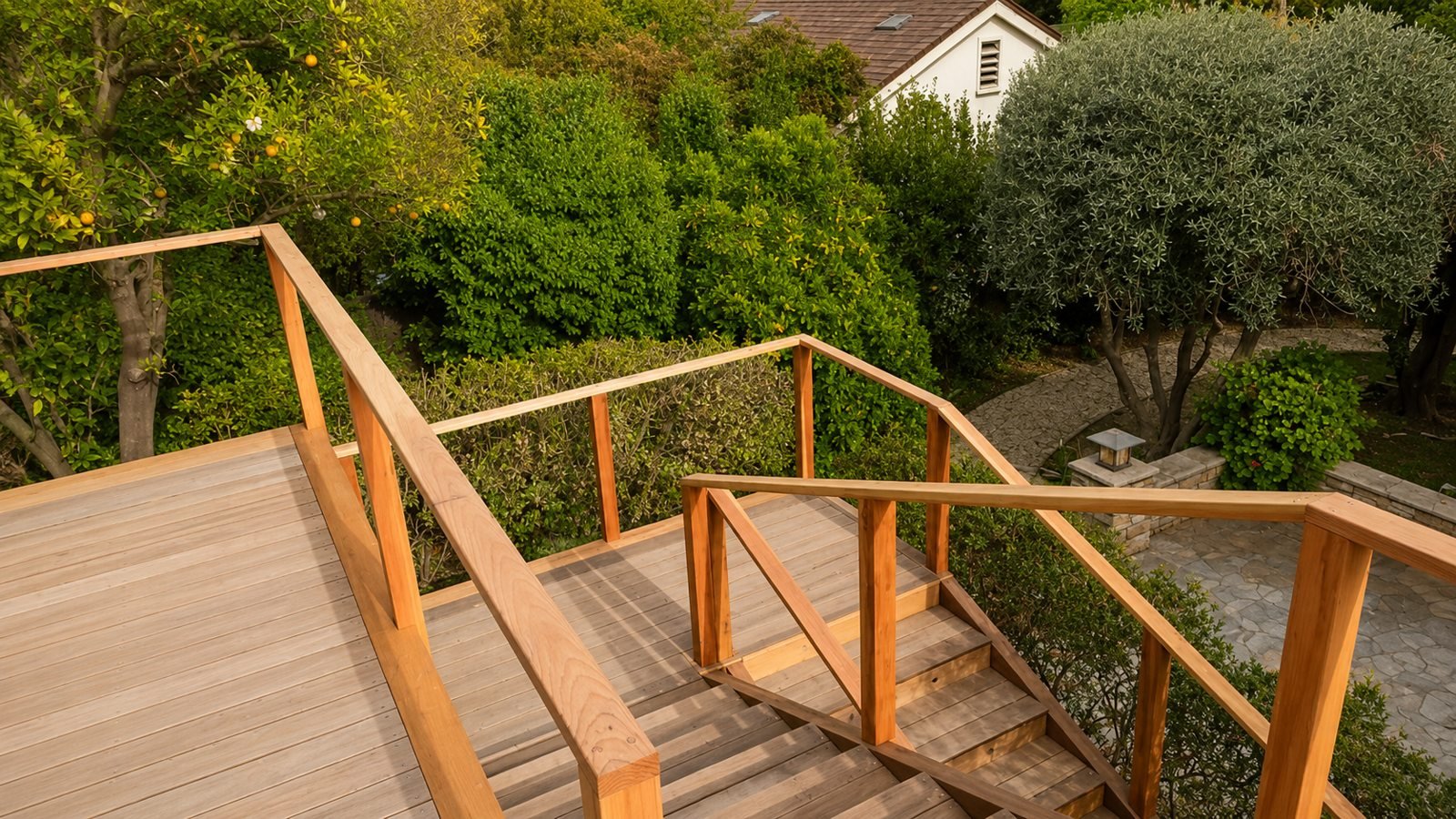
Multi-level layout. The house sits on a slope, so the deck steps down in two levels: a main platform outside the sliding door for dining and lounging, then a lower landing that ties into the yard. Level changes give the space zones without carving it up with walls.
Why Reclaimed Hardwood Was the Right Call
Two reasons — one financial, one aesthetic.
Financially, premium tropical hardwood decking runs $8–$15 per square foot for the boards alone in this market. A deck this size in new hardwood would have added five figures to the material bill. Salvaging saved most of that.
Aesthetically, old hardwood has a depth of colour and grain you can’t fake. The boards had been oiling themselves for years — the surface pulls a warm patina that new boards need three or four seasons to develop. The homeowners were going to lose that if we started from scratch, and they’d have to live through the “yellow deck” phase of a new install.
The catch, of course, is that reusing decking only works if the sub-structure below is the problem, not the boards on top. A pre-rebuild inspection is what decides that — we don’t quote reuse until we’ve pulled a few boards and looked at what’s actually underneath.
Hardware & Finish Details
- Fasteners: 305-grade stainless-steel deck screws throughout — no rust bleed into the wood, no black stains around the fastener heads.
- Post attachments: through-bolted with concealed carriage bolts, backing plates hidden inside the substructure.
- Cable tensioning: turnbuckle fittings at every corner post so the cables can be re-tightened seasonally as wood posts settle.
- Top rail profile: rounded edges, wide enough to rest a wine glass or a forearm — the small details that make a deck feel finished.
- Board finish: cleaned, lightly sanded, and treated with a penetrating hardwood oil (not film-forming — it wears evenly and re-oils easily).
Project Timeline
- Day 1–2: demo — remove old decking (carefully, to salvage), pull out framing, haul debris.
- Day 3–5: frame the new substructure, set posts, install joists and blocking.
- Day 6–8: reinstall reclaimed hardwood decking, cut in stairs, install stringers and treads.
- Day 9–10: install cable railing system, tension cables, oil the deck, walk-through.
Total: about two weeks on-site with a small crew, plus a day for the pre-quote inspection.
Care and Warranty
The reclaimed hardwood should be re-oiled every 12–18 months in the Pasadena climate. Cable railing is essentially maintenance-free — a wipe-down twice a year to keep dust and pollen off the stainless. The substructure is spec’d and hardware-warranted for the life of the wood; our own labor warranty on the rebuild is two years.
FAQ
Can I always reuse my old deck boards? Not always. If the boards are cracked through, badly cupped, or rotting from the underside, they need to go. Hardwood generally holds up longer than pressure-treated pine or cedar for this reason — the density and natural oils resist water damage.
How much did reusing the boards save? Depends on the deck. On a project this size, salvaged hardwood decking saved the homeowners well into four figures compared to buying new premium boards.
Is cable railing code-compliant? Yes — when properly designed. The cables are tensioned so the 4″ sphere rule is met, posts are engineered for the load, and the top rail is at code height. We build to LA County / City of Pasadena residential code.
How long does a rebuild like this take? Around two weeks on-site for a typical two-level deck, longer for multi-story or larger footprints.
Do you build new decks too, or only rebuilds? Both. We build new decks in composite (Trex, TimberTech), pressure-treated wood, cedar, redwood, and tropical hardwoods, and we do full rebuilds, resurfaces, and railing swaps.
Serving Pasadena, Glendale, Burbank, and Greater Los Angeles
ProHands Handyman is owner-operated. We handle deck rebuilds, new decks, railings, fences, and gates across Pasadena, Glendale, Burbank, La Cañada, Altadena, San Marino, and the greater LA area. Free same-day estimates.
Ready to bring your deck back to life? Get a free estimate →