
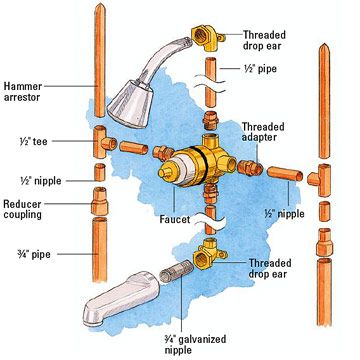
Components Overview
-
Threaded Drop Ear: This fitting secures pipes to the wall and ensures a stable connection for the faucet and shower head.
-
Hammer Arrestor: Prevents water hammer noise and protects the pipes from damage due to sudden pressure changes.
-
½-inch Tee: Connects the water supply to the faucet and shower head.
-
Reducer Coupling: Adjusts pipe sizes where necessary.
-
Nipples (½-inch and ¾-inch): Short lengths of pipe that join the fittings together.
-
Threaded Adapter: Links different types of pipes, such as copper to threaded fittings.
-
Faucet: The main control point for regulating water flow and temperature.
-
Shower Head: Dispenses water for showering.
-
Galvanized Nipple (¾-inch): Used for connecting larger sections to the faucet or tub spout.
Installation Steps
Step 1: Prepare the Workspace
-
Shut off the water supply.
-
Remove any existing fixtures or pipes carefully to avoid damaging surrounding walls or flooring.
-
Inspect the wall cavity for any signs of damage or corrosion.
Step 2: Assemble the Components
-
Install the Threaded Drop Ear:
-
Attach the threaded drop ear fittings securely to the studs or wall framing. Ensure they are level and at the appropriate height for the shower head and tub spout.
-
-
Attach the Hammer Arrestor:
-
Connect the hammer arrestor above the tee fitting leading to the shower head. This device reduces pressure surges and prevents noise.
-
-
Connect the ½-inch Tee:
-
Use the ½-inch tee to split the water supply between the faucet and the shower head. Ensure the connections are tightened properly with Teflon tape to prevent leaks.
-
-
Install the Nipples and Reducer Coupling:
-
Thread the ½-inch and ¾-inch nipples as needed to connect the fittings. Add the reducer coupling where the pipe size changes.
-
-
Threaded Adapter Installation:
-
Use the threaded adapter to join copper pipes with threaded fittings, ensuring a tight, leak-proof seal.
-
Step 3: Attach the Faucet and Shower Head
-
Faucet Installation:
-
Align the faucet with the threaded drop ear and secure it firmly. Make sure the hot and cold water lines are connected to the correct sides.
-
-
Shower Head Connection:
-
Attach the shower head to the top outlet using a threaded nipple. Apply Teflon tape around the threads for a watertight connection.
-
-
Tub Spout Installation:
-
Screw the ¾-inch galvanized nipple into the bottom outlet and attach the tub spout. Ensure the spout is level and aligned properly.
-
Step 4: Test the System
-
Turn on the water supply and test each connection for leaks.
-
Check the water flow from the shower head and tub spout.
-
Ensure proper temperature control through the faucet.
Tips for a Successful Installation
-
Use Quality Materials: Invest in durable fittings and pipes to reduce the risk of leaks and frequent repairs.
-
Apply Teflon Tape: Always use Teflon tape on threaded connections to prevent leaks.
-
Secure Fixtures: Ensure all fittings are firmly secured to the wall studs to avoid movement and wear over time.
-
Inspect Before Sealing: Before closing up walls, double-check for leaks and functionality.
Troubleshooting Common Issues
-
Simultaneous Water Flow to Shower and Tub:
-
Adjust or replace the diverter valve in the faucet.
-
Ensure the faucet cartridge is installed correctly.
-
-
Low Water Pressure:
-
Check for blockages in the pipes or shower head.
-
Inspect the water supply valves to ensure they are fully open.
-
-
Leaks Around Fittings:
-
Tighten connections and reapply Teflon tape where necessary.
-
Proper installation of bathtub and shower plumbing can save time, money, and future headaches. By following these steps and using high-quality components, you can ensure a reliable and efficient plumbing system for your home.
For expert assistance or further inquiries, contact us at ProHands Handyman Services. We’re here to help!