
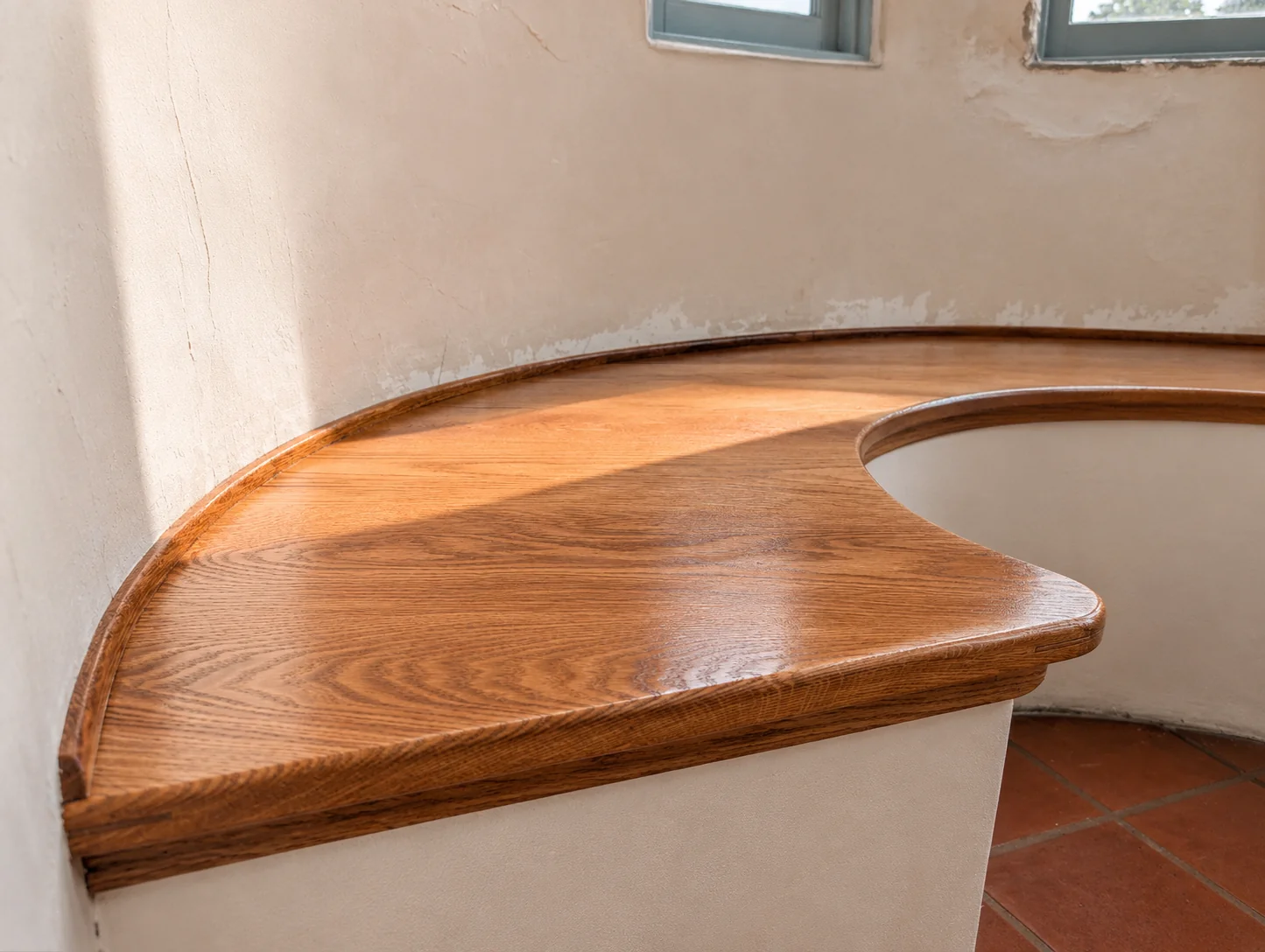
A tower-shaped room in a Los Angeles home — a round nook off the main living space, three tall windows and a shallow curved wall between them — got a full refresh and a solid-oak window seat scribed to the arc. The curved walls were patched, replastered in the damaged spots, and repainted. The window seat we built in-shop: templated on site, fabricated from white oak, finished with a satin penetrating oil, and installed as a clean continuous curve under the glass.
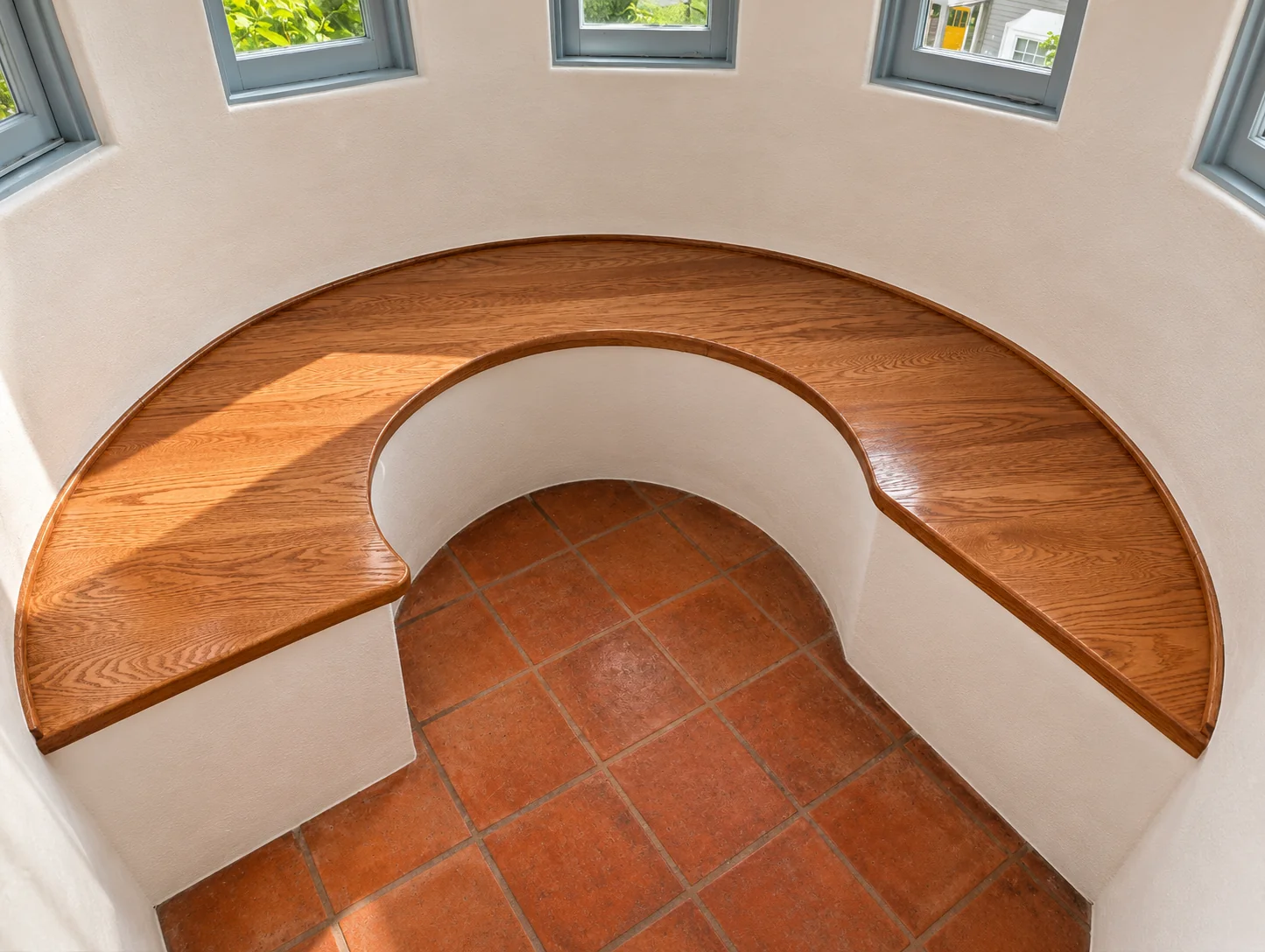
The job
The brief was to make the tower room useful without changing its architecture. Right now it was a sunny but empty corner — no furniture fit the arc, no clear purpose. A fixed window seat was the obvious move: a place to sit and read without crowding the room, following the geometry of the walls, letting the windows stay the focal point.
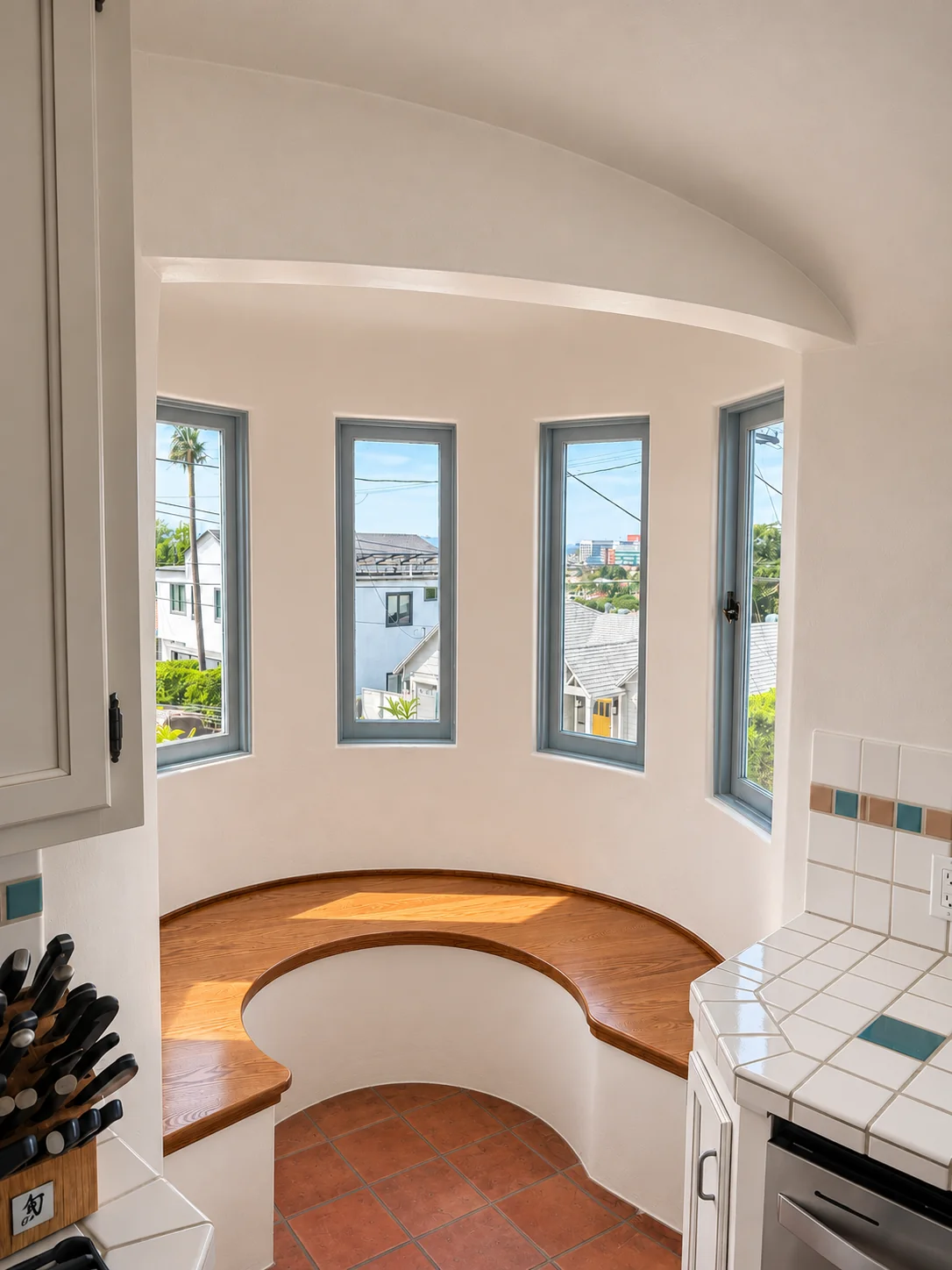
Walls — plaster repair and paint
Before the millwork, we fixed the walls. Years of small hairline cracks around the window headers, two softer patches where water had gotten in and been left to dry. We cut out the failed material, replaced the backing where needed, floated new plaster in two coats to match the surrounding texture, sanded flush, primed and painted. Flat warm-white on the walls, satin on the window casings, so the paint supports the oak without competing with it.
Templating on site
Curved walls do not forgive. We spent an afternoon templating the exact arc with thin plywood stock — scribing each section to the actual plaster, not to a theoretical radius. Two reference templates: one for the back of the window seat, which follows the wall; one for the front, a looser, softer curve the homeowner chose. Window height, floor variance, and any high spots in the plaster — all recorded on the template so the shop work could proceed without surprises.
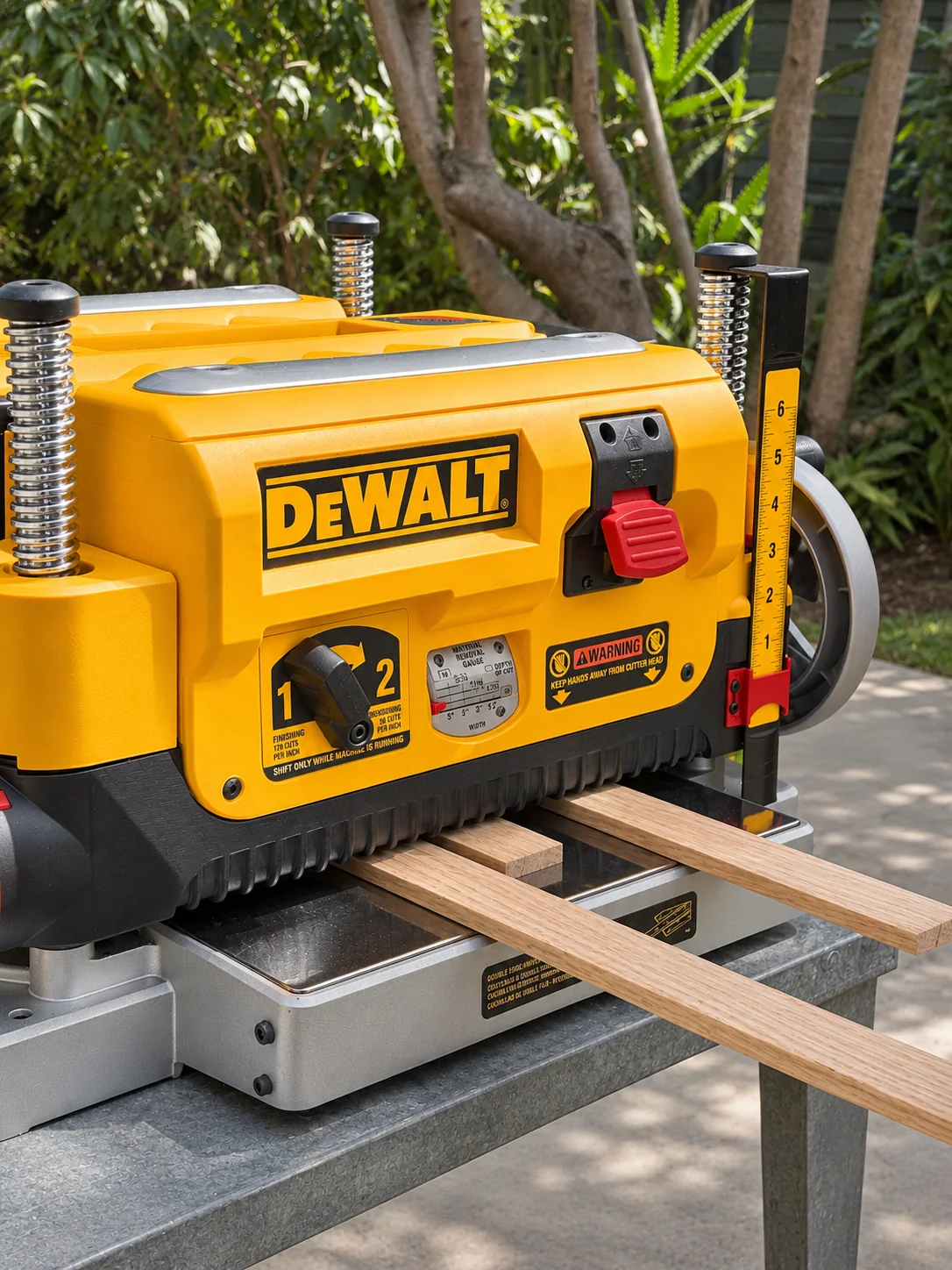
Workshop fabrication — planer, jigsaw, hand sanding
Solid white oak for the window seat. Rough boards were run through a DeWalt 735 thickness planer to a common 1-3/4″ blank, then edge-glued into panels wide enough for the top and the apron. Grain direction was selected carefully — oak reads very different going with you versus against you under hand — so we laid up the glue-up such that every panel runs the same way the eye travels around the arc.
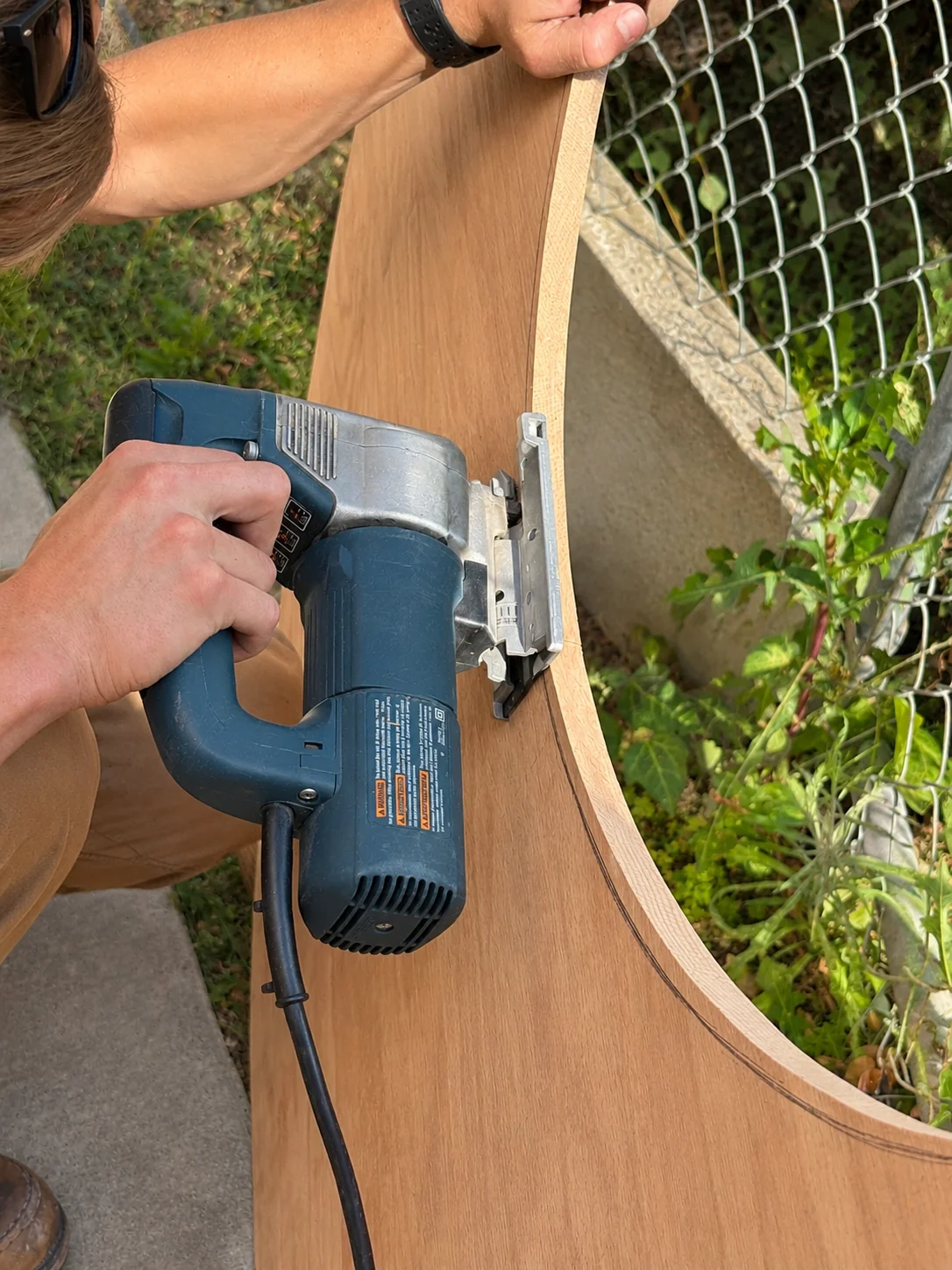
Curves were cut with a jigsaw against the templates, then trued with a flush-trim bit. From there it was hand sanding — 150, 180, 220 — on every face the hand or the eye can reach. Oak was chosen for grain, warmth, and how well it holds a hand-feel finish.
Dry fit and install
Delivered to site in three sections — one top, two apron panels — sanded ready for finish but not yet oiled. On site, we dry-fit each section, scribed the final 1/32″ into the plaster where the wall showed a small drift, took the pieces back out, hand-sanded the scribe lines, applied two coats of a satin penetrating oil, and let it cure. Final install is screwed and glued to a solid-oak subframe anchored into the wall studs — no fasteners visible from above, no gap at the plaster.
Project summary
- Scope: round tower room refresh — plaster repair, repaint, bespoke curved-oak window seat
- Walls: patched and replastered in damaged spots, primed, painted flat warm-white
- Window seat: solid white oak, edge-glued panels, scribed to the wall arc
- Shop tools: DeWalt 735 thickness planer, jigsaw against on-site templates, flush-trim bit, hand sanding through 220
- Finish: two coats satin penetrating oil, applied after final dry fit on site
- Install: screwed and glued to an oak subframe anchored to the wall studs, no visible fasteners
Have a curved wall, a bay, or an unusual nook that needs a bespoke bench, window seat or built-in? Get in touch — send photos with a tape measure in frame, we come back the same day with a templating-and-fabrication plan.