
A heavy custom steel fence, a full-automatic sliding gate with a built-in pedestrian door, and a code-compliant redwood section wrapping the electrical zone — all in one Los Angeles property. This was a full-scope metal-and-wood project: we drew it, cut it, welded it, powder-coated it, trenched for the gate motor and track, poured the concrete, hung the panels, and dialed in the gate so it closes clean every time.
Project Overview
The client wanted the privacy of a solid fence, the clean look of real wood, and the longevity of steel — all three. The solution was a heavy steel structural frame with wood-grain-printed corrugated metal panels, plus a powered sliding gate across the driveway with a walk-through pedestrian door built right into it. One remote, two ways in.
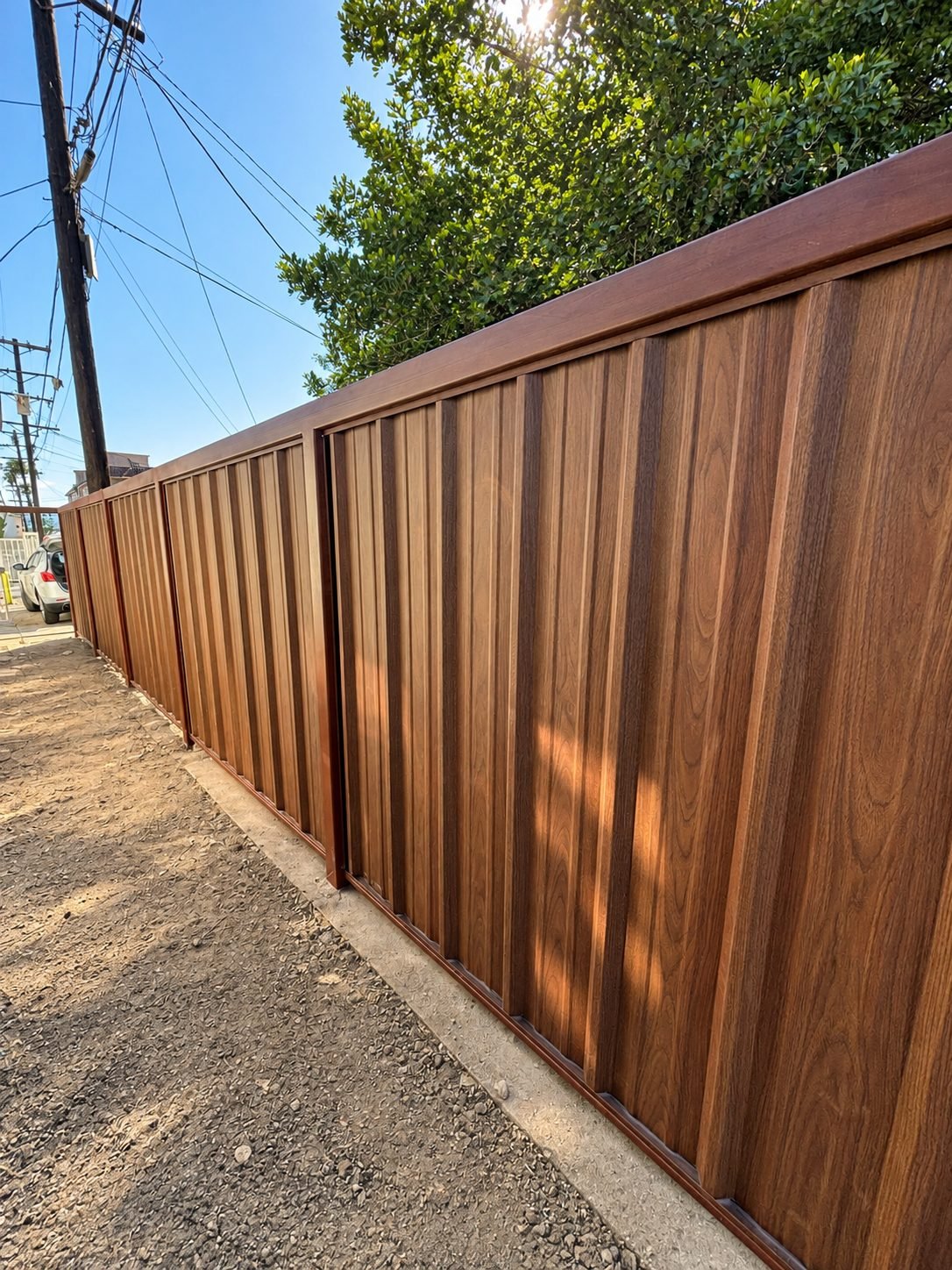
From the street this reads as a premium hardwood fence. Up close it is steel: welded, bolted, and anchored to withstand decades of LA sun, winter rain, and the daily impact of a motorized gate opening and closing hundreds of times a month.
Why Steel + Wood-Grain Metal Panels
Real wood fences in Los Angeles have one timeline: a stain refresh at year three, warping and splitting by year seven, replacement around year ten. The homeowner here wanted zero of that maintenance cycle. The compromise is almost always “modern grey corrugated” or “composite that doesn’t quite look like wood.” Here we delivered the actual look of a stained premium hardwood with none of the upkeep:
- Structural frame: rectangular steel tube (2×2 and larger at posts), hand-welded in our shop, hot-dipped primed and powder-coated to a matte dark bronze.
- Infill panels: factory-finished wood-grain-print corrugated steel. The texture is pressed in; the wood pattern is baked on under a clear UV coat. It does not fade, split, or need re-staining.
- Hardware: stainless carriage bolts hidden behind the frame, galvanized hinges, through-bolted post anchors into fresh concrete piers.
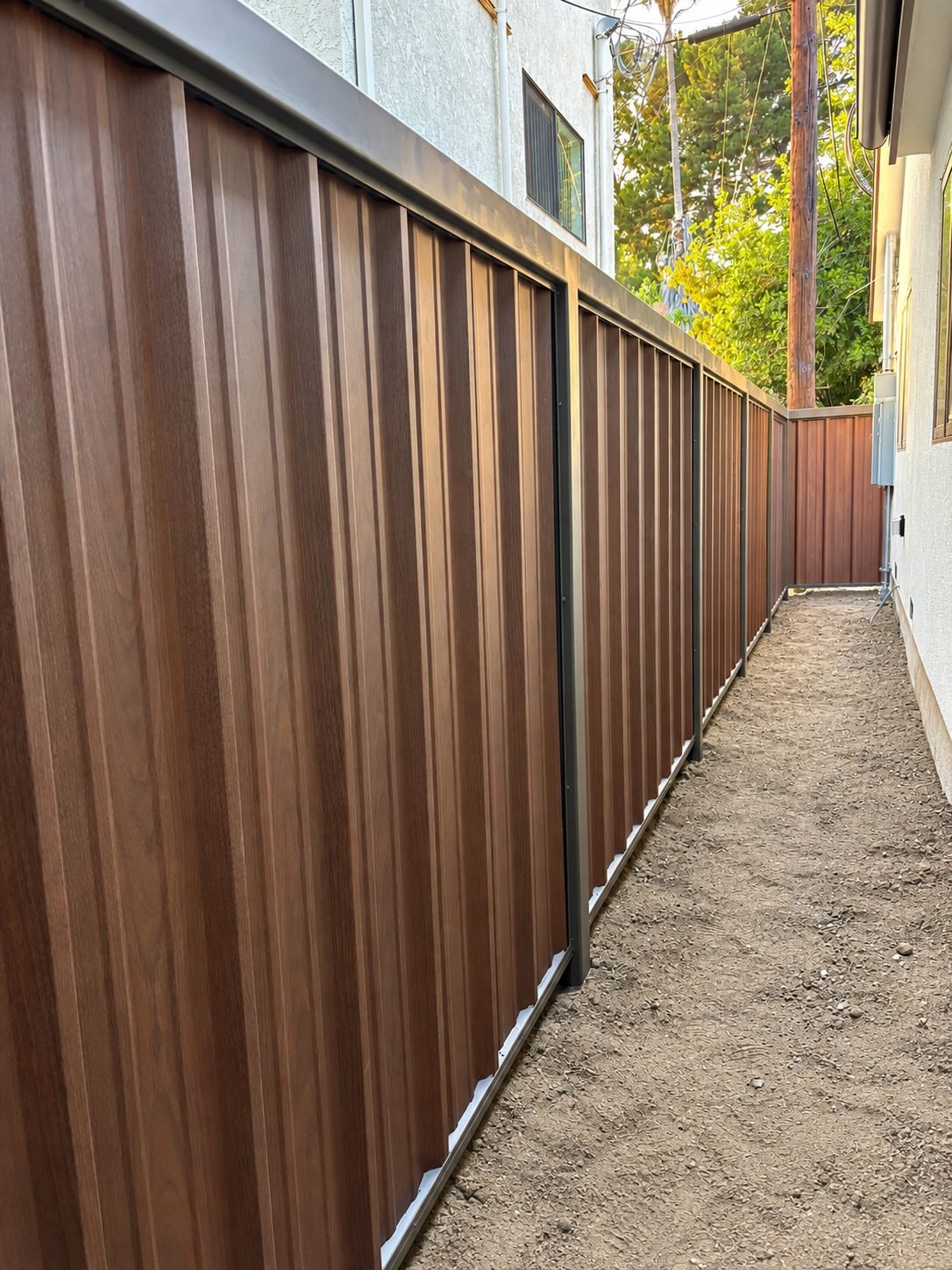
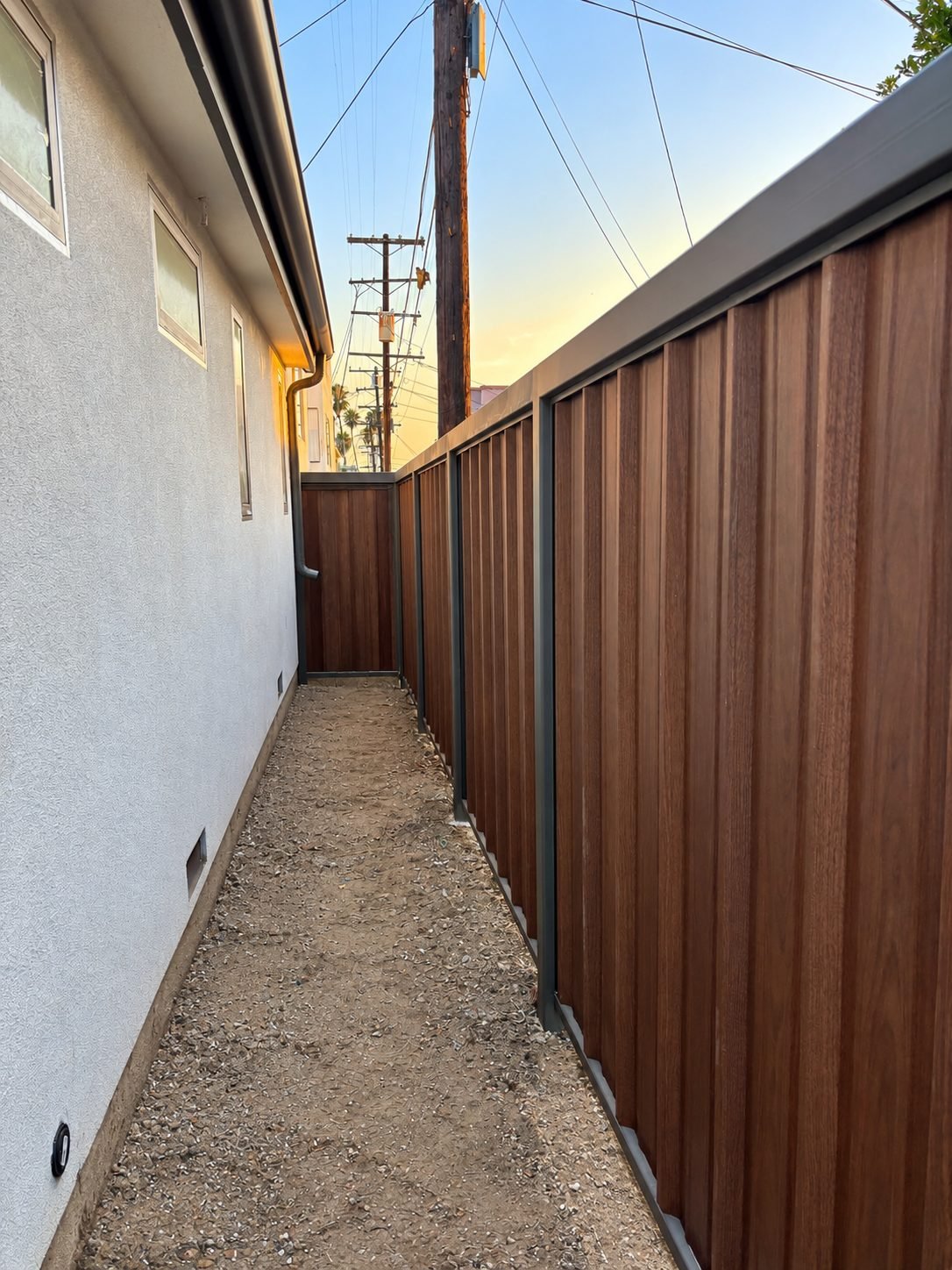
The warm wood tone makes the fence disappear into the landscape instead of acting as a visual wall. You read “wood” first and only notice the steel durability on closer inspection.
Automatic Sliding Gate with a Built-In Pedestrian Door
A powered sliding gate solves the problem of a long driveway with no room to swing — the gate just rolls to one side on a buried track with a V-wheel carriage. The owner opens it from a remote, from a keypad at the entry, or from a smartphone over Wi-Fi relay. The pedestrian door built into the sliding gate means you can walk in without powering the whole gate up: handy for delivery drops, taking the dog out, or when the gate motor is being serviced.
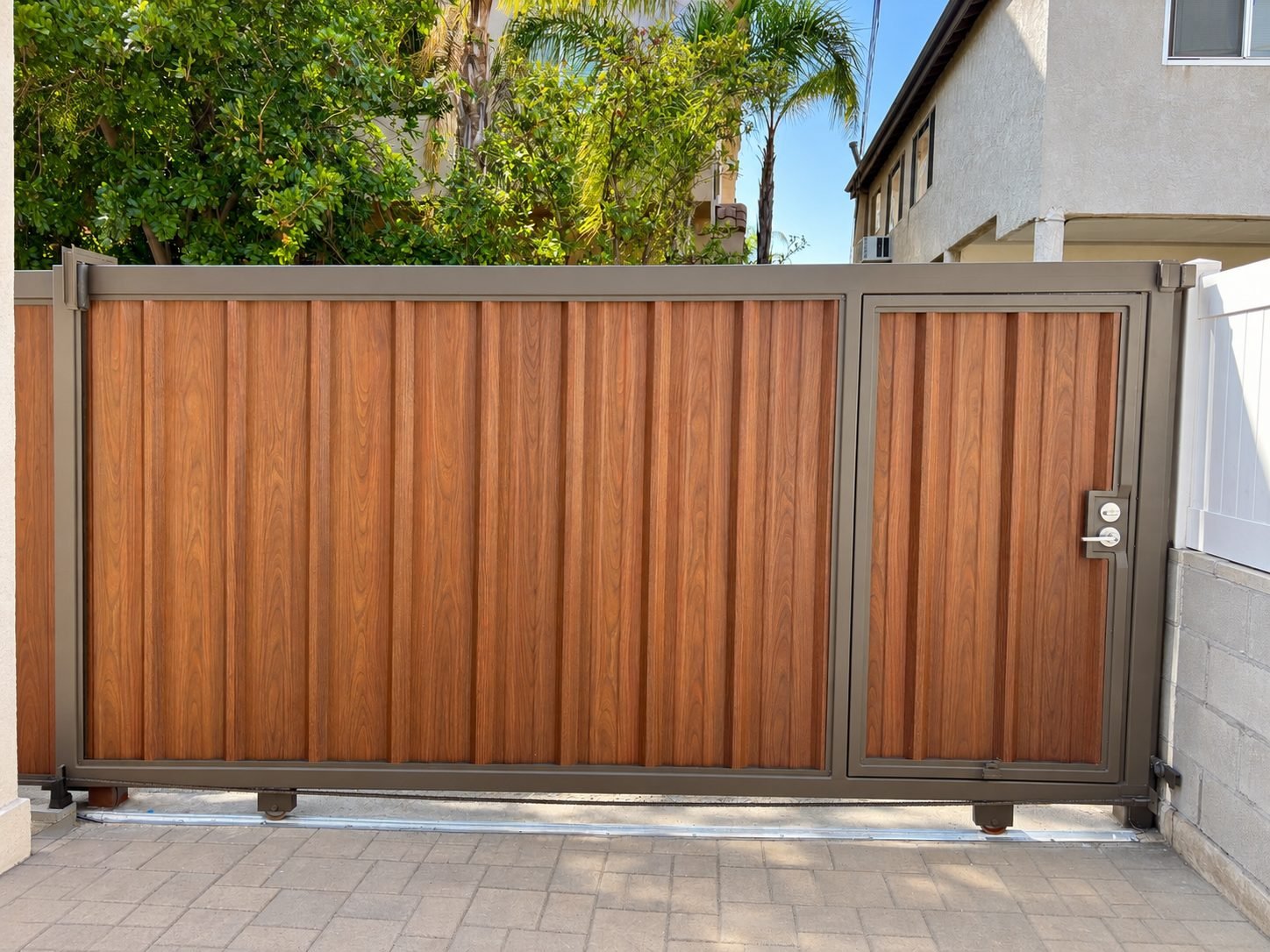
Mechanically this is the hardest part of the project. The pedestrian door has to:
- Hang from the same moving frame as the main gate without racking it when swinging open
- Have its own lockset keyed to the home’s system
- Clear the strike box reliably even as the gate expands and contracts across LA’s temperature swings
- Not interfere with the gate motor, limit switches, safety sensors, or the gate’s travel path
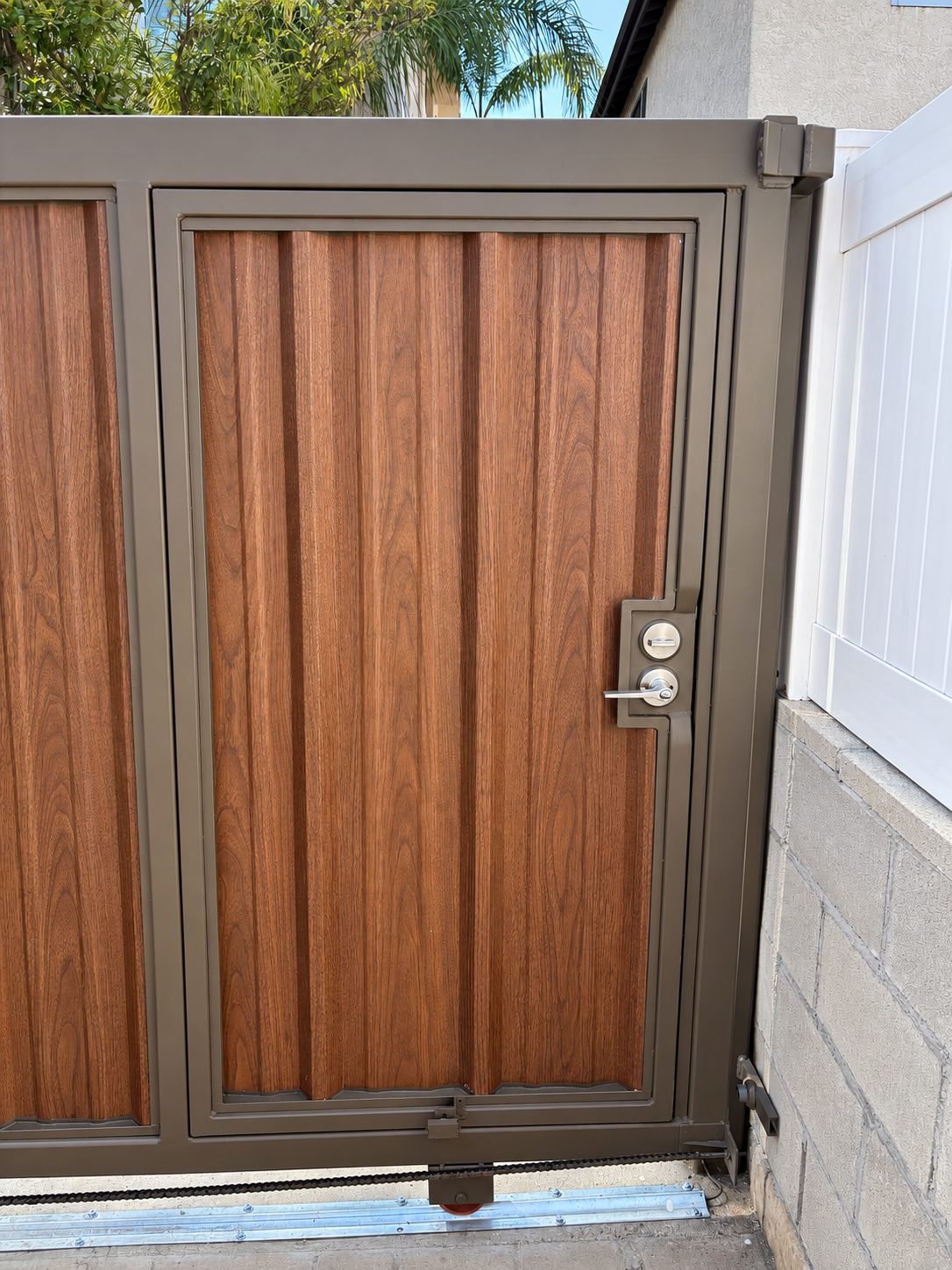
We built the door’s inner frame as a steel sub-rectangle welded inside the main sliding leaf, with its own continuous-piano-style hinge welded directly to the leaf. The handle set is a stainless deadbolt + lever, keyed to match the house. The strike plate is reinforced steel welded into the main gate frame.
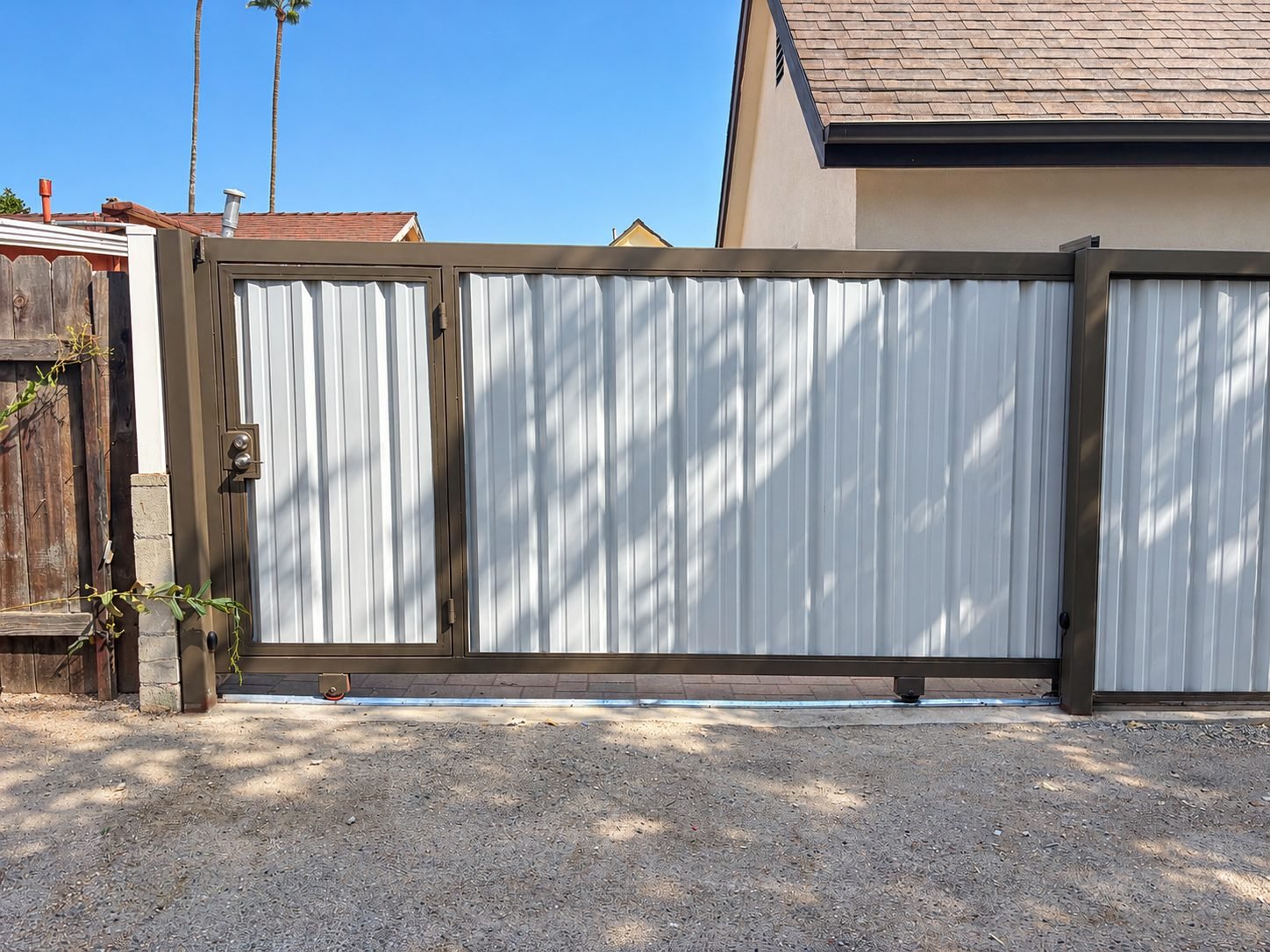
The gate rolls on an in-ground V-track with hardened steel wheels. The motor is a 24V linear slide operator rated for gates up to 1,500 lbs — ours is well under that spec, which keeps the operator loafing instead of straining, and massively extends motor life. Safety photo-eyes break travel on obstruction; the limit switches are externally adjustable.
Code-Compliant Redwood Section Near Electrical
Here is a detail most residential metalwork crews miss: Los Angeles electrical code and NEC §110.26 require specific clearance and non-conductive material around electrical panels and meters. You cannot box an electrical panel in with steel panels — code requires wood or another non-conductive material in that zone, both for arc flash safety and to prevent any accidental conductive path between the panel housing and ground.
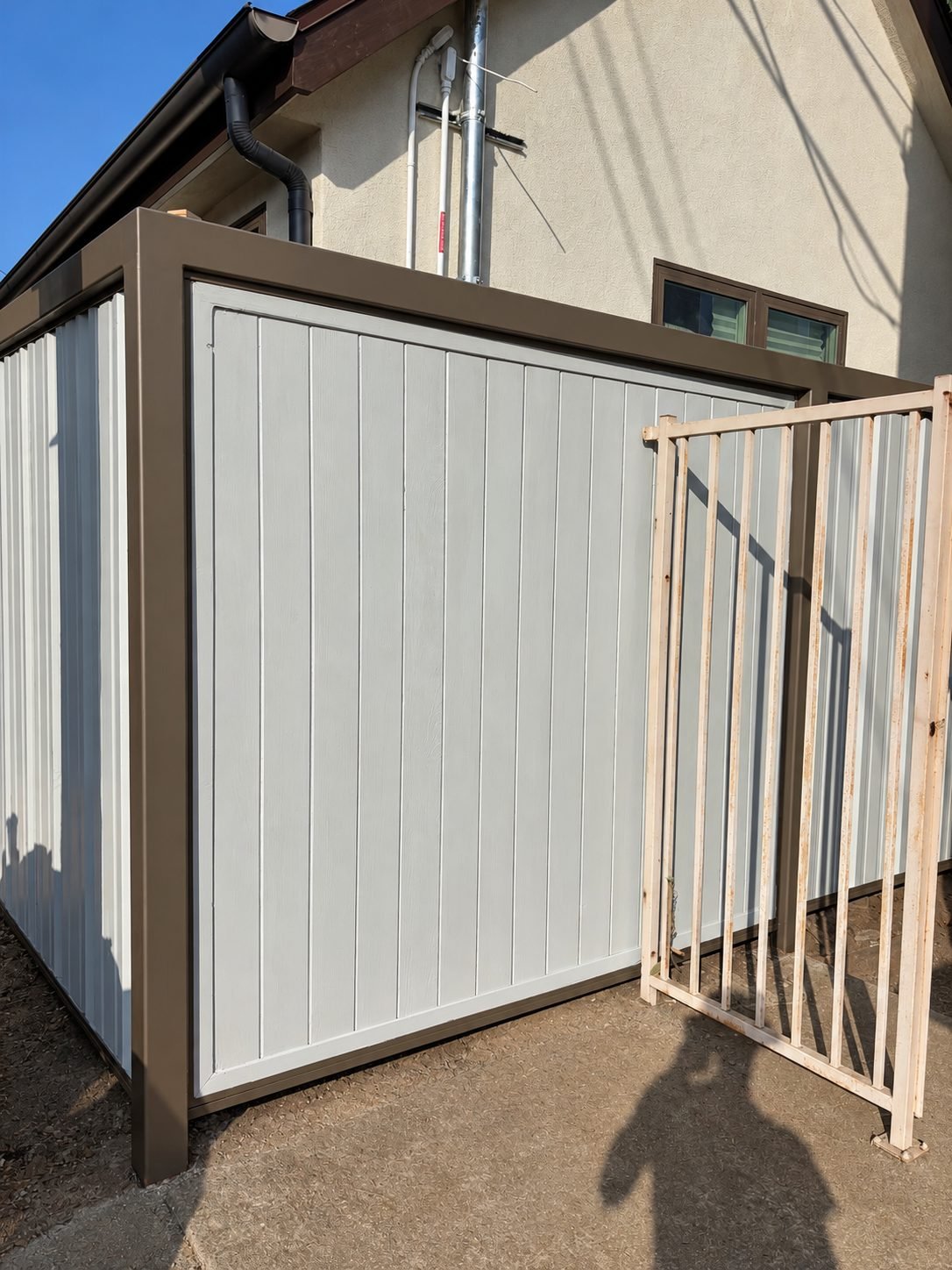
Our solution: a dedicated redwood infill section around the electrical zone, framed by the same steel structure for a continuous appearance. Redwood is naturally decay-resistant, dimensionally stable, and (critically) non-conductive. We planed, sanded, and sealed the redwood boards on-site before installation.
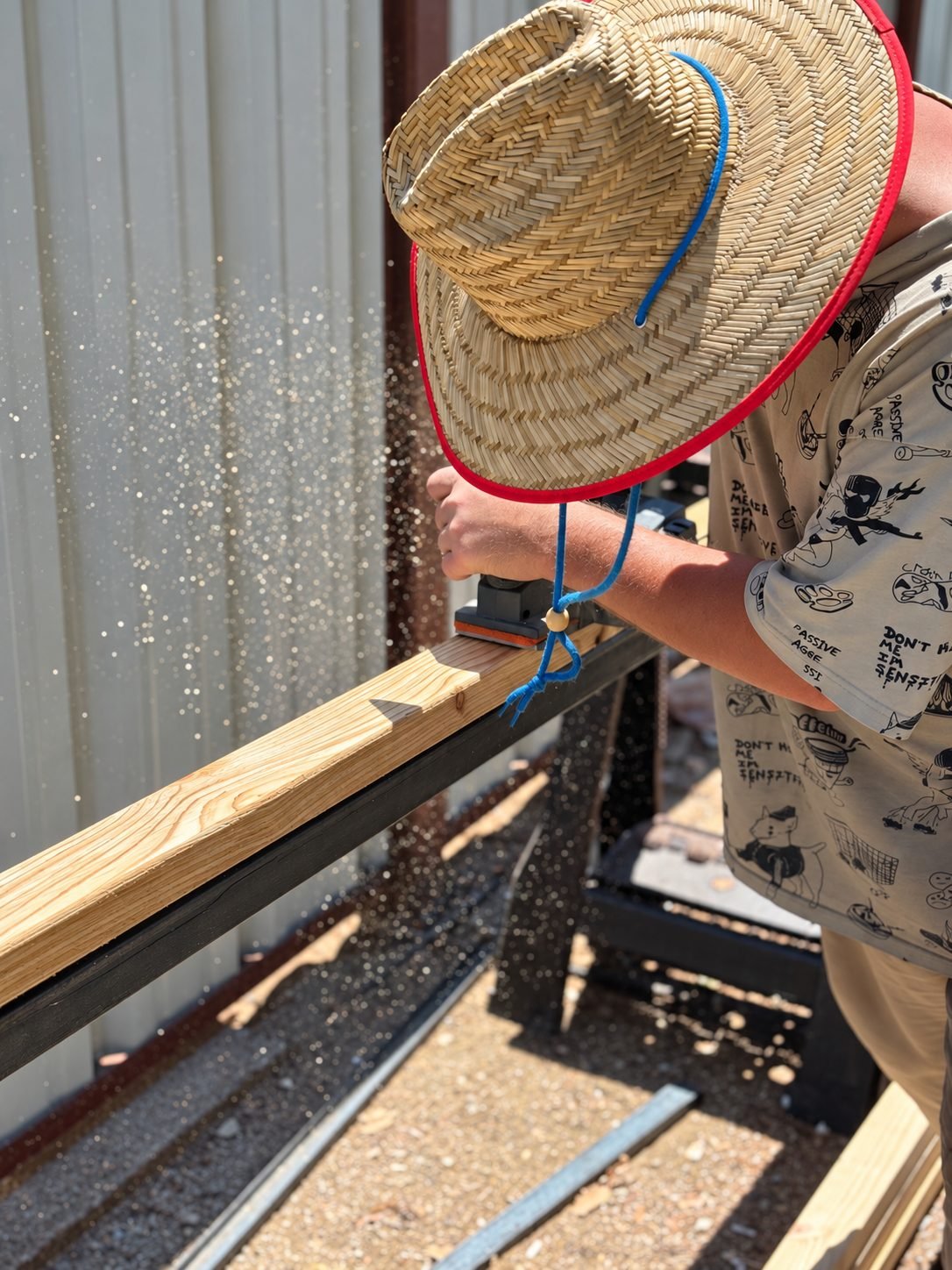
From the street, the only clue that this section is different is a slightly different panel orientation. Functionally, it means the fence passes inspection and the homeowner is not sitting on a liability if there is ever an electrical fault.
Back-Side Grey Panels — Honest Finish
Along the back of the property where the fence faces the alley and the neighbor’s utility corner, we switched to grey corrugated steel panels with a reddish-brown top rail that pulls from the house’s existing fascia. The grey panels are the same product line as the wood-grain panels, just a different factory finish — same gauge steel, same frame compatibility, same lifespan.
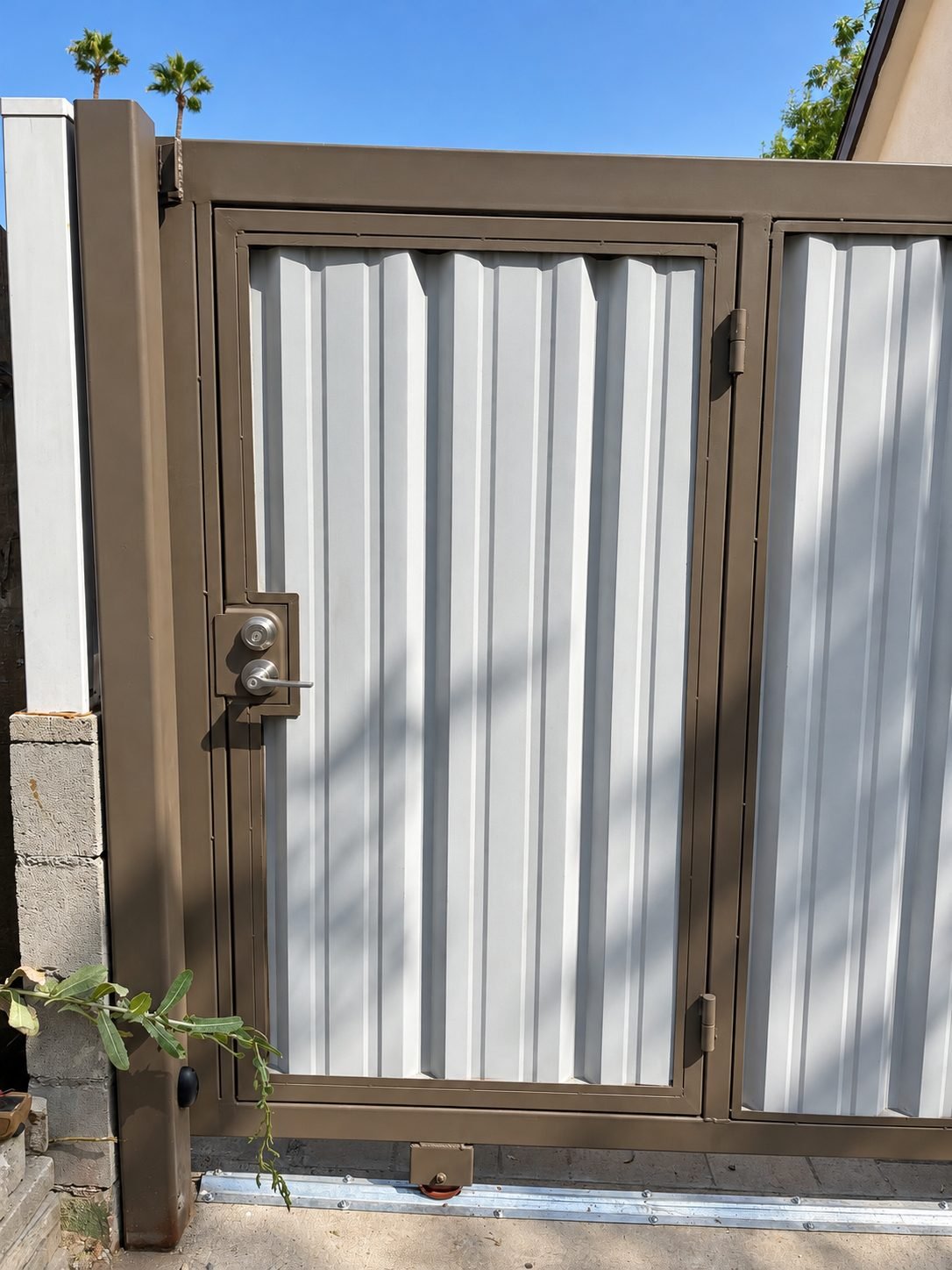
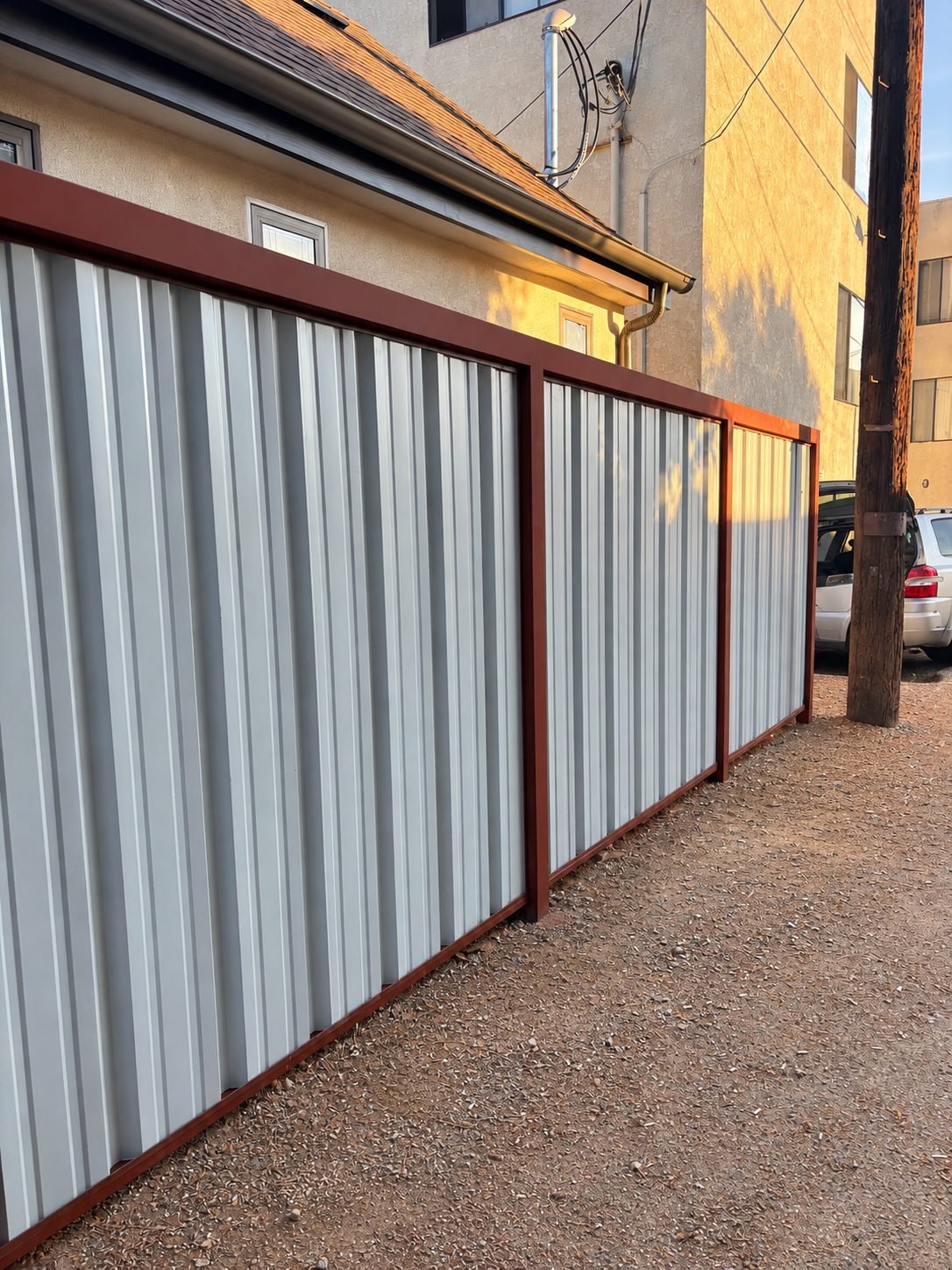
Why the switch? Two reasons. One: the alley side gets a lot more direct afternoon sun bounce off the pavement and the neighbor’s wall, and the grey panels reflect more of that heat (lower expansion/contraction over time). Two: the wood-grain finish is a visual premium that belongs on the front and side yard where the homeowner sees it every day — the alley side does not need it.
How the Steel Was Fabricated
Every piece of this fence frame was cut, mitered, welded, and finished by hand in our shop before being trucked to site. Factory-made panelized fence systems are faster to install but have two problems: the welds are usually only MIG spot-welds (fail in salt-air environments), and the dimensional tolerances assume a perfectly flat installation surface, which almost never exists in a real Los Angeles yard.
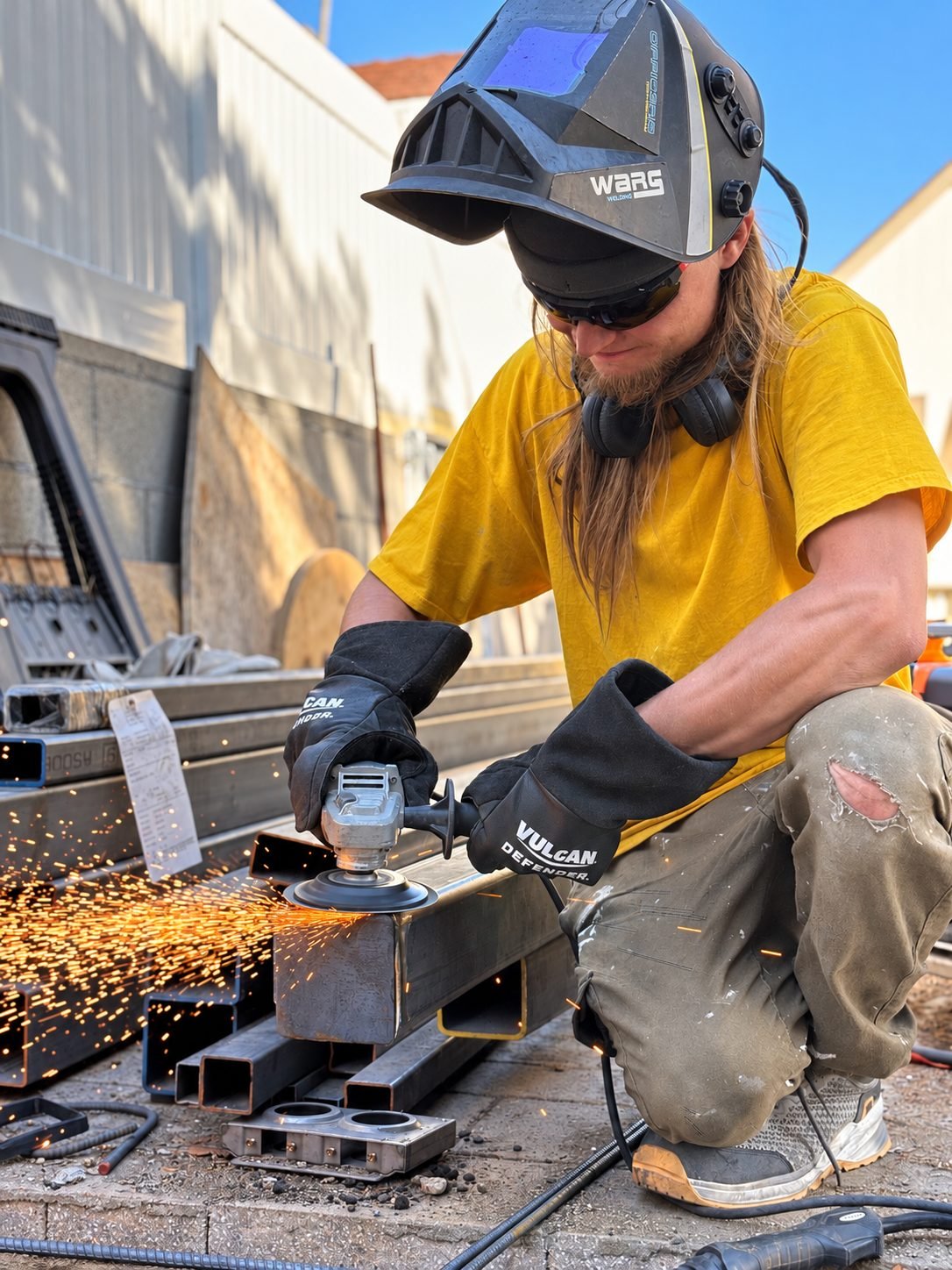
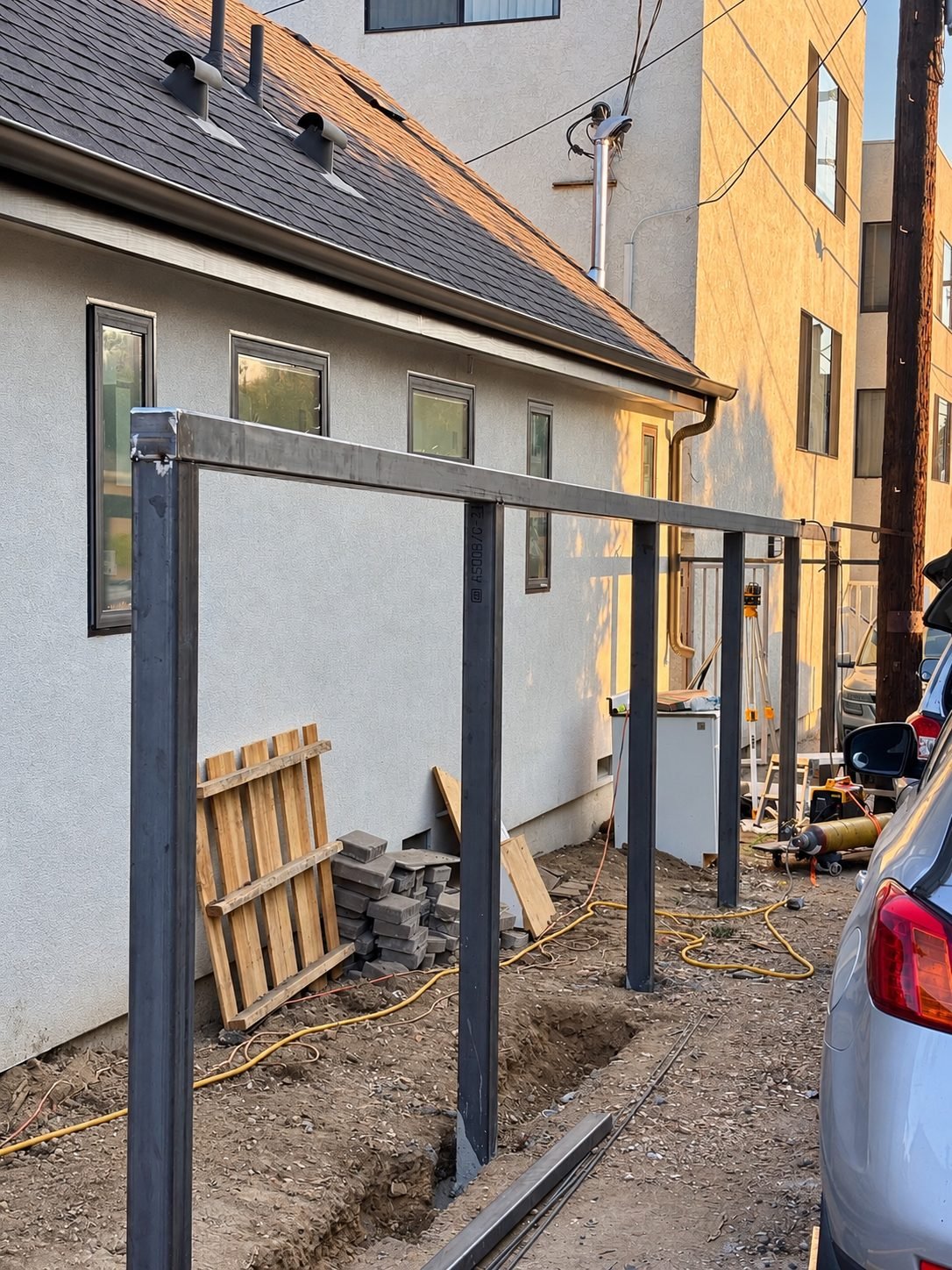
Our frames are TIG-welded at corners and MIG at long seams, which gives the right balance of appearance (TIG looks clean at the visible joints) and strength (MIG is faster and provides deep penetration on the structural members). Every weld gets ground flush and the whole frame is powder-coated after fabrication, before any panels go on. If a panel ever gets damaged, it unbolts and swaps without touching the structure.
What You Get With This Build
- Lifespan: 25+ years on the structural steel, 15+ on the wood-grain-printed panels before any noticeable finish degradation. Compare: 7–10 years for a cedar fence, 10–12 years for pressure-treated.
- Maintenance: wash twice a year with a garden hose. No stain, no sealer, no board replacement.
- Security: rectangular steel tube is significantly harder to breach than wood posts. The gate adds motorized sliding with manual override.
- Resale appeal: a motorized gate is one of the top-returning upgrades for Los Angeles single-family homes in the $800K–$2M range — buyers love controlled driveway access.
- Code compliance: redwood near electrical, proper permits pulled, inspected and signed off.
What This Costs vs a Standard Wood Fence
A fence of this scope — steel frame, wood-grain metal panels, motorized sliding gate with built-in pedestrian door, redwood utility section, in-shop fabrication, trenching, concrete piers, powder coat, hardware, permits — runs roughly 3× the price of a cedar fence of the same linear footage, before the gate. The gate adds significantly on top: motor, track, remotes, keypad, photo-eyes, wiring run to the service panel.
The math works if the client is planning to be in the house 10+ years, cares about kerb appeal, and wants the convenience of a powered gate. The math does not work if the plan is to sell in two years — a cedar fence is a smarter spend in that scenario, and we will tell you that straight.
Planning a Steel-Frame Fence or Gate in Los Angeles?
If you are considering a steel + wood-look fence, a motorized gate, or you have a tricky property with electrical panels, slopes, or long driveways that complicate a standard fence install — we’re happy to walk the site with you and talk through what makes sense. We fabricate everything in-house, we pull the permits, and we don’t quote prices we can’t honour. Free same-day estimate for most residential fence and gate projects.
Contact us at (818) 401-7766 or request an estimate on the site. Greater Los Angeles — Glendale, Burbank, Pasadena, La Cañada, La Crescenta, Eagle Rock, Los Feliz, Atwater Village, San Marino.