
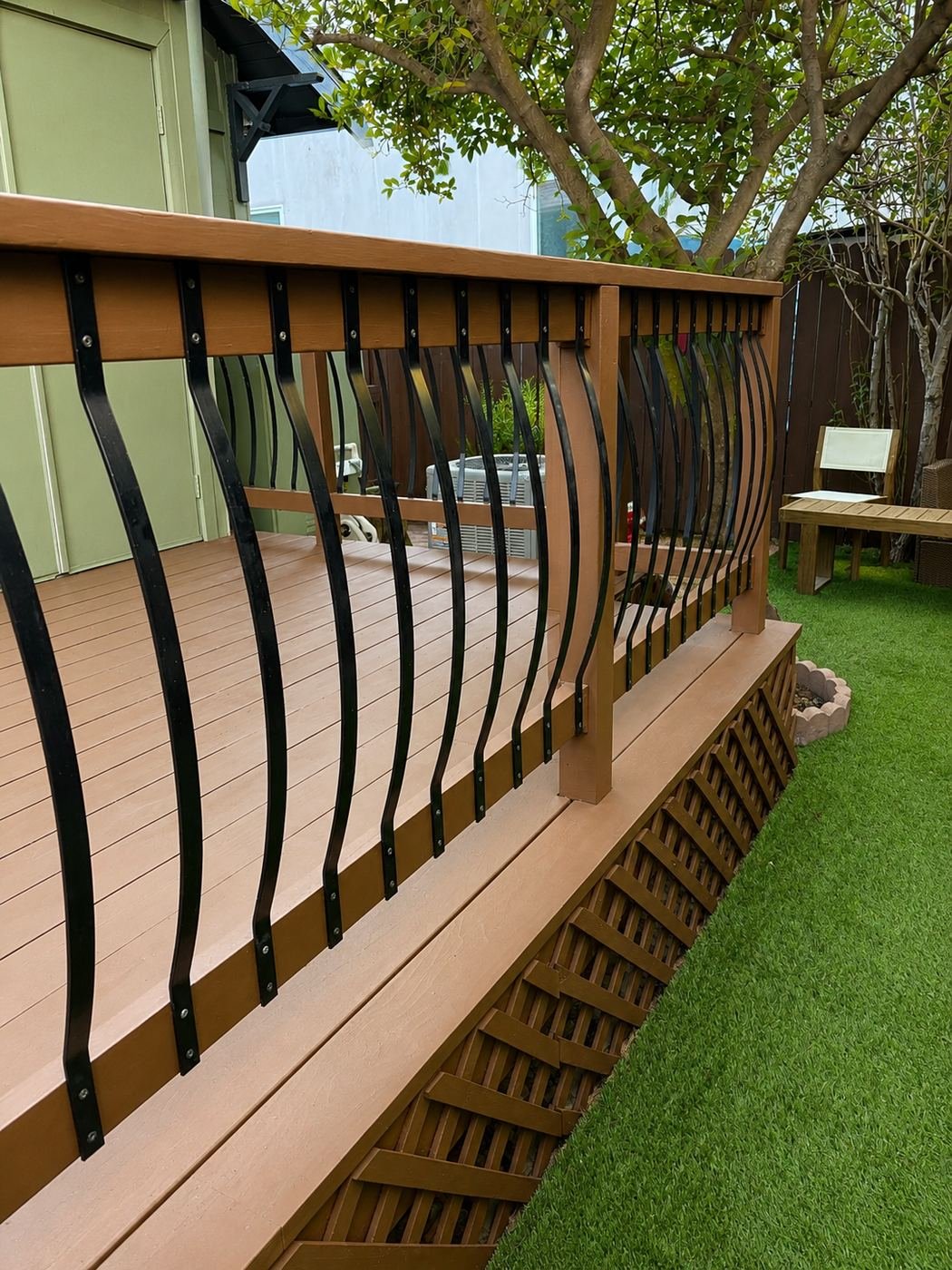
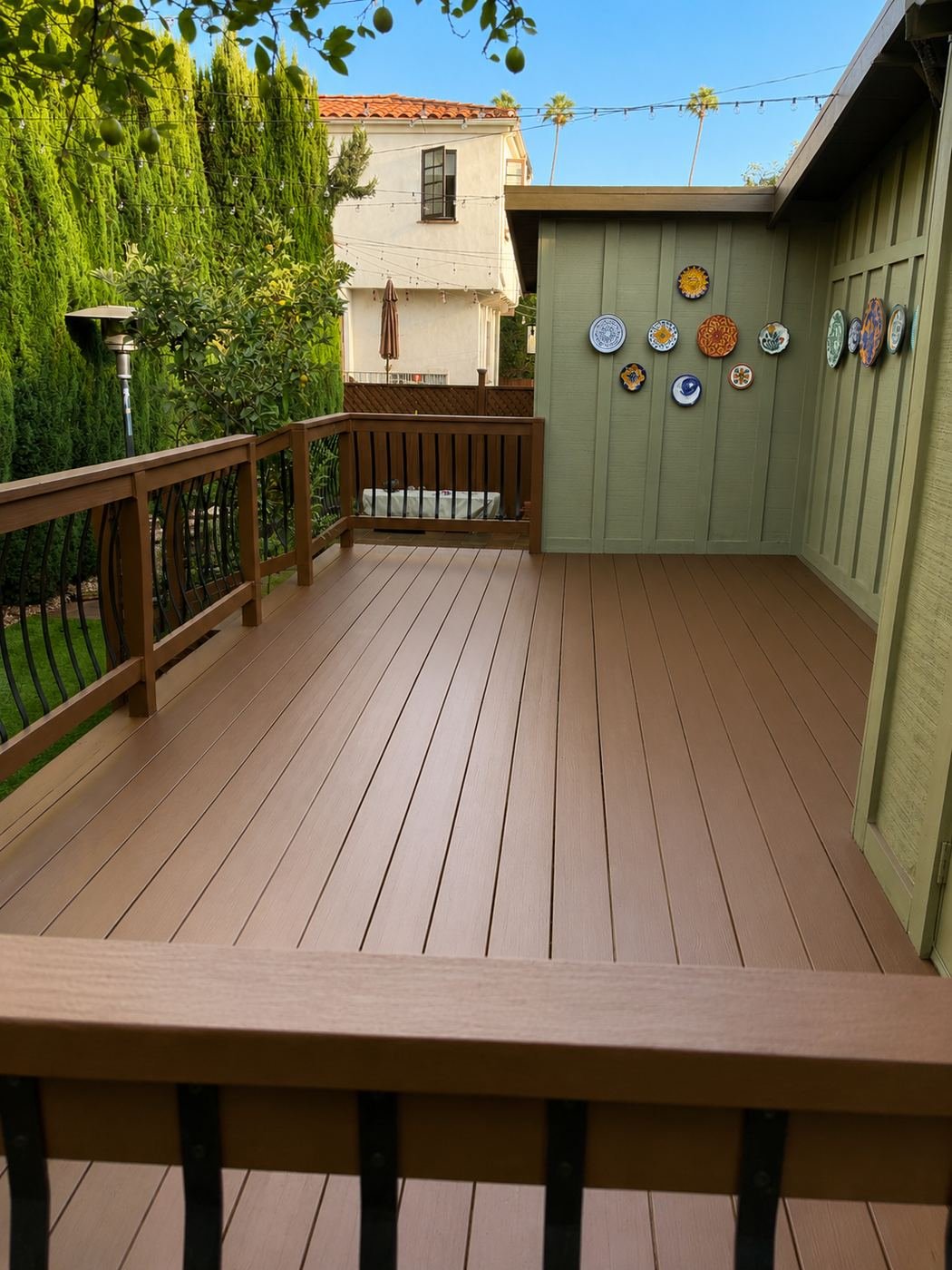
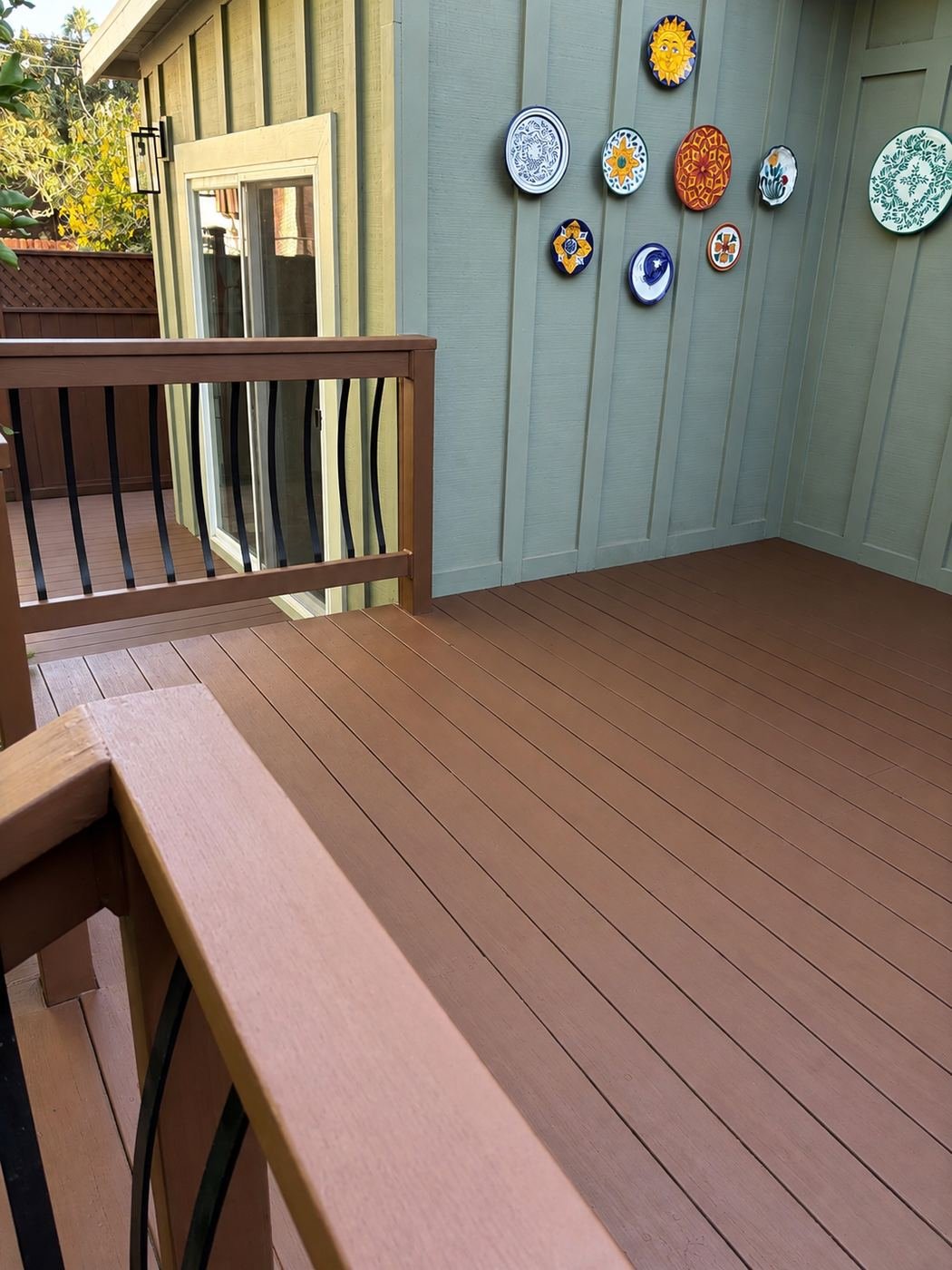
Full restoration of a wood deck with decorative bowed-baluster railings for a Los Angeles backyard — damaged boards replaced, the entire deck surface and railing system repainted, lattice skirt and stair treads refreshed. The decorative black metal “bowed” (belly) balusters were kept — that profile isn’t current anymore and replacing it with modern stock pickets would strip the deck of its original character. The deck now reads as new while keeping the design detail that gave it personality in the first place.
Project overview
- Location: Residential backyard, Los Angeles
- Scope: Full deck restoration — damaged wood board replacement, three-tread stair refresh, full repaint of deck boards + railing + posts + lattice skirt, black metal baluster refresh
- Original railing: Decorative bowed (“belly”) black metal balusters — kept and refinished
- Deck surface: Wood deck boards, warm brown finish — damaged pieces replaced with matching lumber, full surface repainted/stained for a uniform tone
- Finish: Exterior deck paint/stain on wood elements, matte-black touch-up on metal balusters
Why restore instead of rebuild
On wood decks over 10–15 years old there are usually two things wrong: a few boards have cracked, cupped, or faded unevenly from sun exposure, and the railing paint has chalked. The temptation on a deck like this is to tear it out and start over — but a full tear-out is expensive and loses the design character that made the deck right for the house in the first place. The bowed balusters here are a good example: that profile was common in early-2000s custom metal work and you don’t see it in current catalogs. Restoration keeps the original design and brings the finish back to new.
- Board replacement, not full re-deck. We pulled only the deck boards that were cracked, split, cupped, or had sun-damage so deep that paint wouldn’t hide it. The rest of the field stayed.
- Full repaint for color match. Replacement boards and existing boards wouldn’t match tone-for-tone even if sourced from the same lumber yard (sun-weathered boards are always lighter than new). The whole deck gets repainted/restained so the finish is uniform across old and new.
- Baluster refinish. Each bowed baluster hand-touched with matte black exterior metal paint — these ornaments are the first thing to collect paint drips and the first place sloppy brushwork shows, so each one is painted separately with the deck boards masked underneath.
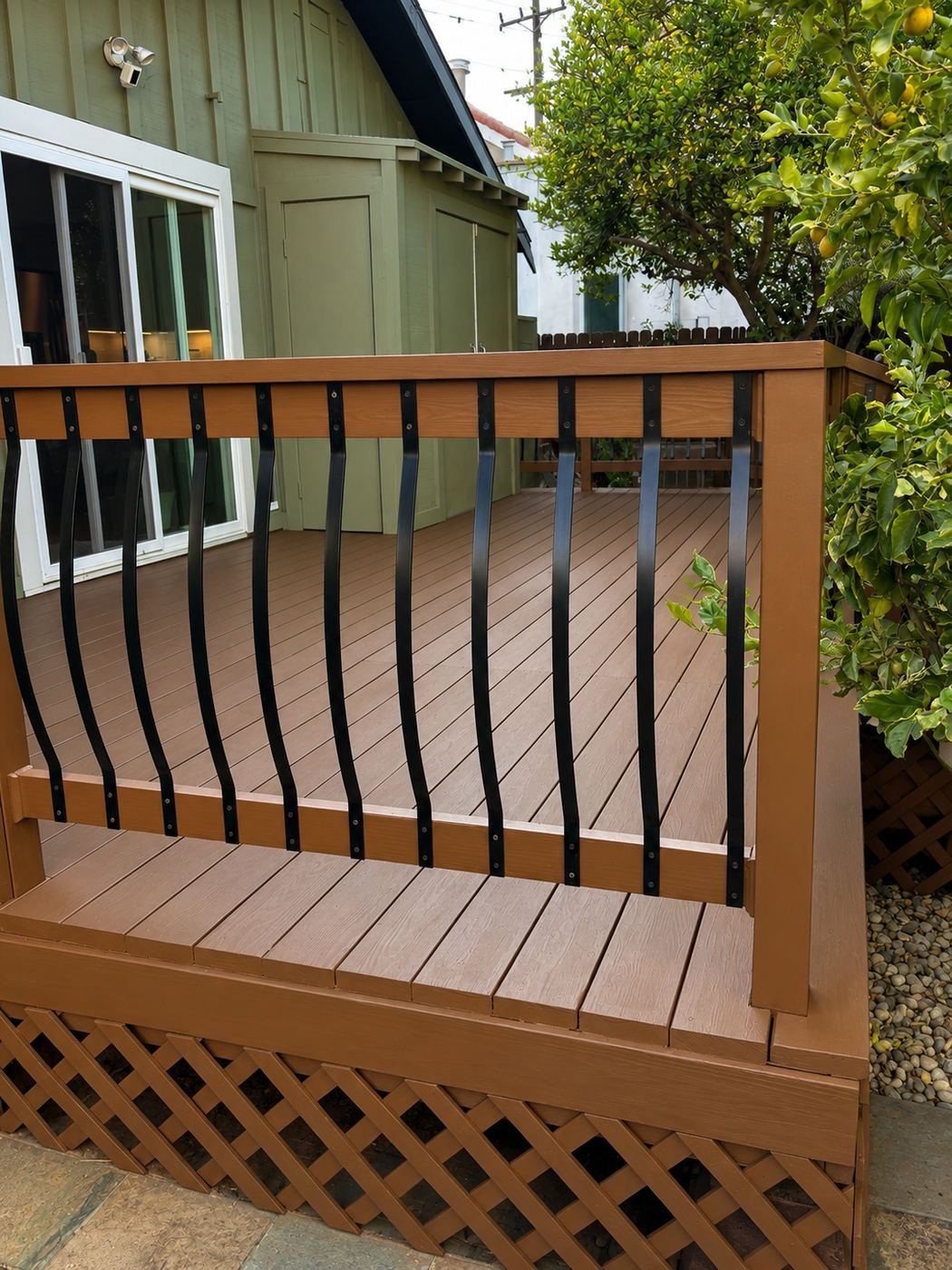
- Lattice skirt refresh. The lattice panels under the deck framing were cleaned, loose pieces re-fastened, and repainted in the same deck tone so the whole structure reads as one piece.
Stairs — the detail that shows the age first
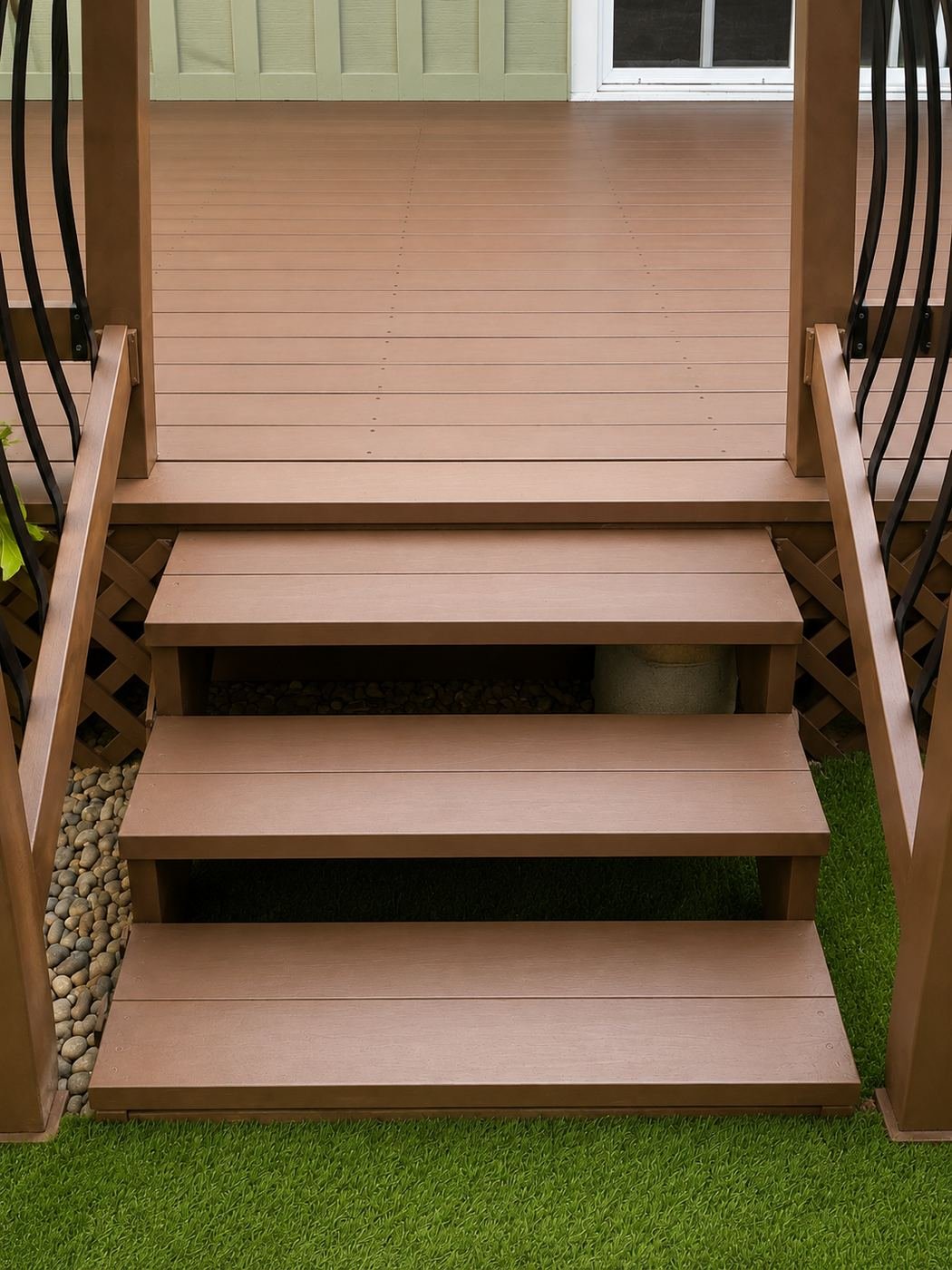
Stair treads take the most foot traffic and the most water. On restoration jobs the stair treads almost always need replacement even when the deck field is still sound. On this deck:
- Three new treads. Full wood tread replacement, cut square to the stringers, screwed from the top with countersunk fasteners.
- Stringers inspected and repainted. Side stringers (the angled boards that carry the treads) checked for rot, repainted after any patching.
- River-rock drainage bed. The rock bed at the base of the stairs is both decorative and functional — keeps the bottom tread from sitting in puddled irrigation water, which is what rots deck framing from the bottom up.
Need a deck restored?
If you have a wood or composite deck with faded finish, a few cracked boards, flaking rail paint, or a railing design you don’t want to lose — restoration is almost always a better call than full rebuild. We handle board replacement, stair tread refresh, railing refinish, and deck-wide repaint across Los Angeles. Free on-site assessment.
Call ProHands: (818) 401-7766 · Email: info@prohandshandyman.com · Serving: Los Angeles, Glendale, Burbank, Pasadena, San Marino