
A set of solid-wood interior doors — single-panel Shaker, two-panel Shaker, and four-panel Craftsman — installed and finished for a Los Angeles home. The client supplied the doors (unfinished vertical-grain fir slabs); we handled the hang, the hardware, and the full stain-and-topcoat finish. Honey/amber stain, matte topcoat, matched across all three doors so the house reads consistent room to room.
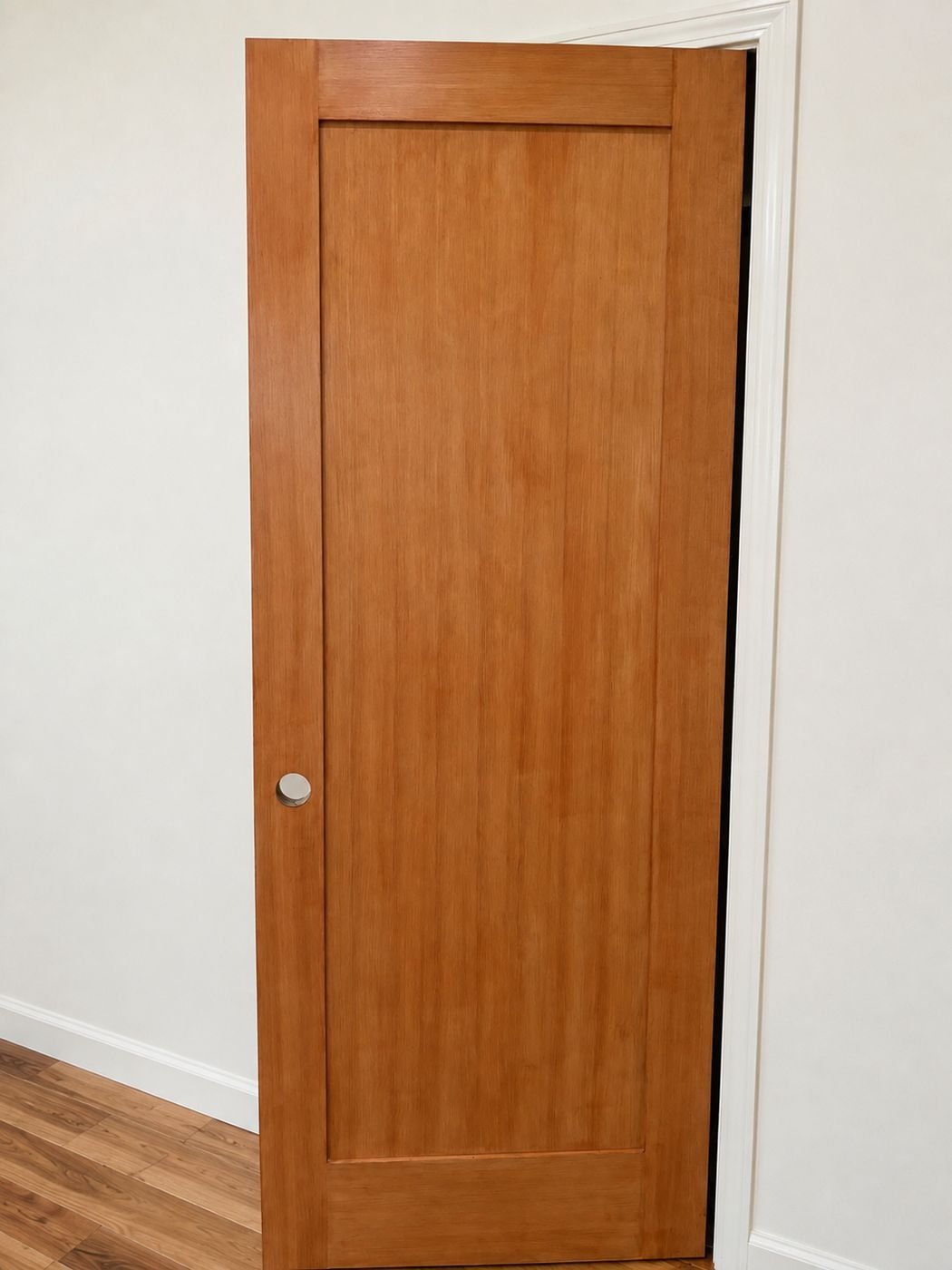
Project overview
- Location: Interior remodel, Los Angeles
- Scope: Three solid-wood interior doors — install, hardware, full stain and topcoat finish (doors supplied by client)
- Door styles: Single-panel Shaker, two-panel Shaker, four-panel Craftsman
- Wood: Vertical-grain fir, solid-core (not hollow)
- Finish: Warm honey/amber penetrating stain, matte polyurethane topcoat (two coats, lightly sanded between)
- Hardware: Matte black hinges, mixed knob/latch and recessed pulls per door function
Why solid wood (and why the finish matters)
Hollow-core doors are the standard spec in LA tract remodels — cheap, light, and they feel like it the moment you close one. Solid wood is a different conversation: proper weight on the hinges, no drum sound when it latches, and a surface that takes stain the way veneer never can. On this project the client sourced the doors unfinished specifically so the stain color could be matched to the rest of the house’s trim.
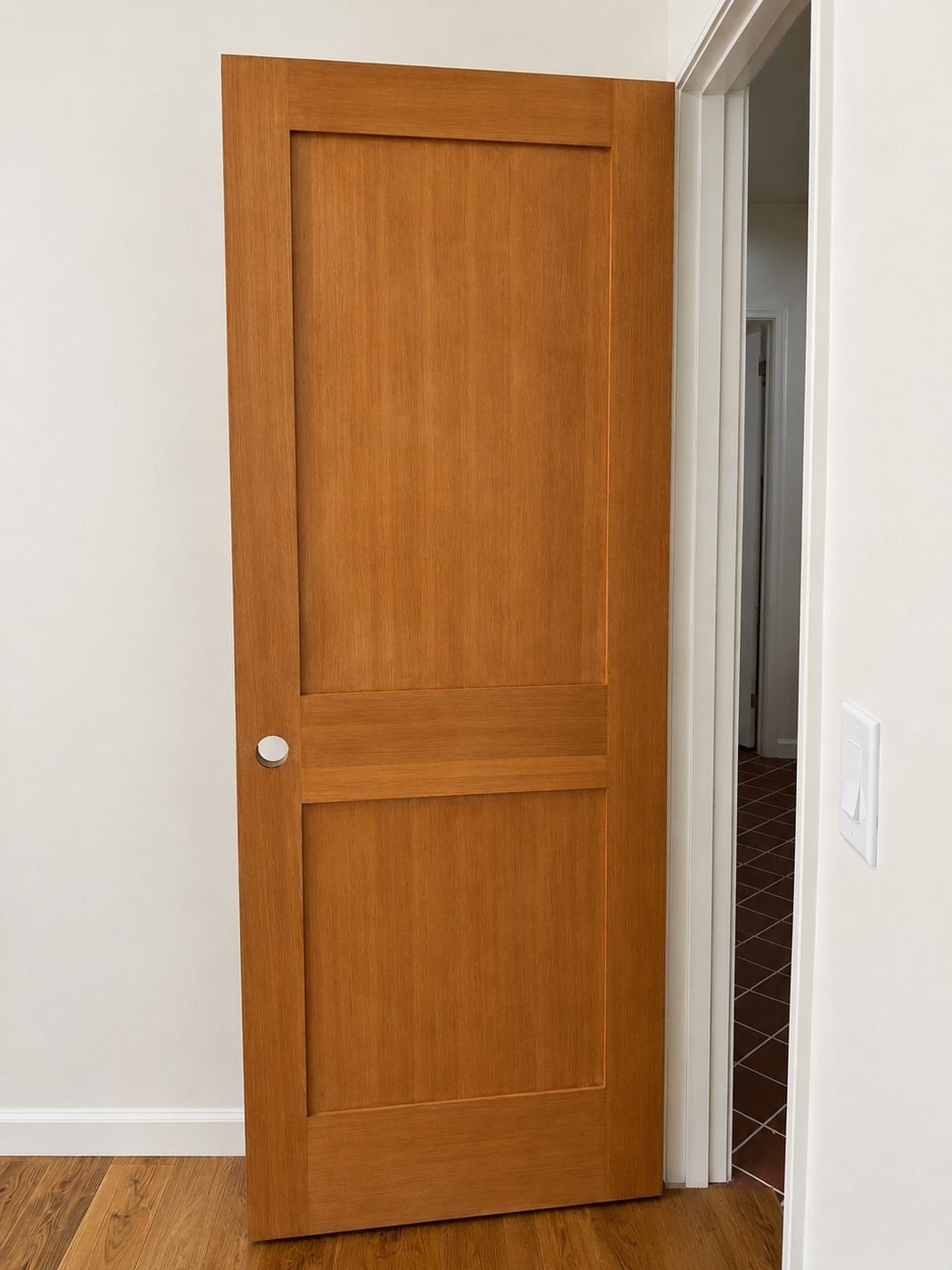
Finish process — what the stain job actually involves
- Prep sand. 180 grit over the full door — faces, edges, panels, and the top and bottom rails that most installers skip. Factory sanding on unfinished doors is uneven and the stain shows every missed spot.
- Grain fill (where needed). Vertical-grain fir has open grain; we spot-fill with a tinted filler so the stain lays flat on the faces, not pooled in the grain.
- Pre-stain conditioner. Fir and pine blotch without it. One coat, wiped back after 5–10 minutes.
- Penetrating stain. Oil-based, wiped on and off by hand so the color is even across the faces and the rails. Two passes for depth on this honey tone.
- Topcoat. Matte polyurethane — two coats, sanded lightly between with 320 grit so the surface stays glass-smooth without the plastic look of gloss.
- Edges and top/bottom seal. The top and bottom of the door get sealed too — this is what keeps the slab from drawing moisture and warping once it’s hung.
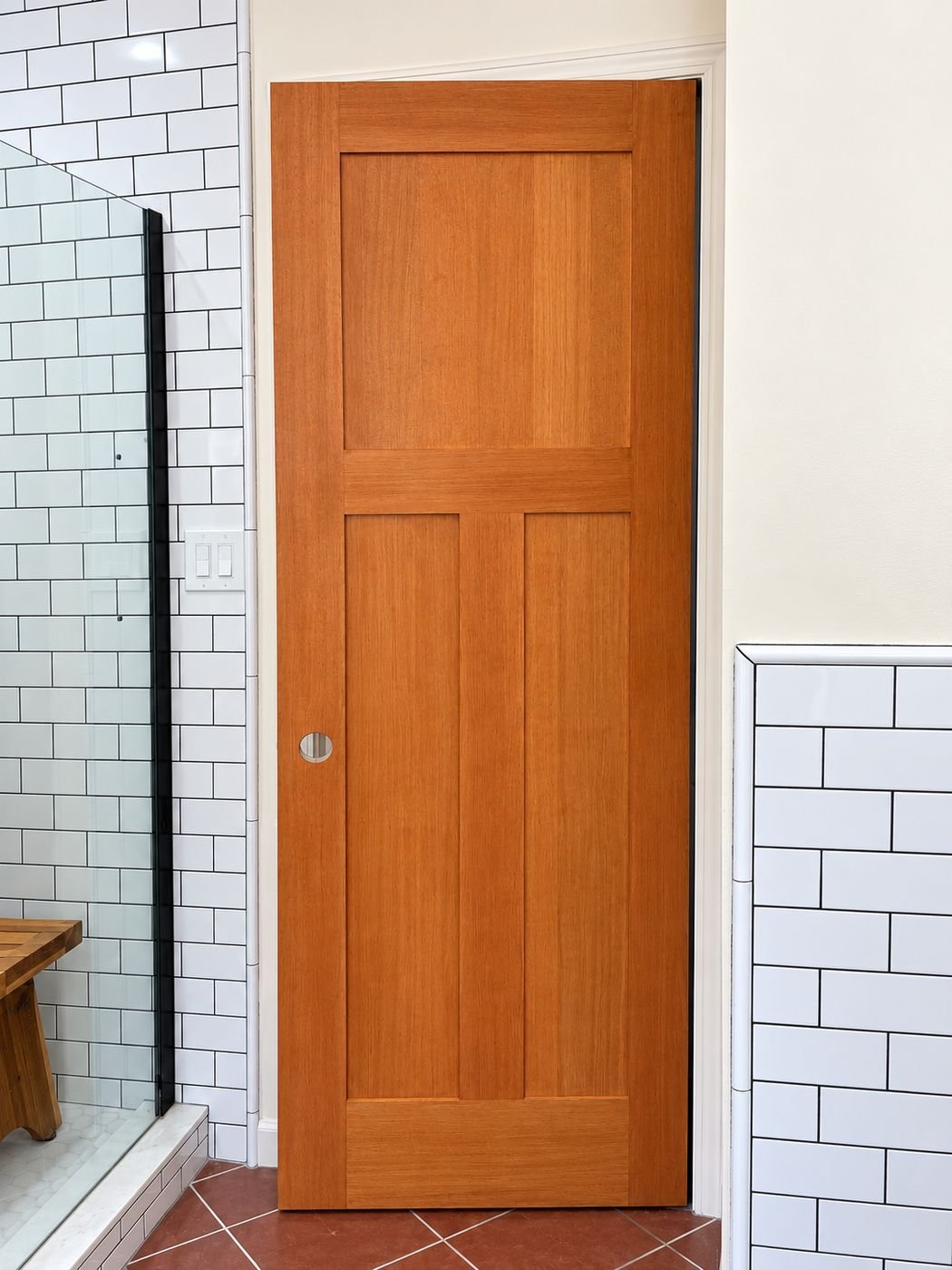
Install details
- Jamb check. Old houses in LA rarely have square jambs. Every opening gets shimmed and checked for plumb before the door hangs, otherwise it’ll latch wrong or swing open on its own.
- Hinge mortise. Clean mortises cut to depth so the hinge sits flush — not a shim stack that eventually squeaks and sags.
- Reveal. Even 1/8″ reveal around the top and sides, 1/2″ clearance over the finished floor — tightened by hand after the hinges are set.
- Latch alignment. Strike plate cut after the door is hung, so the latch catches cleanly on the first try instead of chewing the strike edge.
Our door policy — read this before you ask us to supply
We install and finish interior and exterior doors, but we don’t supply the door slabs themselves. The reason: a solid-wood door can arrive with hairline cracks, warped slabs, or face-grain defects the client may not want after it’s hung. We don’t want to be on the hook for a manufacturing issue on a product we didn’t make. Our approach: we measure, recommend the model and where to buy, the client purchases, and ProHands’s warranty covers the install and the finish work. That boundary saves everyone the awkward conversation later.
Need interior doors hung and finished?
Hanging and finishing solid-wood doors is one of the jobs where the install quality shows for the next 20 years. If you’ve got doors on order (or need help picking a slab style that fits the house), we handle the measurement, install, stain, and topcoat. Free on-site estimate.
Call ProHands: (818) 401-7766 · Email: info@prohandshandyman.com · Serving: Los Angeles, Glendale, Burbank, Pasadena