
A modern horizontal wood fence is one of the fastest ways to upgrade the curb appeal of a Los Angeles home. Done right, it looks clean, architectural, and built to last — the kind of detail that complements mid-century, Spanish, Craftsman, and modern homes equally well. Done wrong, it warps within a year, sags between posts, and ends up looking cheaper than the day it was installed.
This guide walks through how we approach horizontal fences for our LA clients: what materials hold up in our climate, what design choices matter, what a quality build actually costs, and what to expect during the project.
Why Horizontal Fences Work So Well in Los Angeles
Horizontal slat fences have become the default modern choice in neighborhoods like Silver Lake, Eagle Rock, Highland Park, Mar Vista, Studio City, and Venice — and for good reason.
The clean, linear lines pair naturally with the flat rooflines, stucco, and clean facades that define a lot of LA architecture. A horizontal fence visually widens the property, makes a smaller lot feel more generous, and frames landscaping rather than fighting it.
Our climate also helps. We get long stretches of dry weather and very little freeze-thaw movement, which means a properly built horizontal fence can stay tight and straight for many years without the cupping issues you would see in wetter regions. The trade-off is intense UV — and that is where wood selection and finish make all the difference.
Choosing the Right Wood
The wood you choose drives both the look and the lifespan of the fence. These are the options we recommend in Los Angeles, ranked by how they actually perform in our market.
Western Red Cedar. Our most popular pick for modern horizontal fences. Naturally rot- and insect-resistant, dimensionally stable, and it takes stain beautifully — you get that warm honey-to-amber tone that homeowners love. Mid-range cost. Expect 15–25 years of service with proper sealing.
Redwood (Construction Heart or Clear). A premium California-grown choice. Slightly richer in color than cedar, exceptional rot resistance, and very stable. Cost has come up in recent years, but for a front-facing fence on a higher-end home, it is worth it.
Ipe and other tropical hardwoods. The longest-lasting option — easily 40+ years — with a deep, dense grain that ages to a beautiful silver if left untreated. Heavier, harder to work, and significantly more expensive in both material and labor. We recommend Ipe for clients who want a true once-in-a-lifetime fence.
Pressure-treated pine with stain. The budget-friendly route. It works, and we can deliver a clean modern look, but you trade off lifespan and refinishing cycles. Best when the fence is set back from the street or used in less visible locations.
We generally do not recommend untreated fir or pine for a front-facing modern fence in LA. The savings up front rarely justify the warping and refinishing you will see within a few seasons.
Design Details That Separate a Good Fence from a Great One
Most horizontal fences look similar at a quick glance. The difference between premium and average comes down to the details.
Board thickness and width. We typically build with 1×6 or 1×4 boards, sometimes mixed for a more architectural rhythm. Thicker boards (5/4 or 2x material) hold their line better over long runs and read as more substantial from the street.
Reveal gap between boards. A consistent 1/4″ to 1/2″ reveal between boards is what gives the fence its modern signature. Too tight reads as solid siding; too open feels like a screen. We mock up a section on site before committing to the spacing.
Post system. Hidden posts (with boards spanning across the face) create the cleanest modern look but require more engineering. Exposed posts framed by trim caps are simpler and still look intentional when done right. For taller fences, we use steel post inserts or properly sized concrete footings to prevent leaning over time.
Top cap. A finished top cap adds a premium feel and protects the end grain of the posts from water. On the cleanest designs, we run a continuous flat cap the length of the fence.
Hardware. Black powder-coated hinges and latches are standard on modern fences. We avoid shiny galvanized hardware on the front-facing side — small detail, big visual difference.
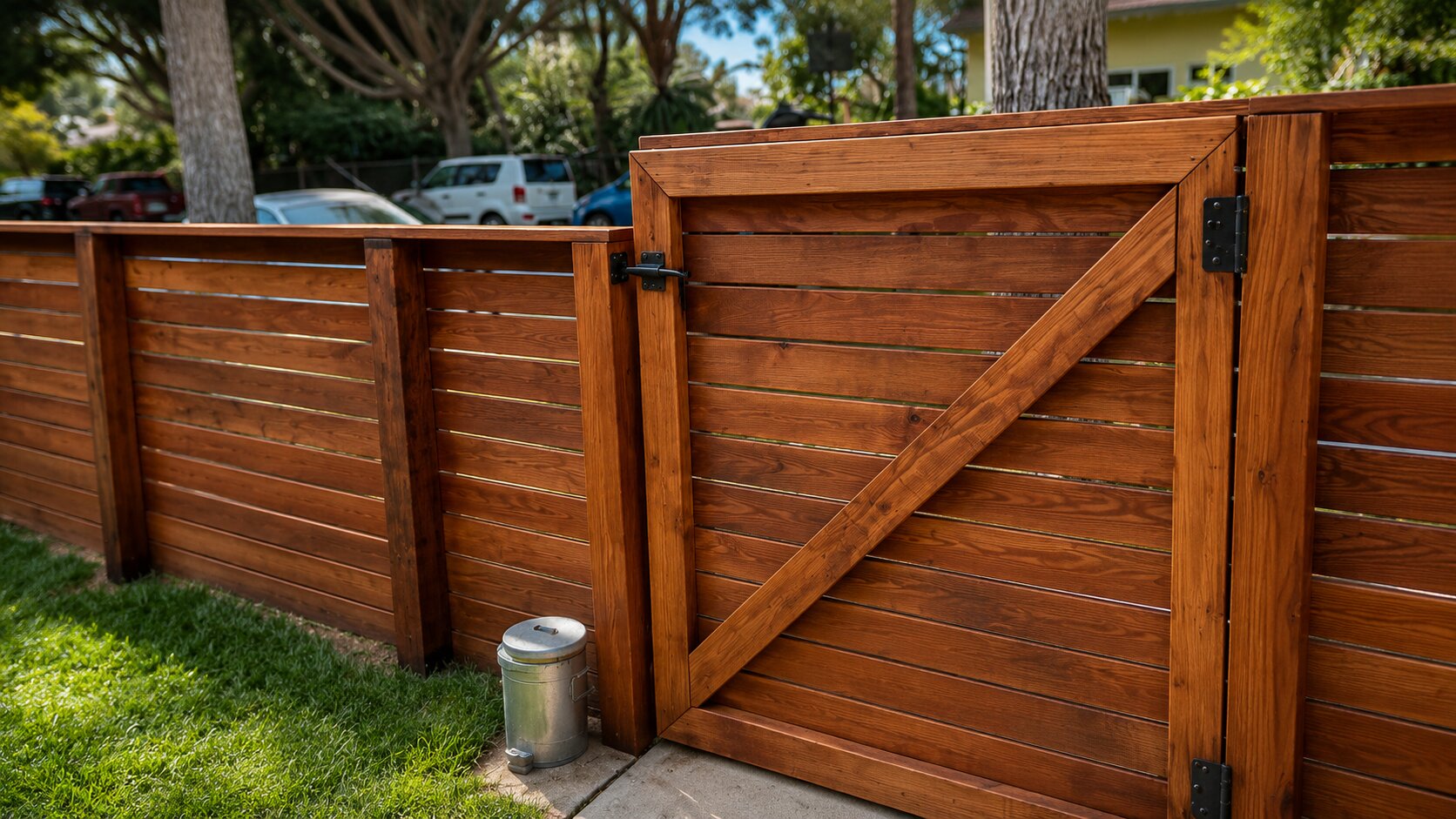
Gate construction. The gate is the part of the fence that gets used every day, so it has to be built to take that abuse. We use a Z-frame or steel-reinforced frame, heavy-duty hinges, and a self-closing latch where the client wants it.
Lighting and integration. When the fence is part of a larger front-yard project, we plan low-voltage lighting, drip irrigation routing, and grade transitions into the build from day one rather than trying to add them after.
Realistic Cost Ranges in Los Angeles
Pricing depends heavily on wood choice, height, run length, gates, demo of an existing fence, and site conditions. These are the ranges we see for a quality build by a licensed contractor in the LA market in 2026:
Cedar horizontal fence, 5–6 ft tall, standard build: roughly $85 to $135 per linear foot installed, including materials, labor, posts, footings, and stain or sealer.
Redwood horizontal fence, 5–6 ft tall: roughly $110 to $170 per linear foot installed.
Ipe or tropical hardwood horizontal fence: roughly $180 to $280 per linear foot installed, sometimes higher for complex designs.
Single pedestrian gate: $850 to $1,800 depending on hardware, framing, and width.
Driveway or double gate: $2,200 to $5,500 depending on width, hardware, and whether an automatic opener is included.
These ranges are for clean, accessible jobs. Add for demo and disposal of an existing fence, retaining wall work, steep grade changes, or permit-required heights (generally over 6 ft on the side and rear, over 42″ in the front setback in most LA jurisdictions — we handle the permit research as part of our estimate).
We always provide a written, itemized estimate that separates labor, materials, gates, finish work, and exclusions so there are no surprises mid-project.
What the Build Process Looks Like
A typical modern horizontal fence project on a single-family LA property follows a clear sequence.
Site visit and measurements. We walk the property line, check for utilities (we always call DigAlert), assess grade and existing conditions, and confirm what the city will and will not allow at the proposed height.
Design and proposal. Board layout, reveal spacing, post strategy, gate placement, finish color, hardware. We share photos of comparable projects so the client knows exactly what they are getting.
Demo and prep. If there is an existing fence, we remove and haul it. We mark post locations and confirm grade.
Post installation. We dig footings to depth (typically 24–36″ depending on height), set posts in concrete, and let them cure fully before any board work. Cutting corners here is the single biggest reason fences lean within a year.
Framing and board installation. Boards go on with consistent reveal spacing, fasteners hidden where the design calls for it, and tight cuts at corners and gates.
Gate build and hardware. Built on site for a precise fit. Hinges, latch, and any self-closing mechanism dialed in.
Finish. Sand the public-facing side, apply stain or sealer in the agreed tone. We always recommend at least a UV-protective sealer in LA — sun is the number one enemy of a wood fence here.
Walk-through and care guide. Final inspection with the homeowner and a written maintenance schedule.
Project timeline ranges from a few days for a short front-yard run to two or three weeks for a full property with gates and demo.
Maintenance: What to Expect Over the Years
A horizontal fence in Los Angeles is low-maintenance, not no-maintenance. Realistic expectations:
A quality UV sealer or semi-transparent stain should be refreshed every 2–4 years on the south- and west-facing sides, longer on shaded runs. We can do this as a service or hand off a clear DIY guide.
Hardware should be checked annually — hinges occasionally need a quarter-turn after a season of settling.
Boards rarely need replacement when the build is done correctly. When they do, the modular nature of horizontal construction makes single-board swaps straightforward.
Common Questions from LA Homeowners
How tall can my fence be? Generally up to 6 ft in side and rear yards, and up to 42″ in the front setback, but every jurisdiction has its own rules — and HOAs add their own layer. We confirm the limits in writing before designing.
Do I need a permit? For standard residential heights, usually not. For taller fences, retaining structures, or fences in hillside zones, often yes. We handle the research and pull permits when required.
Can you match a neighbor’s existing fence style? Yes, and we often do for shared property lines.
How long until the wood loses its color? Without sealer, redwood and cedar will silver out within a year or two. With a quality stain and UV sealer, you can hold the warm tone for 2–4 years between refreshes.
Do you offer a warranty? Yes. We stand behind our work with a written warranty on craftsmanship and a separate manufacturer warranty on materials and hardware.
A Recent Project: Horizontal Cedar Fence in Los Angeles
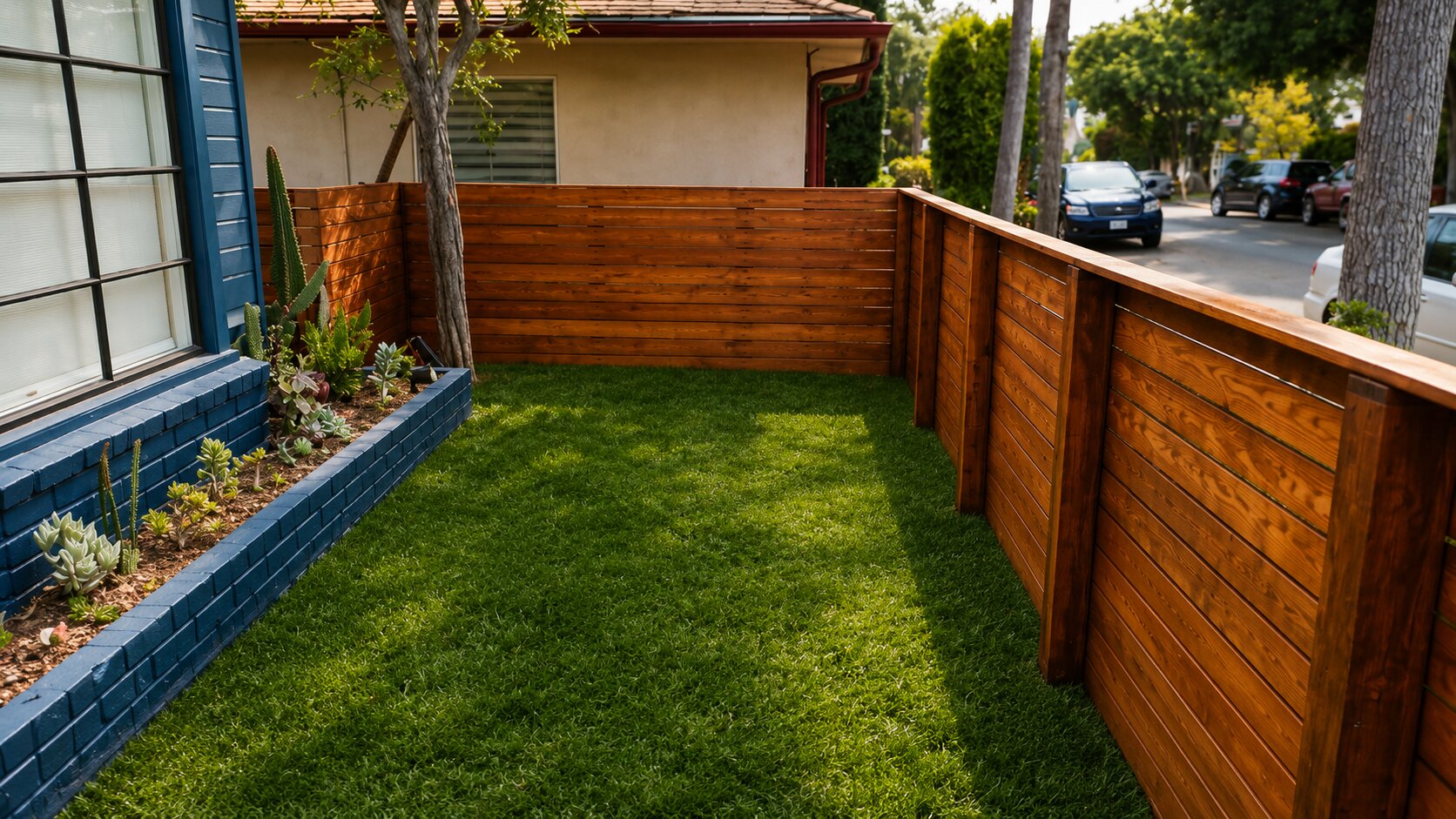
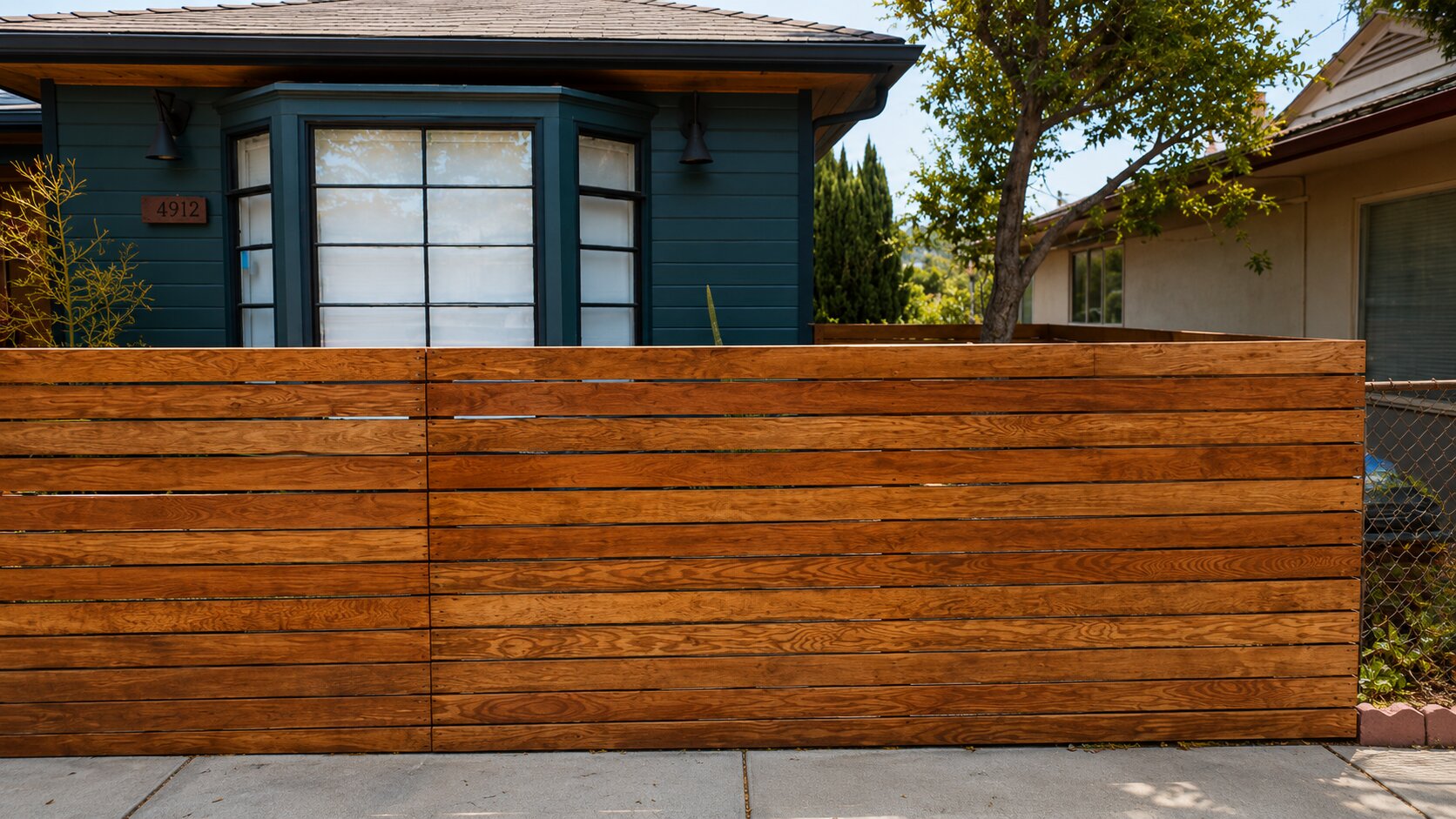
The photos in this post show a recent front-yard project we completed in LA: a horizontal cedar fence wrapping the front and side of a mid-century home. The build features a hidden-post system, continuous flat top cap, custom pedestrian gate with Z-frame, and a warm honey stain finish with UV sealer. The fence ties together a new front lawn, succulent planter, and refreshed entry walk.
This is exactly the level of detail we bring to every fence project — material selection, design, build quality, and finish that holds up to the LA sun and adds real value to the home.
Get a Quote on a Modern Horizontal Fence in Los Angeles
If you are considering a horizontal wood fence for your LA property, we would be glad to walk the site, talk through options, and put together a clear written estimate. We handle the full project from design through final stain — no subcontractor handoffs, no surprises.
Contact us to schedule a free on-site consultation.